The tradition & historical record
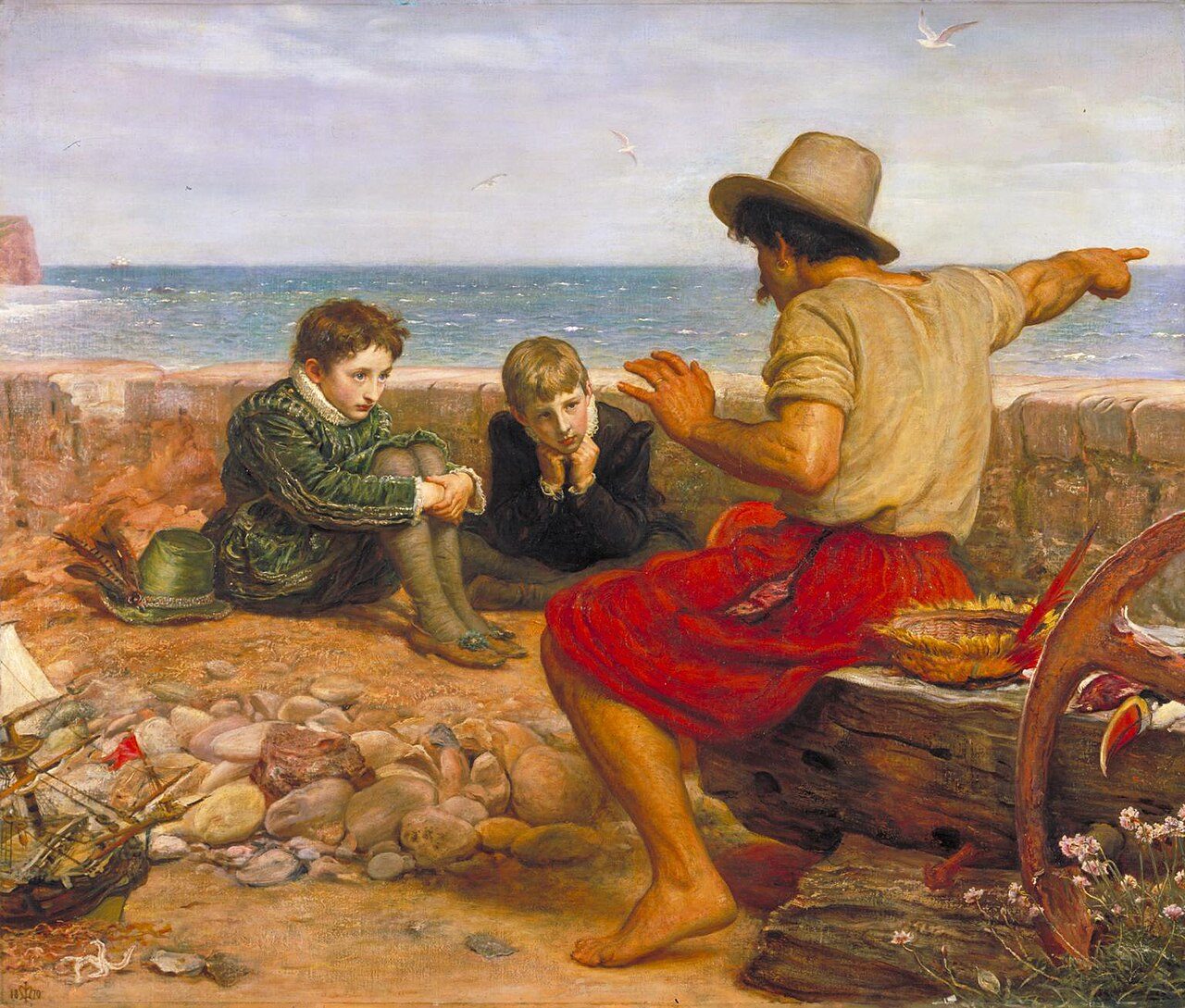
6 min read · 2 sourcesStorytelling is the social and cultural activity of sharing stories, sometimes with improvisation, theatrics, or embellishment. Every culture has its own narratives, which are shared as a means of entertainment, education, cultural preservation, or instilling moral values (sometimes through morals). Crucial elements of stories and storytelling include plot, characters, and narrative point of view. The term "storytelling" can refer specifically to oral storytelling but also broadly to techniques used in other media to unfold or disclose the narrative of a story. 1
Historical perspective
Storytelling, intertwined with the development of mythologies, predates writing. The earliest forms of storytelling were usually oral, combined with gestures and expressions. Storytelling often has a prominent educational and performative role in religious rituals (for example, the Passover Seder), and some archaeologists believe that rock art may have served as a form of storytelling for many ancient cultures, including the Aboriginal peoples of Australia. The Aboriginal Australian people painted symbols which also appear in stories on cave walls as a means of helping the storyteller remember the story. The story was then told using a combination of oral narrative, music, rock art and dance, which brings understanding and meaning to human existence through the remembrance and enactment of stories. People have used the carved trunks of living trees and ephemeral media (such as sand and leaves) to record folktales in pictures or with writing. Complex forms of tattooing may also represent stories, with information about genealogy, affiliation and social status. Folktales often share common motifs and themes, suggesting possible basic psychological similarities across various human cultures. 1
Contemporary storytelling
Modern storytelling has a broad purview. In addition to its traditional forms (fairytales, folktales, mythology, legends, fables etc.), it has extended itself to representing history, personal narrative, political commentary and evolving cultural norms. Contemporary storytelling is also widely used to address educational objectives. New forms of media are creating new ways for people to record, express and consume stories. Tools for asynchronous group communication can provide an environment for individuals to reframe or recast individual stories into group stories. Games and other digital platforms, such as those used in interactive fiction or interactive storytelling, may be used to position the user as a character within a bigger world. Documentaries, including interactive web documentaries, employ storytelling narrative techniques to communicate information about their topic. Self-revelatory stories, created for their cathartic and therapeutic effect, are growing in their use and application, as in psychodrama, drama therapy and playback theatre. Storytelling is also used as a means by which to precipitate psychological and social change in the practice of transformative arts. Some people also make a case for different narrative forms being classified as storytelling in the contemporary world. For example, digital storytelling, online and dice-and-paper-based role-playing games. In traditional role-playing games, storytelling is done by the person who controls the environment and the non-playing fictional characters, and moves the story elements along for the players as they interact with the storyteller. 1
Oral traditions
Oral traditions of storytelling are found in several civilizations; they predate the printed and online press. Storytelling was used to explain natural phenomena, bards told stories of creation and developed a pantheon of gods and myths. Oral stories passed from one generation to the next and storytellers were regarded as healers, leaders, spiritual guides, teachers, cultural secrets keepers and entertainers. Oral storytelling came in various forms including songs, poetry, chants and dance. Albert Bates Lord examined oral narratives from field transcripts of Yugoslav oral bards collected by Milman Parry in the 1930s, and the texts of epics such as the Odyssey. Lord found that a large part of the stories consisted of text which was improvised during the telling process. Lord identified two types of story vocabulary. The first he called "formulas": "Rosy-fingered Dawn", "Wine-dark Sea" and other specific set phrases had long been known of in Homer and other oral epics. Lord, however, discovered that across many story traditions, fully 90% of an oral epic is assembled from lines which are repeated verbatim or which use one-for-one word substitutions. In other words, oral stories are built out of set phrases which have been stockpiled from a lifetime of hearing and telling stories. The other type of story vocabulary is theme, a set sequence of story actions that structure a tale. Just as the teller of tales proceeds line-by-line using formulas, so he proceeds from event-to-event using themes. One near-universal theme is repetition, as evidenced in Western folklore with the "rule of three": Three brothers set out, three attempts are made, three riddles are asked. 1
Märchen and Sagen
Folklorists sometimes divide oral tales into two main groups: Märchen and Sagen. These are German terms for which there are no exact English equivalents, however we have approximations: Märchen, loosely translated as "fairy tale(s)" or little stories, take place in a kind of separate "once-upon-a-time" world of nowhere-in-particular, at an indeterminate time in the past. They are clearly not intended to be understood as true. The stories are full of clearly defined incidents, and peopled by rather flat characters with little or no interior life. When the supernatural occurs, it is presented matter-of-factly, without surprise. Sagen (translated as "legends") are traditionally understood within folkloristics as narratives grounded in real or believed-to-be-real events, typically anchored to a specific historical time and geographical location. Unlike traditional fairy tales (Märchen), where the fantastical is accepted without surprise, legends draw narrative tension from the emotional friction generated when the uncanny or supernatural intrudes into ordinary human reality. Common narrative subgenres within this category include ghost lore, Lover's Leap traditions, encounters with supernatural entities, and contemporary UFO abduction narratives. Another important examination of orality in human life is Walter J. Ong's Orality and Literacy: The Technologizing of the Word (1982). Ong studies the distinguishing characteristics of oral traditions, how oral and written cultures interact and condition one another, and how they ultimately influence human epistemology. 1
Learning
Storytelling is a means for sharing and interpreting experiences. Peter L. Berger says human life is narratively rooted, humans construct their lives and shape their world into homes in terms of these groundings and memories. Stories are universal in that they can bridge cultural, linguistic and age-related divides. 1
The text above is adapted from the Wikipedia article “Storytelling”, available under the Creative Commons Attribution-ShareAlike 4.0 licence. 1
storytelling is social and cultural activity of sharing stories, often with improvisation, theatrics, or embellishment, according to the structured record cited below. This entry was generated automatically from that record and has not yet been reviewed by a person familiar with the tradition. 2
The source record links this tradition to 31 external registers, which can be verified through the citation. 2