The tradition & historical record
3 min read · 2 sourcesStraight dough is a single-mix process of making bread. The dough is made from all fresh ingredients, and they are all placed together and combined in one kneading or mixing session. After mixing, a bulk fermentation rest of about 1 hour or longer occurs before division. It is also called the direct dough method. 1
Formula
A straight dough formula might look like this: 1
Process
In general, the process steps for making straight dough are as follows: 1
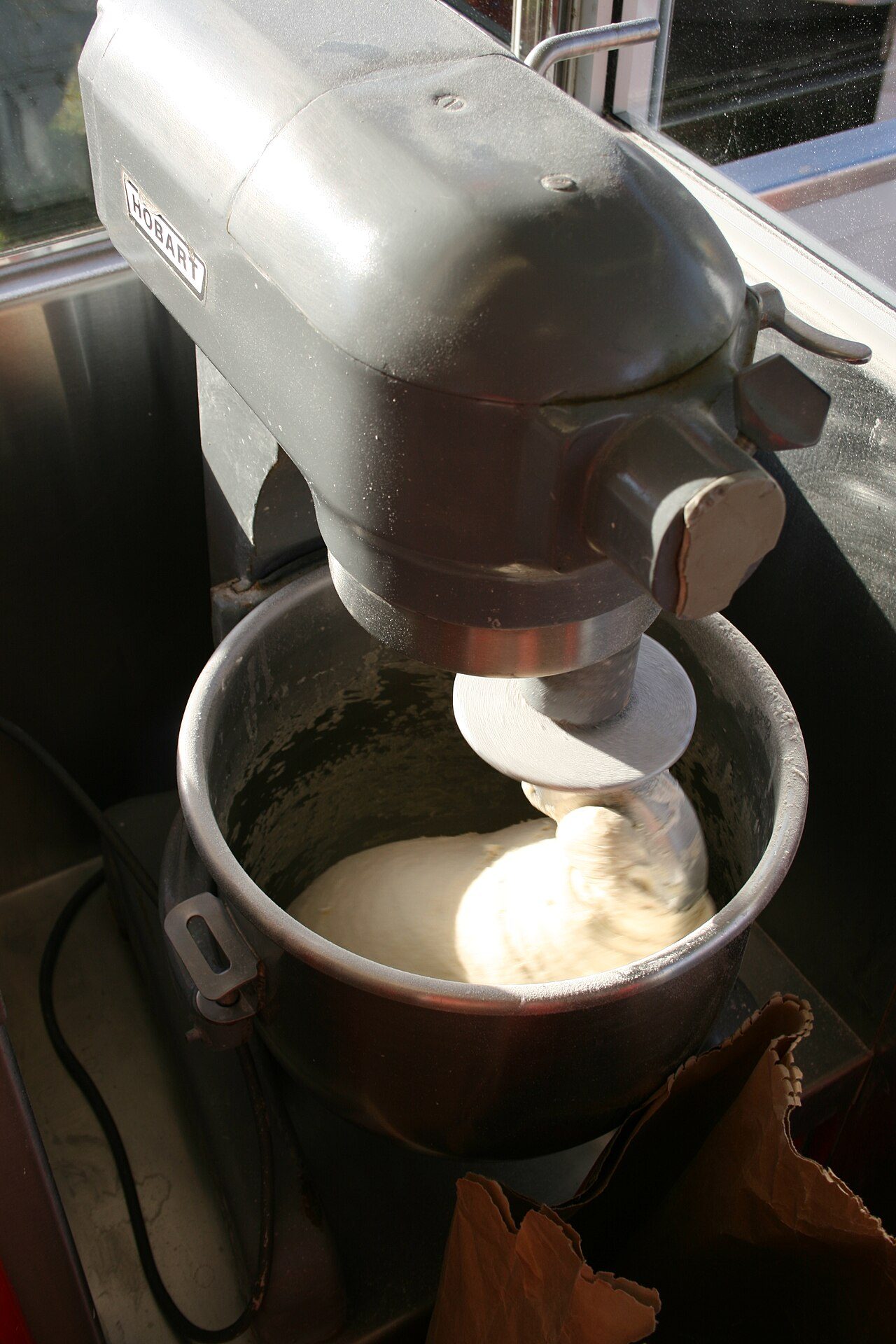
Mise en place: The first step is to look at the formula ("recipe"), familiarize yourself with the ingredients and process, get ready to perform the task at hand. Assess the availability of tools, consider the batch size and time schedule, and gather what is needed. Weigh ingredients: This is also called scaling. If more yeast is chosen for the initial mixing and it is viable, faster fermentation occurs. If too much yeast is used the result is a noticeable yeast flavor. Mixing: The ingredients are all placed in a mixing bowl at once and combined. A variation of this technique is to add ingredients sequentially. This mixing process may be done by hand kneading or by machine. Once fermentation has commenced, it will continue until the heat of the oven kills the yeast during baking. For fast fermentations, long, intense mixing techniques are recommended for dough development, whereas for long-fermented doughs, short-mixing techniques on slow speeds or hand kneading may be used with sufficient later folding. It is known that mixing adds heat to dough, and more intense mixing adds heat more quickly. Doughs mixed at warmer temperatures of 79 °F (26 °C) are known to have more oxidation than doughs mixed at lower temperatures of 73 °F (23 °C). Oxidation results in loss of color and flavor. 1
History
The straight dough method became popular after the discovery and later mass production of baker's yeast, as well as the mass production of mixing machines. Straight dough was simpler than sponge and dough, took less time and effort, and was considered superior for commercial purposes. Baking expert Julius Emil Wihlfahrt of The Fleischmann Company wrote in 1915:Generally speaking, sponge is best used for fancy breads and straight dough for the average bread, for in this manner the advantages of both systems can be best appropriated. Prior to 1920, there were two basic kinds of breads, naturally leavened French bread, and Vienna bread leavened with cereal press yeast, an early form of baker's yeast. After 1920, when mixing machines became popular among bakers, rural bakers began to make more sponge doughs and city bakers more straight doughs, both replacing sourdough. By the 1930s, straight dough had mostly replaced sponge dough, and the terms "French" and "Vienna" breads were used less often. Bakers who continued using older methods were generally unable in America to compete on a cost basis, and so with "rare exceptions," were limited to local niche markets. 1
The text above is adapted from the Wikipedia article “Straight dough”, available under the Creative Commons Attribution-ShareAlike 4.0 licence. 1
Straight dough is Bread making process, according to the structured record cited below. This entry was generated automatically from that record and has not yet been reviewed by a person familiar with the tradition. 2
The source record links this tradition to 1 external register, which can be verified through the citation. 2