The tradition & historical record
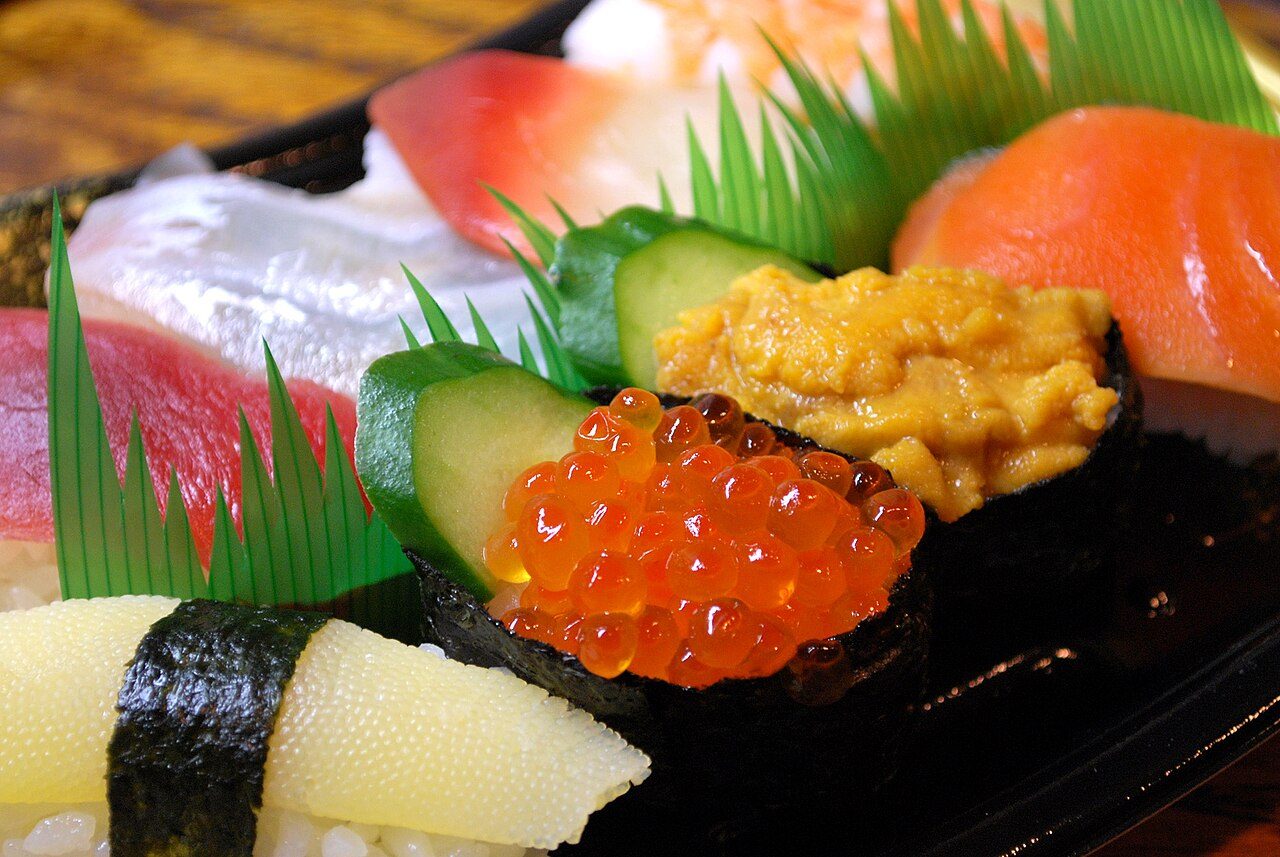
6 min read · 2 sourcesSushi (すし, 寿司, 鮨, 鮓; pronounced [sɯɕiꜜ] or [sɯꜜɕi] ) is a traditional Japanese dish made with vinegared rice (鮨飯, sushi-meshi), typically seasoned with sugar and salt, and combined with a variety of ingredients (ねた, neta), such as seafood, vegetables, or meat; raw seafood is the most common, although some may be cooked. While sushi has numerous styles and presentations, the current defining component is the vinegared rice, also known as shari (しゃり), or sumeshi (酢飯). The modern form of sushi is believed to have been created by Hanaya Yohei, who invented nigiri-zushi, the most commonly recognized type today, in which seafood is placed on hand-pressed, vinegared rice. This innovation occurred around 1824 in the Edo period (1603–1867). It was the fast food of the chōnin class in the Edo period. Sushi is traditionally made with medium-grain white rice, although it can also be prepared with brown rice or short-grain rice. It is commonly prepared with seafood, such as squid, eel, yellowtail, salmon, tuna, or imitation crab meat (surimi). Certain types of sushi are vegetarian. It is often served with pickled ginger (gari), wasabi, and soy sauce. Daikon radish or pickled daikon (takuan) are popular garnishes for the dish. Sushi is sometimes confused with sashimi, a dish that consists of thinly sliced raw fish or occasionally meat, without sushi rice. Today, sushi is considered one of the most popular dishes in the world. 1
Etymology
The modern word sushi is derived from sushi (酸し), an archaic form of an adjective meaning "sour". This refers to the taste of the original dish, made from fish fermented in rice. The word can be written in various ways in Japanese: in hiragana as すし, using the kanji 鮨 or 鮓, or as the ateji 寿司. In compounds, the initial s undergoes rendaku, and sushi becomes -zushi as in nigirizushi. 1
Narezushi
A dish known as narezushi (馴れ寿司, 熟寿司), "matured fish", stored in fermented rice for possibly months at a time, has been cited as one of the early influences for the Japanese practice of applying rice on raw fish. The fish was fermented with rice vinegar, salt, and rice, after which the rice was discarded. Narezushi is also called honnare, meaning "fully fermented", as opposed to namanare, meaning "partially fermented", a type of sushi that appeared in the Muromachi period. Fermented fish using rice, such as narezushi, originated in Southeast Asia, where it was made to preserve freshwater fish, possibly in the Mekong River basin, which is now Laos, Cambodia, Thailand, and Vietnam, and in the Irrawaddy River basin, which is now Myanmar. The first mention of a narezushi-like food is in a Chinese dictionary thought to be from the fourth century, in this instance referring to salted fish that had been placed in cooked or steamed rice, which caused it to undergo a fermentation process via lactic acid. Fermentation methods following similar logic in other Asian rice cultures include burong isda, balao-balao, and tinapayan of the Philippines; pekasam of Indonesia and Malaysia; padaek (ປາແດກ) of Laos; pla ra (ปลาร้า) of Thailand; sikhae (식해) of Korea; and mắm of Vietnam. The lacto-fermentation of the rice prevents the fish from spoiling. When wet-field rice cultivation was introduced during the Yayoi period, lakes and rivers would flood during the rainy season and fish would get caught in the rice paddy fields. Pickling was a way to preserve the excess fish and guarantee food for the following months, and narezushi became an important source of protein for Japanese consumers. 1
Namanare
Until the early 19th century, sushi slowly changed with Japanese cuisine. The Japanese started eating three meals a day, rice was boiled instead of steamed, and of large importance was the development of rice vinegar. During the Muromachi period (1336–1573), the Japanese invented a style of sushi called namanare or namanari (生成, なまなれ, なまなり), which means "partially fermented". The fermentation period of namanare was shorter than that of the earlier narezushi, and the rice used for fermentation was also eaten with the fish. In other words, with the invention of namanare, sushi changed from a preserved fish food to a food where fish and rice are eaten together. After the appearance of namanare, sake and sake lees were used to shorten fermentation, and vinegar was used in the Edo period. 1
Hayazushi
During the Edo period (1603–1867), a third type of sushi, haya-zushi (早寿司, 早ずし, "fast sushi"), was developed. Haya-zushi differed from earlier sushi in that instead of lactic fermentation of rice, vinegar, a fermented food, was mixed with rice to give it a sour taste so that it could be eaten at the same time as the fish. Sushi had evolved with a focus on shortening the fermentation period, but with the invention of haya-zushi, which is simply mixed with vinegar, the fermentation process was eliminated and sushi became a fast food. Many types of sushi known in the world today, such as chirashizushi (散らし寿司, "scattered sushi"), inarizushi (稲荷寿司, "Inari sushi"), makizushi (巻寿司, "rolled sushi"), and nigirizushi (握り寿司, "hand-pressed sushi"), were invented during this period, and they are a type of haya-zushi. Each region utilizes local flavors to produce a variety of sushi that has been passed down for many generations. A 1689 cookbook describes haya-zushi, and a 1728 cookbook describes pouring vinegar over hako-zushi (箱ずし, "box sushi") (square sushi made by filling a wooden frame with rice). Today's style of nigirizushi (握り寿司, "hand-pressed sushi"), consisting of an oblong mound of rice with a slice of fish draped over it, became popular in Edo (contemporary Tokyo) in the 1820s or 1830s. One common story of the origin of nigirizushi is of the chef Hanaya Yohei (1799–1858), who invented or perfected the technique in 1824 at his shop in Ryōgoku. The nigirizushi of this period was somewhat different from modern nigirizushi. The sushi rice of this period was about three times the size of today's nigirizushi. 1
Conveyor belt sushi
In 1958, Yoshiaki Shiraishi opened the first conveyor belt sushi restaurant (回転寿司, kaiten-zushi) named "Genroku Zushi" in Higashi-Osaka. Conveyor belt sushi is a casual and affordable type of sushi restaurant. Conveyor belts are typically installed along tables or counters in the restaurant and are used to carry plates of sushi past diners, who can choose to take whatever they want. Generally, the bill is based on the number of sushi plates, with different colors representing a particular price. When Genroku Sushi opened a restaurant at the Japan World Exposition, Osaka, 1970, it won an award at the expo, and conveyor belt sushi restaurants became known throughout Japan. In 1973, an automatic tea dispenser was developed, which is now used in conveyor belt sushi restaurants today. When the patent for conveyor belt sushi restaurants expired, a chain of conveyor belt sushi restaurants was established, spreading conveyor belt sushi throughout Japan and further popularizing and lowering the price of sushi. 1
The text above is adapted from the Wikipedia article “Sushi”, available under the Creative Commons Attribution-ShareAlike 4.0 licence. 1
sushi is portioned prepared vinegared rice topped or rolled with other ingredients, according to the structured record cited below. This entry was generated automatically from that record and has not yet been reviewed by a person familiar with the tradition. 2
The source record links this tradition to 45 external registers, which can be verified through the citation. 2