The tradition & historical record
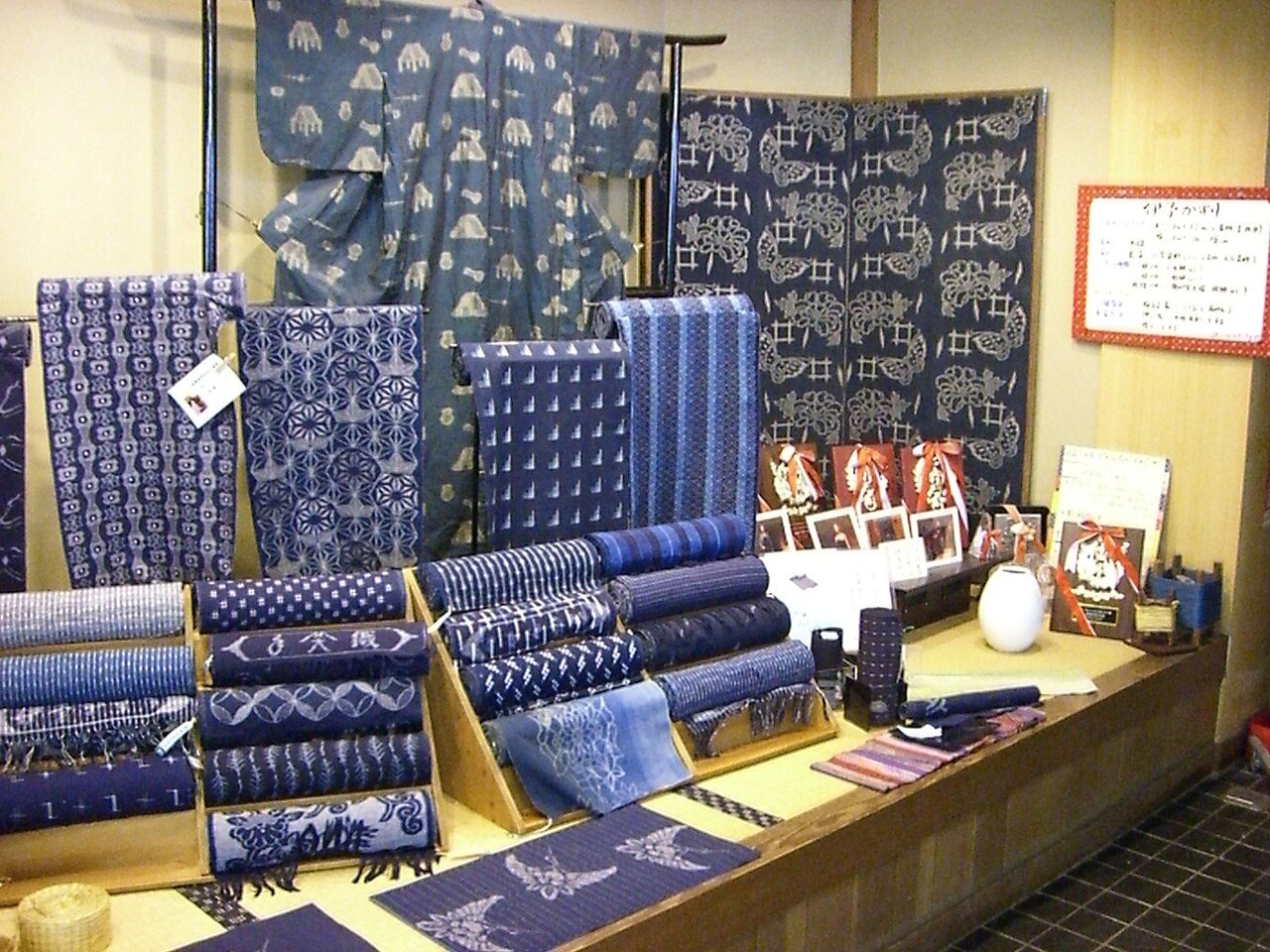
6 min read · 2 sourcesA tanmono (反物(たんもの)) is a bolt of traditional Japanese narrow-loomed cloth. It is used to make traditional Japanese clothes, textile room dividers, sails, and other traditional cloth items. Tanmono (物, mono is a placeholder name) are woven in units of tan, a traditional unit of measurement for cloth roughly analogous to the bolt, about 35–40 centimetres (14–16 in) by about 13 yards (12 m). One kimono takes one tan (ittan) of cloth to make. Tanmono are woven in the narrow widths most ergonomic for a single weaver (at a handloom without a flying shuttle). 1
Fibers
Tanmono may be woven of a variety of fibers, including silk, wool, hemp, linen and cotton. Polyester is also popular, as it is easy to wash at home. In the Jomon period (8000–300 BC) people made twined textiles from a variety of bast fibers from wild plants. Wild fibers (nuno) include the inner bark of wild trees or shrubs (juhi), and grass fibers (sohi). Between the 2nd and 3rd centuries BC, immigrants from the mainland began using the domesticated long-stapled ramie plant. Silk was also known at this time, but used only by the upper classes. Paper was developed in the 3rd and 4th century AD, and woven textiles including paper fibers likely began to be woven around the 5th and 6th century AD, though there is little early record. In the 7th and 8th century AD, Tang-dynasty immigrants brought new production techniques for textiles, and Japanese silk weaving improved. Silk was used for high-class fabrics, with silk noil from broken, lumpy or discarded silk cocoons used to weave lower-class materials such as tsumugi, a type of soft, uneven slub-woven silk with little of its typical shine. In the 1400s, cotton was introduced from Korea. Cotton did not become widely available throughout Japan until the mid-1700s; commoners continued to rely on wild and cultivated bast fibers. Working-class fabrics were mostly made of hemp or ramie (asa). Cotton was more expensive, especially outside the western regions of Japan, where it was grown. Second-hand cotton cloth was, however, sold to rural farmers outside these areas, and was preferred over hemp fabric for its softness and heat-retaining properties. Weaving was largely a cottage industry until cotton cloth was first machine-made in Japan in the 1870s. 1
Weaves
Four basic weaves are commonly used for tanmono. Hira-ori, a plain tabby weave, is simple, hardwearing, and widely used. Aya-ori or shamon-ori is twill weave, and produces soft, draping cloth. Shusu-ori is satin weave; it is thick and lustrous with a heavy drape, but the long floats mean that the fabric tends to snag. Black shusu silk was previously commonly used as the reverse side for chūya obi. Mojiri-ori is a category of gauze weaves used for sha, ro and ra gauzes. They use twisted warps. Mon-ori (pattern weaving) includes patterning by varying the weave and patterning by weaving with variably-dyed threads. Woven patterns include aya (patterned twill), donsu (satin damask), rinzu (figured silk) and mon-chirimen (patterned chirimen). 1
Weaving, dimensions and use
Tanmono are woven narrow instead of being cut to a narrow width, with both vertical edges being selvages. Widths around 40 cm (16 in) are standard, as these were ergonomically the easiest widths to weave on a hand loom without a flying shuttle. Hand-woven and handspun tanmono are still made in Japan, but they are much more expensive, and the industry is in decline. For instance, though in previous decades, up to 20,000 craftspeople were involved in the production of Ōshima tsumugi (a variety of slub-woven silk produced in Amami Ōshima) in 2017, just 500 craftspeople were left. Some varieties of tanmono, previously produced out of necessity by the lower and working classes, are now produced by hobbyists and craftspeople for their rustic appeal. For instance, saki-ori was historically woven from old kimono cut into strips roughly 1 centimetre (0.39 in), with one obi requiring roughly three old kimono to make. Traditionally an article of thrift, sakiori obi are now expensive informal pieces of clothing, prized for their limited production and craftsmanship. Although modern tanmono are mostly machine-woven, the narrow width of most tanmono remains a standard of production. Modern Western fabrics, and traditional fabrics made on automatic looms, are typically much wider; they are less commonly used for kimono production. However, unusually-wide tanmono, designed for use as altar cloth or for maru obi, are sometimes found. Wider tanmono, and more commonly longer tanmono, are also occasionally sold for kimono production; some of these are woven larger to accommodate larger figures, with longer tanmono typically being used to produce a matching kimono, juban and haori set for men. 1
Decoration
Tanmono are decorated with a variety of techniques, either in the weaving process, through embroidery, dyework, a combination of techniques or others, such as appliqué. The decorative technique used on or while constructing the fabric generally designates its end use. For kimono, designs dyed into the fibres and yarns used for weaving before the fabric's construction, including ikat dyeing, are considered informal, with designs dyed into the fabric after weaving and embroidered designs used for more formal kimono. For obi, woven patterns are conversely considered the most formal, with designs dyed onto the fabric and embroidered designs paired with less formal kimono. If a tanmono is to be used for a formal kimono, such as a hōmongi, tsukesage, irotomesode or kurotomesode, it is temporarily stitched together (kari-eba) so the pattern can be drawn across the seams. For less formal kimono, the pattern is drawn and applied to the fabric before it is cut and constructed, as the design is not intended to match up over the seams, or the kimono will have a solid colour. Tsukesage kimono use a non-reversible pattern laid out with respect to where the cuts will fall, but no seam-crossing patterns. Komon, a reversible all-over pattern (such as geometric or sprigged patterns), is used for everyday komon kimono, but also for other garments, such as kataginu and hakama. Designs for children's clothing were not distinguishably gender-specific until the end of the 1700s. Traditionally, tanmono would be dyed and even woven to order; though kimono are still mostly made to order, tanmono are now commonly bought ready-made to be sewn later. Modern tanmono for less formal kimono are often dyed with inkjet printers, though formal kimono are more likely to be dyed by hand. 1
Kasuri
Most ikat-woven, indigo-dyed cotton fabrics – known as kasuri – were historically hand-woven by the working classes, who of necessity spun and wove their own clothing until cheaper ready-to-wear clothing became widely available. 1
The text above is adapted from the Wikipedia article “Tanmono”, available under the Creative Commons Attribution-ShareAlike 4.0 licence. 1
tanmono is traditional Japanese cloth, according to the structured record cited below. This entry was generated automatically from that record and has not yet been reviewed by a person familiar with the tradition. 2