The tradition & historical record
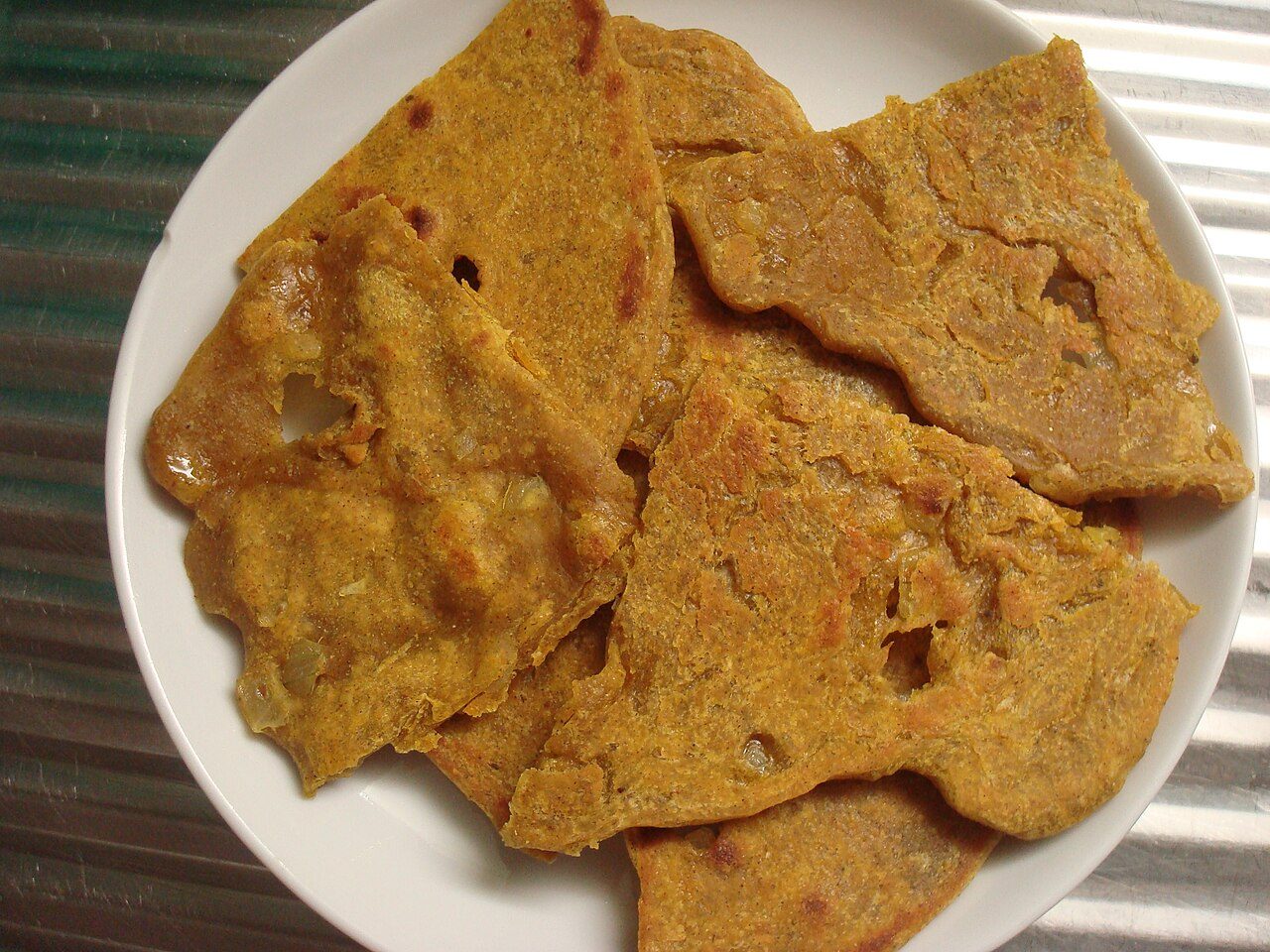
1 min read · 2 sourcesThalipeeth or thalipith is a savoury multi-grain flatbread popular in Western India, particularly in the state of Maharashtra. The flour for thalipeeth, called bhajanee, is prepared from roasted grains, legumes and spices. The ingredients include grains such as rice, wheat, bajra, and jowar; legumes such as chana, and urad; and spices, most commonly coriander and cumin seeds. When preparing the dough, other ingredients such as onion, fresh coriander, other vegetables and spices are added. Thalipeeth is usually served with butter (preferably made from water buffalo milk), ghee, or yogurt. While the dish is popular in Maharashtra it is especially popular in Marathwada, Telangana and North Karnataka. In a variation from bhajani, flour made from tapioca (sabudana) and rajgira (amaranth) is used to make a thalipeeth on Hindu fasting days. 1
The text above is adapted from the Wikipedia article “Thalipeeth”, available under the Creative Commons Attribution-ShareAlike 4.0 licence. 1
Thalipeeth is Indian food, according to the structured record cited below. This entry was generated automatically from that record and has not yet been reviewed by a person familiar with the tradition. 2
The source record links this tradition to 3 external registers, which can be verified through the citation. 2