The tradition & historical record
5 min read · 2 sources"The Legend of Knockgrafton" is an Irish folk tale/fairy tale published by T. Crofton Croker in Fairy Legends and Traditions of the South of Ireland (1825). A humpbacked man named Lusmore delights the fairies by revising their fairy song and has his hump removed, while another hunchback Jack Madden angers them and receives a second hump on top of his own. To the fairies' initial chanting of "Monday, Tuesday", Lusmore had added "Wednesday", but Jack improvised with extra days which the fairies disliked. The tale is classed in the ATU 503 "The Gifts of the Little People" tale group, named after Grimms' KHM 182 known as "Die Geschenke des kleinen Volkes" in German. 1
Plot summary
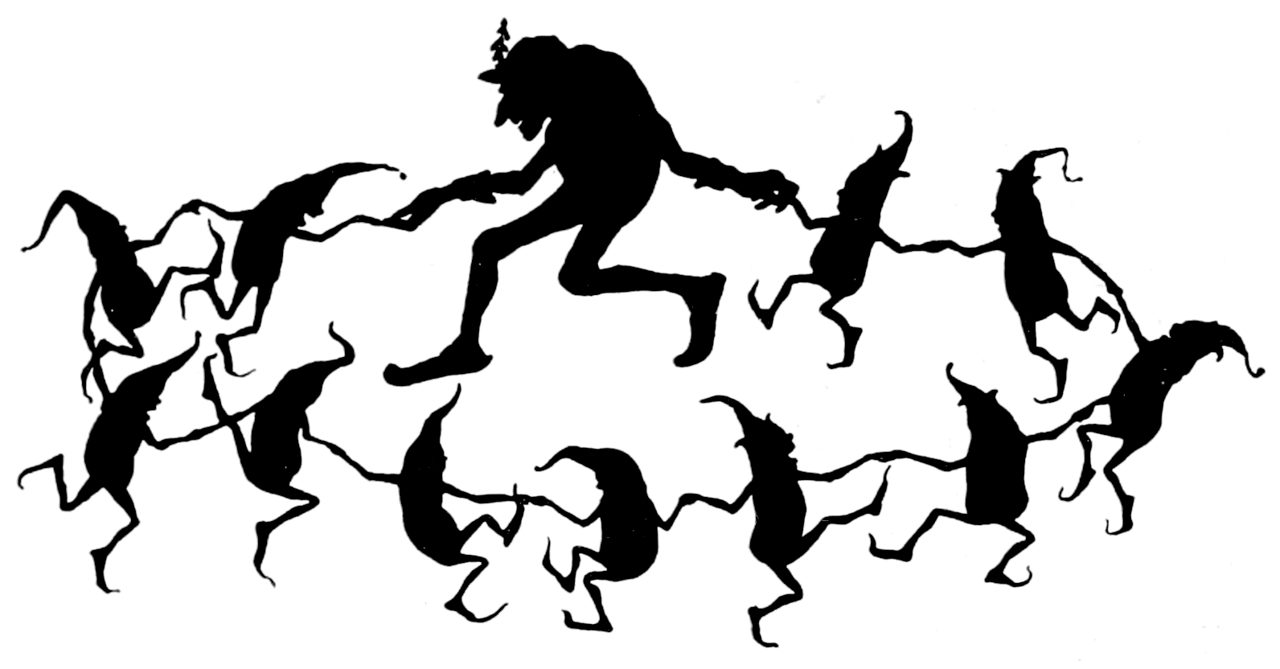
The tale was first published in Thomas Crofton Croker's Fairy Legends and Traditions of the South of Ireland (1825). The plot outline is as follows: There was a hunchbacked (humpbacked) man who made his living selling his plaited goods woven from straw or rush, nicknamed Lusmore (Irish: lus mór literally "great herb", referring to the 'foxglove') because he habitually wore a sprig of this flower or herb on his straw hat. He dwelt in the Glen of Aherlow, County Tipperary. On journey back from peddling, he grew tired and rested near the "moat" (hill or barrow) of Knockgrafton, and as it grew dark, he heard voices inside the barrow singing the refrain of "Da Luan, Da Mort (Monday, Tuesday)". When the singing paused, Lusmore sang back, adding "agus Da Cadine (and Wednesday)" to the strain. This delighted the fairies, and Lusmore was conveyed inside the barrow by a whirlwind. There, he was entertained, and afterwards had his hump removed as reward, together with a new set of fine clothing. Then an old woman came to visit, saying she was from (the neighbouring) County Waterford, the land of the Decie (Déisi). She wished to know the particulars of Lusmore's story, on behalf of a hunchbacked son of her godmother ("gossip"). The hunchback named Jack Madden then traveled to the "moat" to imitate the conduct, but in his irrepressible desire to have the hump removed quickly, he interrupted the fairies, and hoping to be rewarded doubly with clothing, added two more days to the refrain, "Da Dardine, augus Da Hena (Thursday and Friday)". This only angered the fairies, and in retribution, twenty strong members of them brought Lusmore's lump and added it on top of Jack' original hump. Jack later died in grief. 1
Accompanying song
Croker also supplied the musical notation to the song "Da Luan, Da Mort", taken down by Alexander D. Roche, which he said was typically sung by the storytellers of the tale. 1
Authorship
It has been suggested that William Maginn may have been the true author of this particular tale. The tale was printed in a 1933 anthology of tales by William Maginn, selected by his nephew (Rev. Charles Arthur Maginn of Sheffield) and was one of four tales from Croker's Fairy Legends. A conflicting account by the author's much younger brother (Rev. Charles Arthur Maginn, M.A., Rector of Killanully, Cork) credits a similar list of four tales to Maginn, but not "The Legend of Knockgrafton". The latter account was based on a copy of Fairy Legends inscribed with notes in Maginn's hand. 1
Localization
The "Moat of Knockgrafton" was a barrow or tumulus according to Croker, but actually a rath or fort according to others, and is better identified as Knockgraffon (also controversially emended to " Mote of Knockgraffan" by some) in County Tipperary. It lies about 3 miles due north of Cahir, the town where Lusmore peddled his wares. At the start of the tale, Lusmore's place of residence is identified as Glen of Aherlow at the foot of the Galtee Mountains, due west of Knockgraffon. Later Lusmore's village is identified as "Cappagh". P. W. Joyce remarks that in the south of Ireland, a mound where fairy music are said to be heard is referred to as a lissakeole (Irish: lios a cheoil "fort of music"). 1
Yeats
William Butler Yeats included the tale in his 1888 anthology. In connection with this tale, it has been remarked by folklorists that Yeats earnestly believed in fairies, and to quote Yeats critic Frank Kinahan: "[Other Irish writers] saw the attractions of faery as dangerous because illusory. Yeats saw them as dangerous because real". Yeats also claimed real-life experience of being carried away by fairies, as noted by Richard Dorson's survey of Celtic folktale collecting. As to the whirlwind that carries the humans away into the fairy mound, Yeats has remarked on such wind as something the peasantry regard with real fear and respect. 1
The text above is adapted from the Wikipedia article “The Legend of Knockgrafton”, available under the Creative Commons Attribution-ShareAlike 4.0 licence. 1
The Legend of Knockgrafton is recorded in open cultural data. The structured record cited below does not describe the practice, and this entry has not yet been reviewed by a person familiar with the tradition. 2
The source record links this tradition to 1 external register, which can be verified through the citation. 2