The tradition & historical record
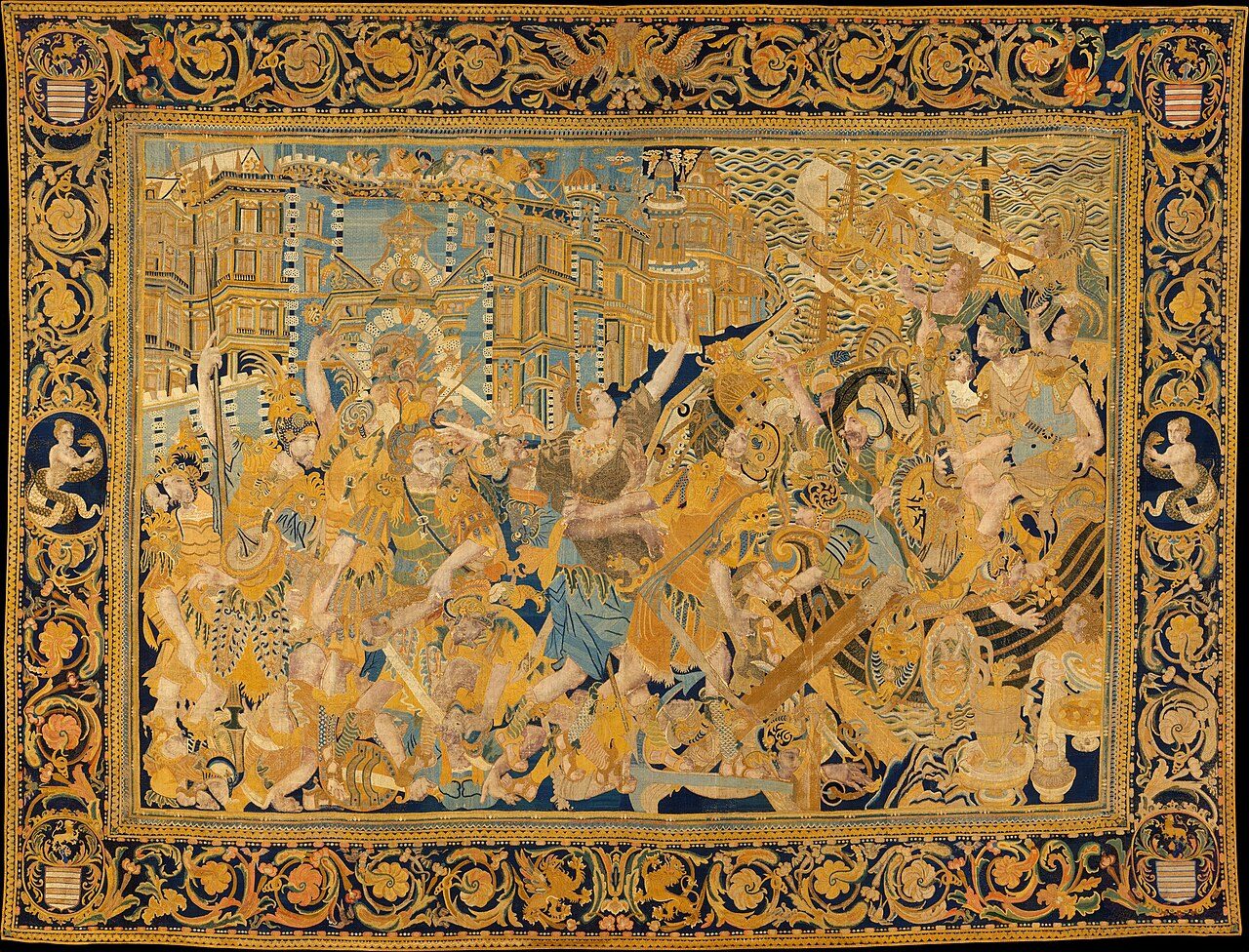
2 min read · 2 sourcesThe Story of Troy is a set of seven embroidered tapestries illustrating stories about the Trojan War made by Ming Chinese artisans of Macau in the 1620s. All of the tapestries are connected by a common border design containing Portuguese patterns a pair of phoenixes at the top, a lion and griffin at the bottom, and a triton and serpent on each side. The four corners of each tapestry are adorned with the same coat of arms, identified as an erroneous depiction of the family crest of Francisco Mascarenhas, the first governor of Macau. It is believed, if the identification proves correct, that Mascarenhas commissioned the tapestries to emphasize the legitimacy of the Portuguese presence in Asia represented by Macau after an unsuccessful Dutch attempt to take the city. There are doubts about this identification, however, since it is not known if Mascarenhas would have accepted a product with the wrong family crests, though there are Jingdezhen porcelain bearing inaccurate crests positively attributed to Francisco Mascarenhas. Despite the classic Western theme, the series of tapestries are laden with Chinese motifs—such as the clouds and waves depicted in the Chinese style, and the presence of lychee, a fruit not native to Europe—reflecting the significant involvement and degree of freedom the Chinese embroiderers had in the work. 1
The text above is adapted from the Wikipedia article “The Story of Troy”, available under the Creative Commons Attribution-ShareAlike 4.0 licence. 1
The Story of Troy is series of embroidered panels made in Macao for the export market, ca. early 17th century, according to the structured record cited below. This entry was generated automatically from that record and has not yet been reviewed by a person familiar with the tradition. 2