The tradition & historical record
2 min read · 2 sourcesThe Trees and the Bramble is a composite title which covers a number of fables of similar tendency, ultimately deriving from a Western Asian literary tradition of debate poems between two contenders. Other related plant fables include The Oak and the Reed and The Fir and the Bramble. 1
The fables
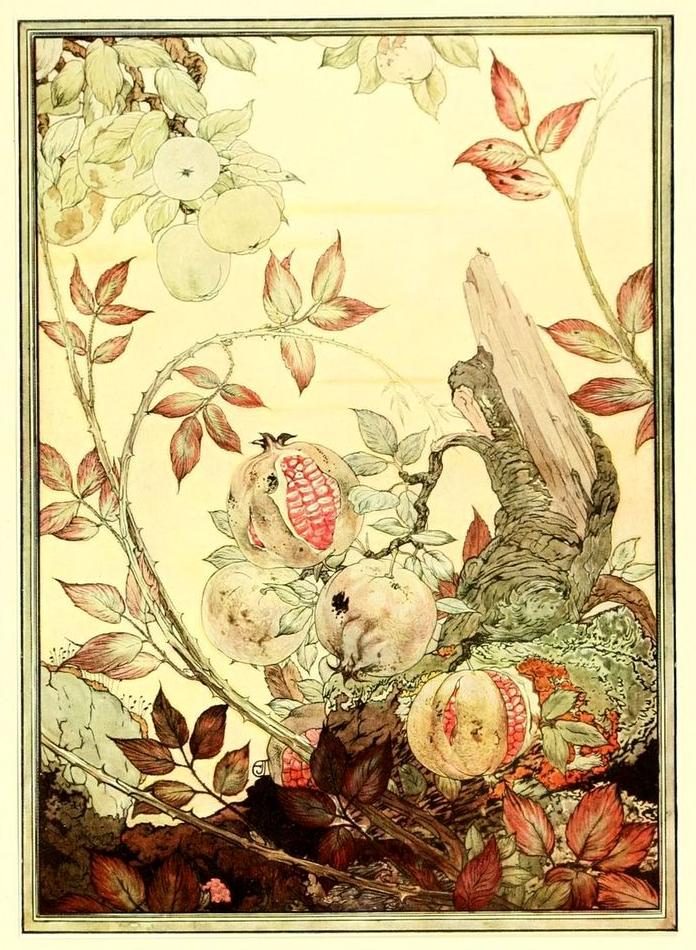
One of Aesop's Fables, numbered 213 in the Perry Index, concerns a pomegranate and an apple tree debating which is the most beautiful. In the midst of it, a bramble bush in a nearby hedge appeals to them, 'Dear friends, let us put a stop to our quarrel.' The account is brief and leads to the humorous moral that 'when there is a dispute among sophisticated people, then riff-raff also try to act important'. The story was for a long time limited to Greek sources and, though versions of a similar debate between other trees gained some currency in the 16th and 17th centuries, it soon fell out of favour again. In 1564 the Neo-Latin poet Hieronymus Osius versified the story under the title "The Apple and the Pear", with the moral that the humble become overweening when the great fall out. Charles Hoole's influential Aesop's fables English and Latin (1657) included it under the title "Of the Peach-tree and the Apple-tree" with the moral that "meaner men do oftentimes settle the controversies of their betters", and is followed more or less by Roger L'Estrange, who concludes that "Every thing would be thought greater in the World than it is". An idea of what such a debate would have been like is gained from a related poem of 116 lines by the Alexandrian poet Callimachus (Iamb 4), which is given the separate number of 439 in the Perry Index. There a laurel and an olive tree are in dispute concerning their relative importance and when a bramble attempts to bring peace it is rebuked by the furious laurel. It has been observed that the poem is in the tradition of poetical disputes of Sumerian origin that spread throughout the Near East. 1
The text above is adapted from the Wikipedia article “The Trees and the Bramble”, available under the Creative Commons Attribution-ShareAlike 4.0 licence. 1
The Trees and the Bramble is fable by Aesop, according to the structured record cited below. This entry was generated automatically from that record and has not yet been reviewed by a person familiar with the tradition. 2
The source record links this tradition to 2 external registers, which can be verified through the citation. 2