The tradition & historical record
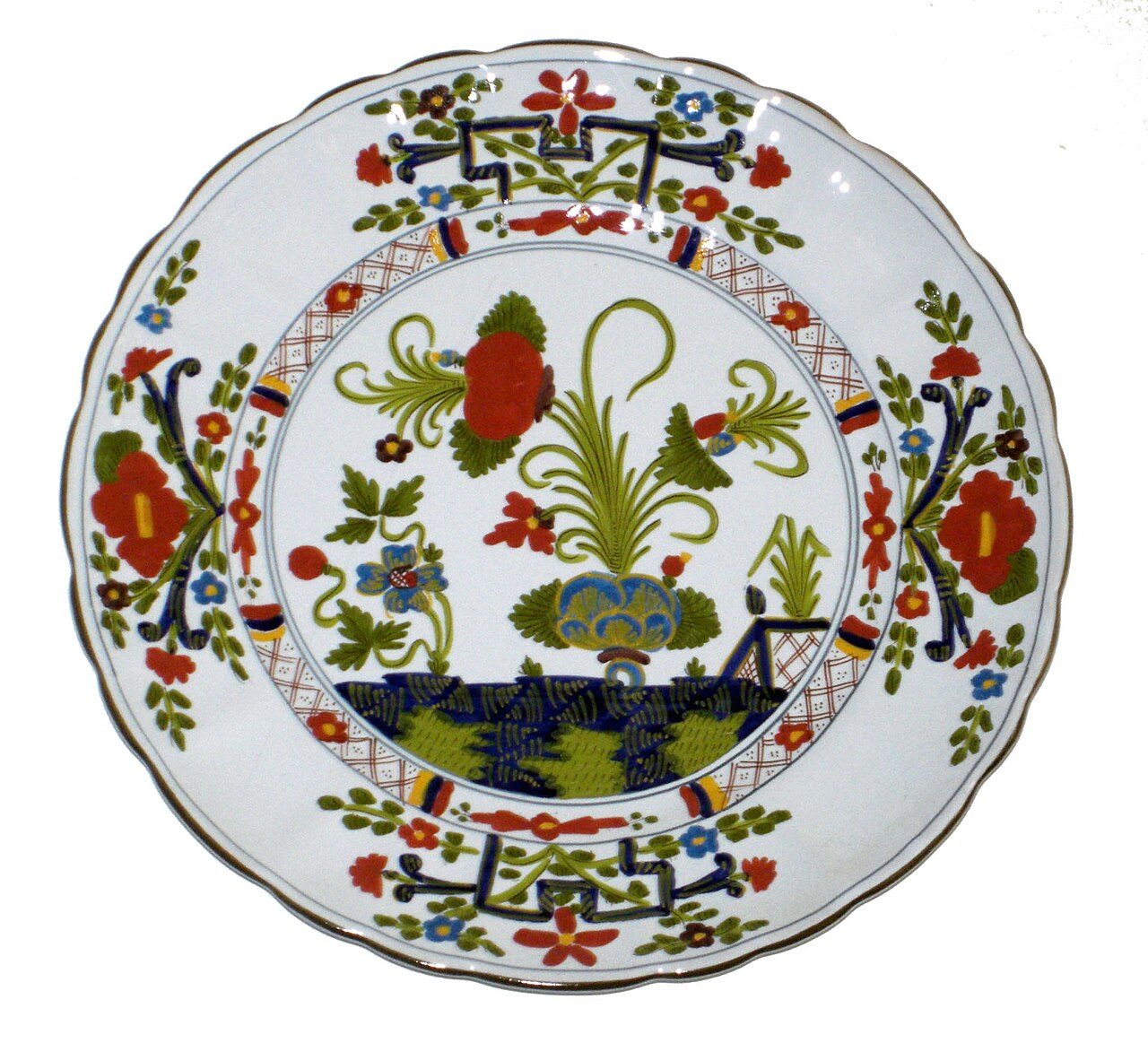
6 min read · 2 sourcesTin-glazed pottery is earthenware covered in lead glaze with added tin oxide which is white, shiny and opaque (see tin-glazing for the chemistry); usually this provides a background for brightly painted decoration. It has been important in Islamic and European pottery, but very little used in East Asia. The pottery body is usually made of red or buff-colored earthenware and the white glaze imitated Chinese porcelain. The decoration on tin-glazed pottery is usually applied to the unfired glaze surface by brush with metallic oxides, commonly cobalt oxide, copper oxide, iron oxide, manganese dioxide and antimony oxide. The makers of Italian tin-glazed pottery from the late Renaissance blended oxides to produce detailed and realistic polychrome paintings. The earliest tin-glazed pottery appears to have been made in Iraq in the 9th century, the oldest fragments having been excavated during the First World War from the palace of Samarra about fifty miles north of Baghdad. 1
Names
Tin-glazed pottery of different periods and styles is known by different names. The pottery from Muslim Spain is known as Hispano-Moresque ware. The decorated tin-glaze of Renaissance Italy is called maiolica, sometimes pronounced and spelt majolica by English speakers and authors. When the technique was taken up in the Netherlands, it became known as delftware as much of it was made in the town of Delft. Dutch potters brought it to England in around 1600, and wares produced there are known as English delftware or galleyware. In France it was known as faience after the Italian city of Faenza which was a major production center from where French artisans had learned the technique. The word maiolica is thought to have come from the medieval Italian word for Mallorca, an island on the route for ships that brought Hispano-Moresque wares to Italy from Valencia in the 15th and 16th centuries, or from the Spanish obra de Mallequa, the term for lustered ware made in Valencia under the influence of Moorish craftsmen from Malaga. During the Renaissance, the term maiolica was adopted for Italian-made luster pottery copying Spanish examples, and, during the 16th century, its meaning shifted to include all tin-glazed earthenware. Because of their identical names, there has been some confusion between tin-glazed majolica/maiolica and the lead-glazed majolica made in England and America in the 19th century, but they are different in origin, technique, style and history. In the late 18th century, old Italian tin-glazed maiolica became popular among the British, who referred to it by the anglicized pronunciation majolica. The Minton pottery copied it and applied the term majolica ware to their product. 1
Hispano-Moresque ware
The Moors introduced tin-glazed pottery to Spain after the conquest of 711. Hispano-Moresque ware is generally distinguished from the pottery of Christendom by the Islamic character of its decoration, though as the dish illustrated shows, it was also made for the Christian market. Hispano-Moresque shapes of the 15th century included the albarello (a tall jar), luster dishes with coats of arms, made for wealthy Italians and Spaniards, jugs, some on high feet (the citra and the grealet), a deep-sided dish (the lebrillo de alo) and the eared bowl (cuenco de oreja). With the Spanish conquest of Mexico, tin-glazed pottery came to be produced in the Valley of Mexico as early as 1540, at first in imitation of the ceramics imported from Seville. Although the Moors were expelled from Spain in the early 17th century, the Hispano-Moresque style survived in the province of Valencia. Later wares usually have a coarse reddish-buff body, dark blue decoration and luster. 1
Maiolica
The 15th-century wares that initiated maiolica as an art form were the product of a long technical evolution, in which medieval lead-glazed wares were improved by the addition of tin oxides under the initial influence of Islamic wares imported through Sicily. Such archaic wares are sometimes dubbed proto-maiolica. During the later 14th century, the limited palette of colors was expanded from the traditional manganese purple and copper green to embrace cobalt blue, antimony yellow and iron-oxide orange. Sgraffito wares were also produced, in which the white tin-oxide slip was decoratively scratched to produce a design from the revealed body of the ware. Refined production of tin-glazed earthenware made for more than local needs was concentrated in central Italy from the later 13th century, especially in the contada of Florence. The importance of the city itself in the production of maiolica declined in the second half of the 15th century, perhaps because of local deforestation. Italian cities encouraged the start of a new pottery industry by offering tax relief, citizenship, monopoly rights and protection from outside imports. Production scattered among small communes and, after the mid-15th century, at Faenza, Arezzo and Siena. Faenza, which gave its name to faience, was the only fair-sized city in which the ceramic industry became a major economic component. Bologna produced lead-glazed wares for export. Orvieto and Deruta both produced maioliche in the 15th century. In the 16th century, maiolica production was established at Castel Durante, Urbino, Gubbio and Pesaro. Some maiolica was produced as far north as Padua, Venice and Turin and as far south as Palermo and Caltagirone in Sicily. 1
Delftware
Delftware was made in the Netherlands from the 16th to the 18th centuries. The main period of manufacture was 1600-1780, after which it was succeeded by white stoneware and porcelain. The earliest tin-glazed pottery in the Netherlands was made in Antwerp in 1512. The manufacture of painted pottery may have spread from the southern to the northern Netherlands in the 1560s. It was made in Middleburg and Haarlem in the 1570s and in Amsterdam in the 1580s. Much of the finer work was produced in Delft, but simple everyday tin-glazed pottery was made in such places as Gouda, Rotterdam, Amsterdam and Dordrecht. The Guild of St. Luke, to which painters in all media had to belong, admitted ten master potters in the thirty years between 1610 and 1640 and twenty in the nine years 1651 to 1660. In 1654 a gunpowder explosion in Delft destroyed many breweries, and, as the brewing industry was in decline, their premises became available to pottery makers. From about 1615, the potters began to coat their pots completely in white tin glaze instead of covering only the painting surface and coating the rest with clear glaze. They then began to cover the tin glaze with a coat of clear glaze which gave depth to the fired surface and smoothness to cobalt blues, ultimately creating a good resemblance to porcelain. Although Dutch potters did not immediately imitate Chinese porcelain, they began to do after the death of the Emperor Wan-Li in 1619, when the supply to Europe was interrupted. 1
English delftware
English delftware was made in the British Isles between about 1550 and the late 18th century. 1
The text above is adapted from the Wikipedia article “Tin-glazed pottery”, available under the Creative Commons Attribution-ShareAlike 4.0 licence. 1
tin-glazed pottery is pottery covered in glaze containing tin oxide, according to the structured record cited below. This entry was generated automatically from that record and has not yet been reviewed by a person familiar with the tradition. 2
The source record links this tradition to 3 external registers, which can be verified through the citation. 2