The tradition & historical record
6 min read · 2 sourcesTlaxcala handcrafts and folk art is that which comes from the smallest state in Mexico, located in the center-east of the country. Its best-known wares are the "canes of Apizaco" (really from San Esteban Tizatlan), sawdust carpets and the making of Saltillo-style serapes. However, there are other handcraft traditions, such as the making of pottery, including Talavera type wares, cartoneria, metalworking and stone working. The state supports artisans through the activities of the Fideicomiso Fondo de la Casa de las Artesanía de Tlaxcala (Handcrafts House of Tlaxcala Fund and Trust) 1
Socioeconomic significance
Tlaxcala is Mexico's smallest and most densely populated entity outside of the Mexico City metropolitan area. A significant portion of the state's handcraft production is done in small villages, and in indigenous communities such as Ixtenco, San Isidro Buensuceso and Tetlahnocan. There are two crafts that are best known from the state, the making of ephemeral sawdust carpets for certain religious celebrations, especially in Huamantla and the making of wooden canes in San Esteban Tizatlán. However, there are a variety of crafts made in the state from textiles, to pottery to stone work and more. Much of which has not been widely documented. The state entity charged with promoting and preserving Tlaxcalan handcrafts is the Fideicomiso Fondo de la Casa de las Artesanía de Tlaxcala (Handcrafts House of Tlaxcala Fund and Trust). It established and runs the Museo Vivo de Artes y Tradiciones Populares del Estado (Living Museum of Folk Arts and Traditions), located in a former state office building. Its main objective is to document the development and status of the state's handcraft traditions. Its permanent collection is in six halls and includes a Child Jesus of ayacahuite wood, with glass eyes and movable limbs; various articles for the making of pulque, Otomi traditional garb, pottery and musical instruments called salterios. It also has exhibits dedicated to various traditions and celebrations. The Trust also sponsored contests for state artisans, such as the Concurso Estatal de Arte Popular Tlaxcala (Tlaxcala State Folks Art Contest), as well as a "Day of the Artisan" in late June. There are also handcraft exhibitions at the annual Feria de Tlaxcala (Tlaxcala State Fair). 1
Wood working
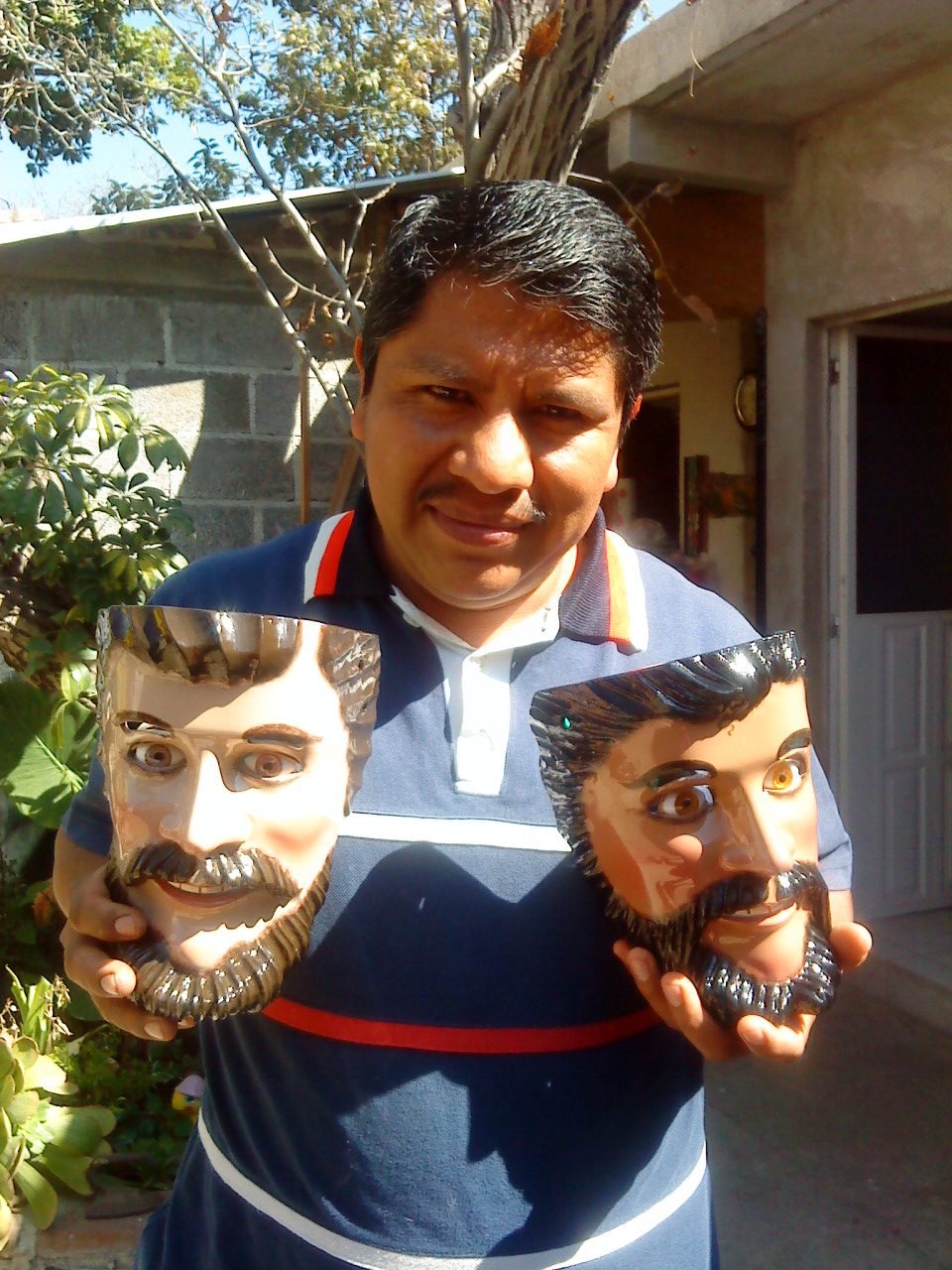
Modern work working techniques were introduced by the Spanish, and along with furniture, a number of smaller wood items are made. The best known wood item is a kind of walking cane which is made in the town of San Esteban Tizatlan. Despite the origin, these canes are generally known as the "walking canes of Apizaco" because the arrival of the railroad to this town allowed their marketing in the larger city, popularizing them. Characteristic of these canes is the carving, which is complemented by different colors of wood and varnish and sometimes burning to add decorative motifs, which are often of pre Hispanic origin. Today, about eighty families depending on woodworking for a living, but the popularity of the canes has made the tlaxistle tree (Amelanchier denticulata), from which they are traditionally made, to become endangered. This has prompted a switch to sabine (sp. Juniperus) wood, but it is not as flexible and requires that the head be worked separately from the body. In addition to the canes, the town makes wooden bats, decorated in a similar fashion, and items of cedar and ayacahuite such as toys, chess sets, letter openers, furniture and religious figures for altars. Another important item is drum called teponaxtle, made from a hollowed log. In San Pablo Apetatitlán, there is a neighborhood called Tlatempa, noted for the making of religious figures from ayacahuite, with glass eyes and movable extremities. They are also noted for the making of traditional masks for Carnival and other festivities. These masks generally portray Europeans as Carnival was a time that allowed the indigenous to poke fun of the conquistadors. One noted family for this work is that of Pedro Reyes, which has made these masks for generations. 1
Textiles
Textiles in the state have a history that dates back well into the pre Hispanic period, and which was well-developed before the arrival of the Spanish. These textiles had complicated designs and were dyed in various colors using resources such as cochineal and a purple dye made from snails from Oaxaca. The best of these were generally made as offerings to the gods. The Spanish introduced the working of new materials such as wool and silk. In the late colonial period into the era of the railroad, textile production consolidated onto haciendas then factories, a number of which became known for their work such as La Trinidad, San Luis, Santa Elena and La Estrella. However, the development of industrial textiles production never completely displaced more traditional methods. The best known handcrafts of the state are the textiles produced in the villages around Santa Ana Chiautempan and San Bernardino Contla, which are marketed through Santa Ana. These are made in family workshops which may have pedal looms or more modern electric looms. Commercial dyes are used as well as some natural dyes such as those made from indigo and walnut. Many of these products are sold on the beaches and other tourist attractions of Mexico, as well as in the state itself. These wares include serapes, rebozos, sweaters of a design called Chiconcuac, jackets, capes, gloves and hats made of wool. The most traditional and high-quality pieces are made from 100% wool, generally made to order, but most of the rest of the production has deteriorated, with the substitution of synthetic fibers for some of all of the wool or cotton. The most recognizable product is the Saltillo-style serape, despite the state's distance from this northern Mexican city. 1
Sawdust carpets
Sawdust carpets are arrangements of colored sawdust, flower petals and sometimes other plant matter to create decorative "paintings" over a stretch of road in preparation for a procession. It is an ephemeral craft as it is meant to be destroyed as the procession passes. Its origins are from the pre Hispanic period, and the best-known creation of this craft in the state is in the city of Huamantla, for the feast of the image of Our Lady of Charity (Virgen de la Caridad). However, other towns in Tlaxcala also make them, such as San Vicente Xiloxochitla and San Juan Totolac for Day of the Dead. 1
Ceramics
Tlaxcala is not one of Mexico major pottery producers, with much made for local consumption, but there is some notable production. One notable feature of much of this production is that it has maintained at least some characteristics from the pre Hispanic period. San Sebastian Atlapa makes what is known as Ocotlan pottery, as they are mostly sold in this town. It is a simple, red-colored pottery which comes burnished and unburnished to make duck figures, water jugs and containers for other liquids using neither molds or potters' wheels. 1
The text above is adapted from the Wikipedia article “Handcrafts and folk art in Tlaxcala”, available under the Creative Commons Attribution-ShareAlike 4.0 licence. 1
Tlaxcala handcrafts and folk art is artistic traditions of Tlaxaca, Mexico, according to the structured record cited below. This entry was generated automatically from that record and has not yet been reviewed by a person familiar with the tradition. 2