The tradition & historical record
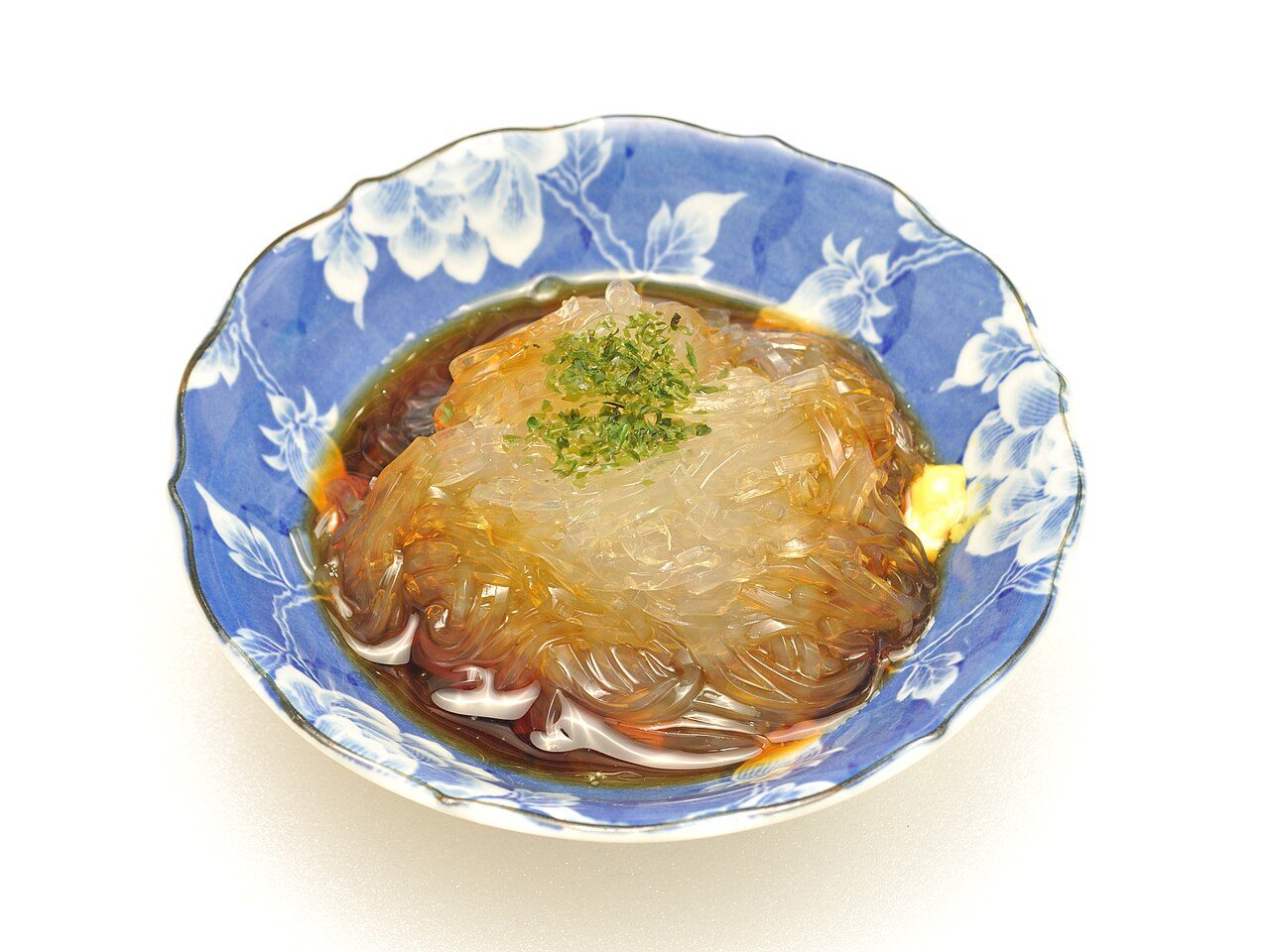
2 min read · 2 sourcesTokoroten (心太, ところてん) is a gelatinous dish in Japanese cuisine, made from agarophyte seaweed. It was traditionally made by boiling tengusa (Gelidium amansii) and allowing the mixture to congeal into a jelly. The jelly is then pressed through an extruding device and shaped into noodles. Unlike gelatin desserts, tokoroten has a firmer texture. Tokoroten can be eaten hot (in solution) or cold (as a gel). Flavorings and garnishes can vary from region to region. In the present day, it is common to eat it with a mixture of vinegar and soy sauce, and sometimes nori, hot pepper, or sesame. In the Kansai region, tokoroten is eaten as a dessert with kuromitsu syrup. 1
History
Tokoroten has been eaten in Japan for over a thousand years. It is thought to have been introduced to Japan from China during the Nara period. During the Edo period, it was popular during the summer as a snack. It was originally made to be eaten immediately and was commonly sold around factories. In the 17th century, it was discovered that freezing tokoroten would result in a stable and dry product known as kanten (agar). While tokoroten can be made from kanten based on seaweeds such as tengusa (Gelidiaceae) and ogonori (Gracilaria), today, commercially produced kanten is mostly made from ogonori. 1
The text above is adapted from the Wikipedia article “Tokoroten”, available under the Creative Commons Attribution-ShareAlike 4.0 licence. 1
Tokoroten is Japanese dish, according to the structured record cited below. This entry was generated automatically from that record and has not yet been reviewed by a person familiar with the tradition. 2
The source record links this tradition to 3 external registers, which can be verified through the citation. 2