The tradition & historical record
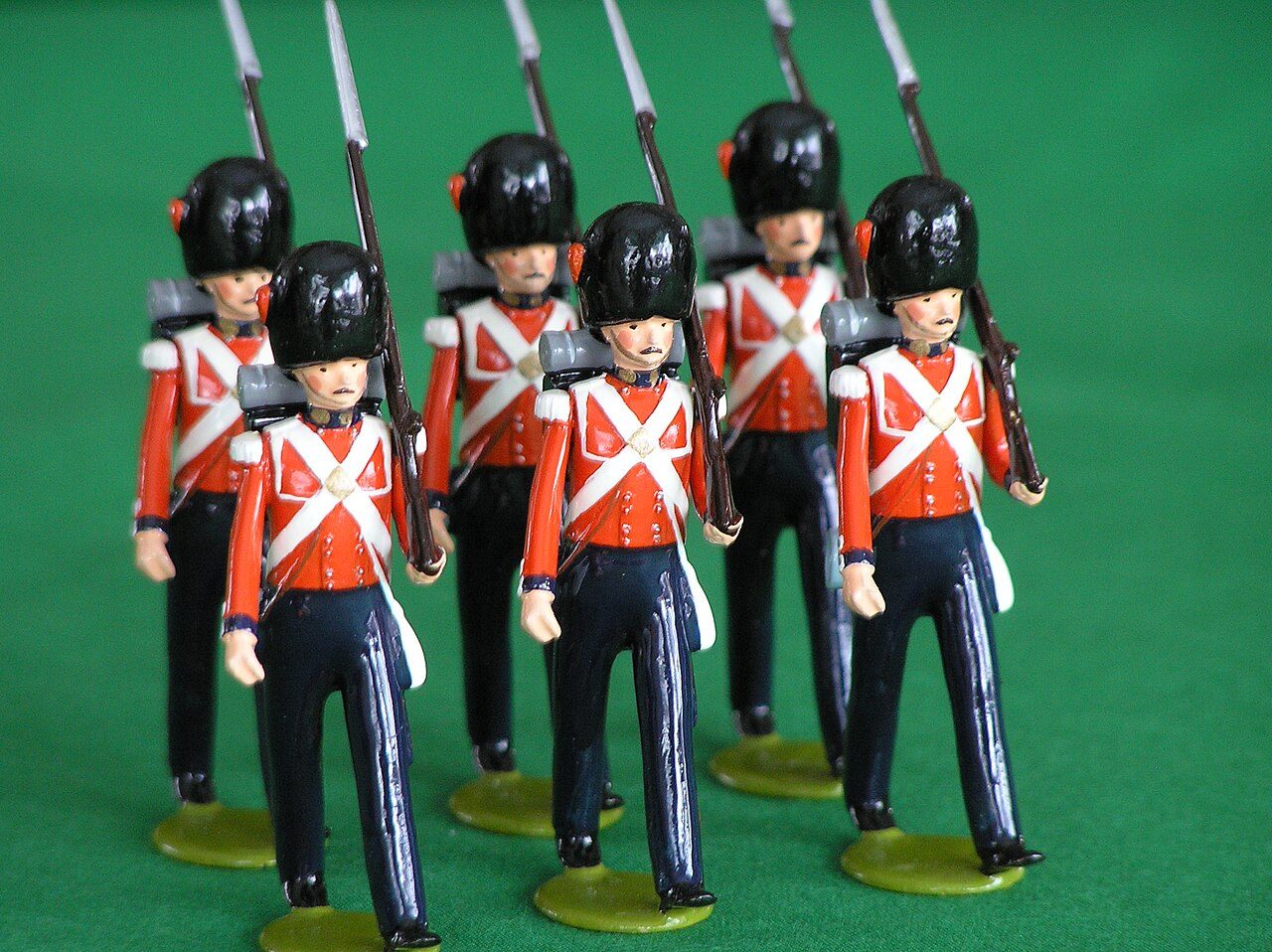
6 min read · 2 sourcesA toy soldier is a miniature figurine that represents a soldier. The term applies to depictions of uniformed military personnel from all eras, and includes knights, cowboys, American Indians, pirates, samurai, and other subjects that involve combat-related themes. Toy soldiers vary from simple playthings to highly realistic and detailed models. The latter are of more recent development and are sometimes called model figures to distinguish them from traditional toy soldiers. Larger scale toys such as dolls and action figures may come in military uniforms, but they are not generally considered toy soldiers. Toy soldiers are made from all types of material, but the most common mass-produced varieties are metal and plastic. There are many different kinds of toy soldiers, including tin soldiers or flats, hollow-cast metal figures, composition figures, and plastic army men. Metal toy soldiers were traditionally sold in sets; plastic figures were sold in toy shops individually in Britain and Europe and in large boxed sets in the U.S. Modern, collectable figures are often sold individually. 1
History
Throughout the classical period the ancient Egyptians adorned their tombs with miniature chariots, soldiers and figures produced in wood, clay or soft metal with the hope it would provide them with suitable armies in the afterlife. Miniatures of knights on horseback were later used by mediæval noblemen to aid in instruction of jousting. Tin soldiers were produced in Germany as early as the 1730s, by molding the metal between two pieces of slate. Toy soldiers became widespread during the 18th century, inspired by the military exploits of Frederick the Great. Miniature soldiers were also used in the 17th, 18th, and 19th centuries by military strategists to plan battle tactics by using the figures to show the locations of real soldiers. During the French Revolution, model soldiers made from silver produced for the training of the deposed Kings, were melted down for their precious metal to mint new coinage. In 1893, the British toy company William Britain revolutionized the production of toy soldiers by devising the method of hollow casting, making soldiers that were cheaper and lighter than their German counterparts. 1
In addition to Britains, there have been many other manufacturers of toy soldiers over the years. For example, John Hill & Company produced hollow cast lead figures in the same style and scale. Companies such as Elastolin and Lineol were well known for their composite figures made of glue and sawdust that included both military and civilian subjects. After 1950, rising production costs and the development of plastic meant that many shop keepers liked the lighter, cheaper, and far less prone to break in transit polythene figure. This led to greater demand for plastic toy soldiers. The first American plastic soldiers were made by Beton as early as 1937. 1
Collecting
There is a substantial hobby devoted to collecting both old and new toy soldiers, with an abundance of small manufacturers, dealers, and toy soldier shows. There are even specialty magazines devoted to the hobby, such as "Toy Soldier Collector", "Plastic Warrior" and "Toy Soldier and Model Figure". Collectors often specialize in a particular type of soldier or historical period, though some people enjoy collecting many different kinds of figures. The most popular historical periods for collecting are the Napoleonic Wars, Victorian era, American Civil War, World War I, and World War II. Many collectors modify and paint plastic figures, and some even cast and paint their own metal figures. Actor Douglas Fairbanks Jr had a collection of 3000 toy soldiers when he sold it in 1977. Fantasy novelist George R. R. Martin has a substantial collection of toy knights and castles. The most extensive collection of toy soldiers was probably that of Malcolm Forbes, who began collecting toy soldiers in the late 1960s and amassed a collection of over 90,000 figures by the time of his death in 1990. Anne Seddon Kinsolving Brown of Providence, Rhode Island, US, began collecting miniature toy soldiers on her honeymoon to Europe in 1930, eventually amassing a collection of over 6,000 figures; these are on display at the Anne S. K. Brown Military Collection at Brown University Library in Providence. 1
In recent years, collectors of vintage toy soldiers made of polythene PE and polypropylene PP thermoplastics as well as PC/ABS plastic blends have reported brittling and disintegration of collectible miniatures or components thereof. 1
Varieties
Different types and styles of toy soldiers have been produced over the years, depending on the cost and availability of materials, as well as manufacturing technologies. Here is a list of some of the most commonly collected varieties of toy soldiers. 1
Materials
Aluminum – Slush-cast aluminium, made chiefly in France during the early and middle 20th century. Paper – Printed on sheets of paper or cardboard, frequently mounted on blocks of wood. Plastic – Hard and soft plastic, generally painted figures. Solid – Cast in solid metal, usually lead, common in Germany during the 19th and early 20th century. Wood - From the 19th century Germany produced large amounts of wooden fortresses and toy soldiers sometimes working on a scissors mechanism. 1
Themes
Army men – Unpainted, soft plastic toy soldiers sold inexpensively in bags or with terrain pieces and vehicles in boxed playsets. Composition – Made from a mixture of sawdust and glue, manufactured mostly in Europe, Austria and Germany. Made in the US during WWII metal rationing. Connoisseur – High quality, collectible figures featuring highly detailed paint jobs. Dimestore – Hollow- or slush-cast iron, sold through five and dime stores from the 1920s to 1960 in the United States. Flat – Thin, two-dimensional tin soldiers cast in slate molds. Hollow cast – Cast in metal, usually a lead alloy, which cools and sets as it touches the mold; the excess molten metal is poured out leaving a hollow figure. 1
The text above is adapted from the Wikipedia article “Toy soldier”, available under the Creative Commons Attribution-ShareAlike 4.0 licence. 1
toy soldier is miniature figurine that represents a soldier, according to the structured record cited below. This entry was generated automatically from that record and has not yet been reviewed by a person familiar with the tradition. 2
The source record links this tradition to 6 external registers, which can be verified through the citation. 2