The tradition & historical record
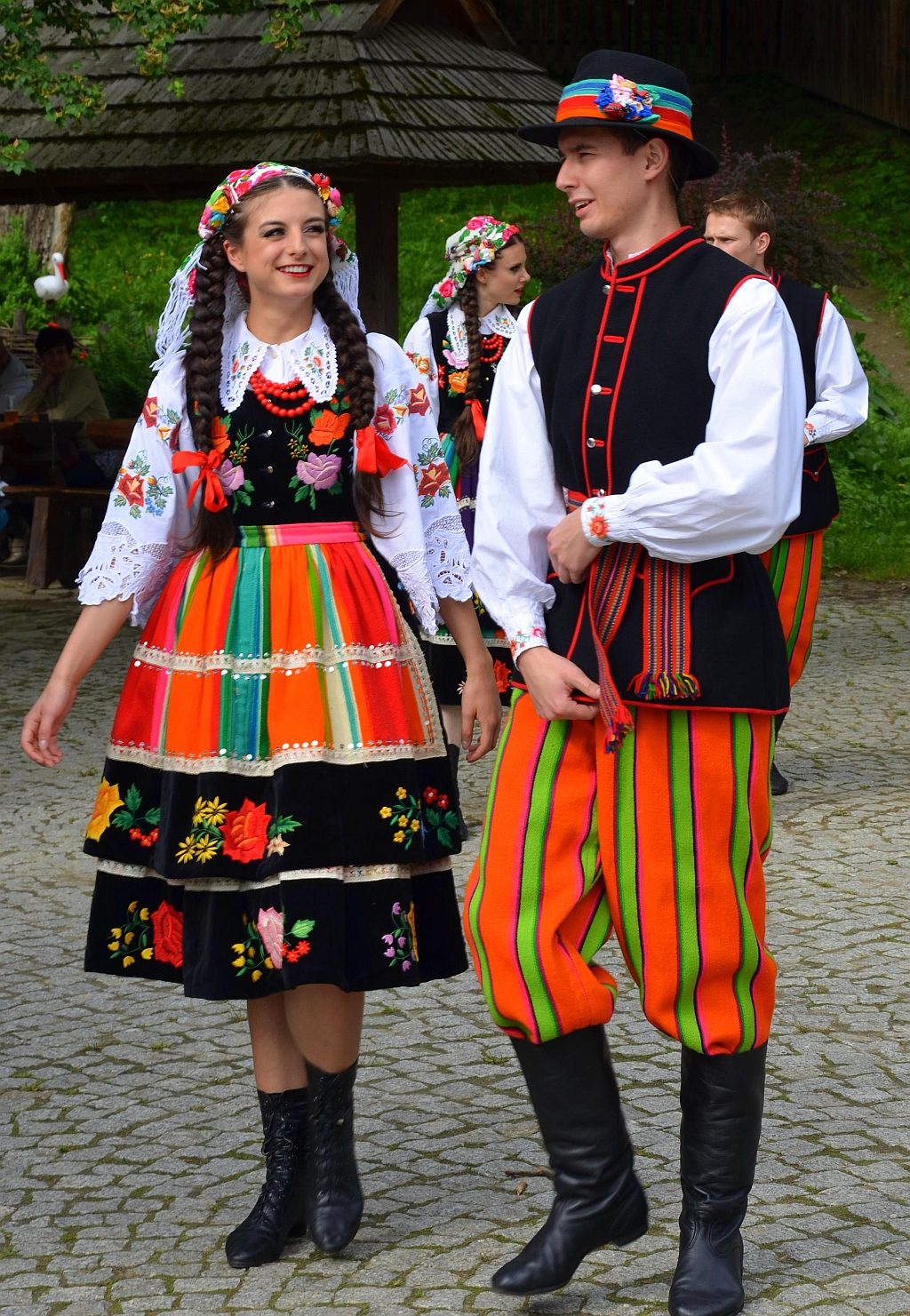
3 min read · 2 sourcesPolish traditional clothing can be divided into two categories, the peasant folk costumes (Polish: stroje ludowe) which vary by ethnographic group and the universal national costume (Polish: strój narodowy) based on the clothing of the nobility which is worn across all social classes ever since the Partitions. They are typically not worn in daily life but at folk festivals, folk weddings, religious holidays, harvest festivals and other special occasions. 1
National costume
The Polish national costume originated from the clothing of the 18th-century Polish-Lithuanian nobility, which combined Western late medieval garments, old Slavic elements, and Eastern fashions (Hungarian, Persian, Turkish, Tatar, and Cossack). At the beginning of the 18th century, Poland entered a fashion conflict known as "the War of the Kontusz and Frock," in which the Polish nobility was split between adopting Western fashion and keeping Old Polish clothing. After the partitions, this made the Old Polish costume an important symbol of Polish identity, leading to it being frequently mentioned in Polish literature and playing an important role in the Polish national epic Pan Tadeusz. By the 19th century, the Polish national costume had become widespread among all social classes and was even adopted by other ethnicities, such as Germans and Jews. This was particularly true in Galicia, where Austrian authorities did not suppress Polish identity. Wearing the national attire continued to be fashionable during the Second Polish Republic, serving as a stereotypical symbol of Polish identity in international media. Although it was later suppressed in the Polish People's Republic due to its aristocratic origins, the film adaptations of Henryk Sienkiewicz's Trilogy successfully renewed public interest in it. Other than being worn during important celebrations, it is worn when dancing the polonaise and the mazur and by bractwa kurkowe, burgher societies dedicated to the defence of their cities. 1
Folk costumes
The period of greatest development of folk costumes happened in the second half of the 19th and early 20th centuries, when the emancipation of peasants, the development of the commodity economy, and industry led to an increase in the wealth of peasants. During the interwar period, folk costumes began to be treated as ceremonial clothing, worn on special occasions, rather than as everyday wear. The appearance of the costume depended on the Polish region where it originated, the climatic conditions, the type of economy, socio-economic relations, and the history of the place where it was created. Inspiration for folk costumes often came from noble and bourgeois costumes, as well as military uniforms. European fashions of the Baroque and Renaissance periods also had an influence. The decoration of the costume depended on the wealth of the ethnographic groups and the individual owner. Some groups with more distinct like Silesians, Gorals or Kashubians may wear their folk costumes more often, meanwhile other groups which lost their sense of ethnographic distinctiveness may do so rarely. Polish folk costumes are usually associated with different ethnographic groups of the Polish nation. The division below will be based on Polish historical regions. 1
Lowland and foothill ethnographic groups
Cracovians (sometimes considered a national costume) Lachs, most notably the Sącz Lachs Lublinians Sandomierzans Pogorzans Biłgoraj-Tarnogród peasants Lasovians 1
Carpathian ethnic groups (mixed ethnogenesis with Valachs)
Gorals Lemkos (East Slavs) 1
Red Ruthenia
Resovians (peasants from around Rzeszów) Pogorzans Biłgoraj-Tarnogród peasants Costumes of Ruthenian peasants (East Slavs) 1
The text above is adapted from the Wikipedia article “Polish traditional clothing”, available under the Creative Commons Attribution-ShareAlike 4.0 licence. 1
traditional clothing of Poland is traditional clothing of Poland varies by region, according to the structured record cited below. This entry was generated automatically from that record and has not yet been reviewed by a person familiar with the tradition. 2
The source record links this tradition to 1 external register, which can be verified through the citation. 2