The tradition & historical record
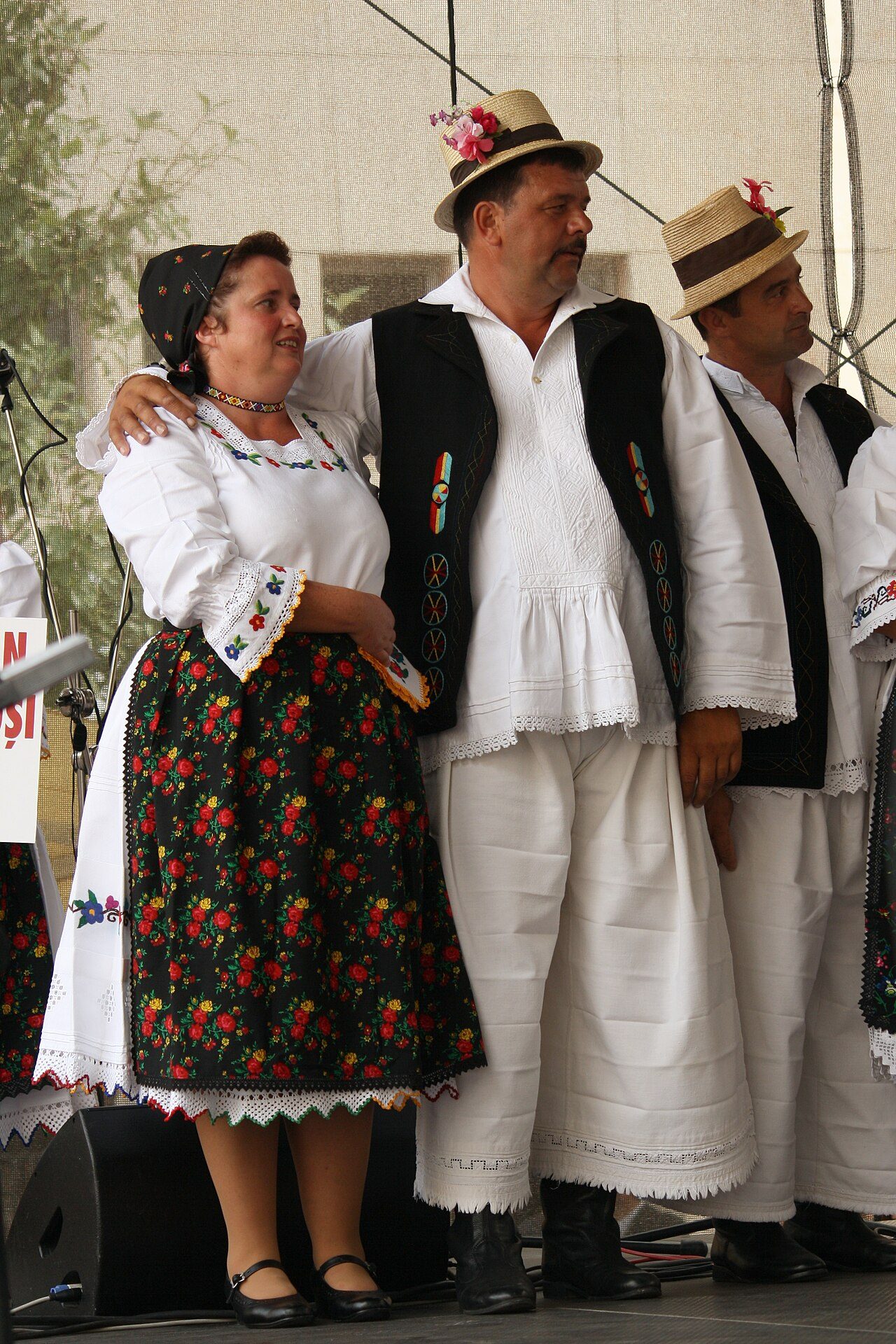
5 min read · 2 sourcesRomanian traditional clothing refers to the national costume worn by Romanians, who live primarily in Romania and Moldova, with smaller communities in Ukraine and Serbia. Today, the vast majority of Romanians wear modern-style dress on most occasions, and the garments described here largely fell out of use during the 20th century. However, they can still be seen in more remote areas, on special occasions, and at ethnographic and folk events. Each historical region has its own specific variety of costumes. 1
Ethnographic regions
Romanian traditional clothing can be classified according to seven traditional regions. These can be further subdivided by ethnographic zones, which may range between 40 and 120, depending on the criteria used. The seven main traditional regions are: 1
Transylvania or Ardeal The western plains: Lower Mureș Plain, Criș Plain (Crișul Negru, Crișul Alb, Crișul Repede), Lower Someș Plain (Oaș Country) Banat, including Timiș Meadow and Caraș-Severin Wallachia, including Western Wallachia called Oltenia and Eastern Wallachia called Muntenia The Lower Danube, including Bărăgan, Northern Dobruja and southern Moldavia Moldavia, including Bukovina, Western Moldavia, Eastern Moldavia also called Bessarabia and since 1991 Republic of Moldova including Transnistria Balkans or Romanians of the Balkan Peninsula, which can be further subdivided into four areas: The Daco-Romanians along the borders: Southern Dobruja also called Cadrilater between 1913 and 1940 (Bulgaria), the Timok Valley (northwestern Bulgaria and eastern Serbia), Vojvodina/Serbian Banat and Ukraine (especially around Chernivtsi and Odessa) Istro-Romanians in Istria, Croatia Macedo-Romanians (or Aromanians) in Albania, Bulgaria, Greece and North Macedonia Megleno-Romanians in Greece and North Macedonia 1
First mentions of Romanian clothing
The Romanian popular costume finds its roots in the part of Thracian, Dacian and Getae ancestors and resembles that of the peoples of the Balkan Peninsula, of course with differences consisting of decorative and colourful details. For example, women's portraits carved on Trajan's Column in Rome after the Dacian Wars provide information about their clothing. Dacian women wore shirts rippled at the neck. Sleeves were either long and wide or short. The dress was long to the ground, over which sometimes was attached a wide draped mantle. In the feet, they wore leather sandals in summer and fur sandals in winter. 1
Middle Ages and Byzantine influence
Portraits of the founders provide important information about the type of material of which were made the pieces of the port and about elements of tailoring, decor and chromatics. Between the eighteenth and nineteenth centuries, votive paintings on the walls of churches reserved for the country's rulers and nobility hypostasiate a wider range of donors. As a result, in the sub-Carpathian areas of Oltenia (especially in Gorj) appear portraits of free peasants, freeholders and yeomen. But representations of peasant port date from the fourteenth century. In Codex Latinus Parisinus, written during 1395–1396 by Paulus Sanctinus Ducensis, a military engineer of King Sigismund of Luxembourg, besides portraits of knights and footmen appear described ancillaries of the army: craftsmen, cartmen, and fishermen. In Chronicon Pictum Vindobonense are portrayed men in white shirts and trousers (Romanian: cioareci). Over they wore shaggy Romanian: sarici with long sleeves and left on back. They wore simple leather shoes (Romanian: opinci). In a simple comparative analysis, it can be grasped that these elements are always present in the port of remote shepherds. Diaries of foreign travellers, particularly those of Antonio Maria Del Chiaro Fiorentino (secretary of Italian language of Constantin Brâncoveanu) and officer Friedrich Schwanz von Springfels contain rich information about the garments of Romanians: ladies, patronesses and peasant women wore identically tailored shirts, distinct being only the methods used for decoration. Boyar shirts were of silk, embroidered with gold thread and decorated with pearls. The costume of Oltenia peasant women was composed of cotton shirts sewn with altițe, striped catrințe and bete. 1
The present situation
After World War I, the popular clothing generalized across traditional communities remains just in the everyday life of the older generation, becoming a ceremonial vestment. In rural penetrated some albums with "national motifs" were edited by traders of textile fibres and dyes industries. During the communist period, these mutations decreased the creative process of costumes in the households. Nowadays, the main wearers of peasant garb are the soloists of folk music, the folk dance ensembles and the actors in movies and shows. 1
Ițari
The ițari are typical for Moldovans and represent a pair of long peasant trousers that were sewn from țigaie (a special breed of sheep wool) and had a length of 2 m, but being narrow, they were crimped on the leg from ankle to the knee. They were worn during the summer and the winter. Ițarii for summer wear are made of pânză de sac (bulky cotton). 1
The text above is adapted from the Wikipedia article “Romanian traditional clothing”, available under the Creative Commons Attribution-ShareAlike 4.0 licence. 1
traditional clothing of Romania is traditional clothing of Romanians, according to the structured record cited below. This entry was generated automatically from that record and has not yet been reviewed by a person familiar with the tradition. 2
The source record links this tradition to 1 external register, which can be verified through the citation. 2