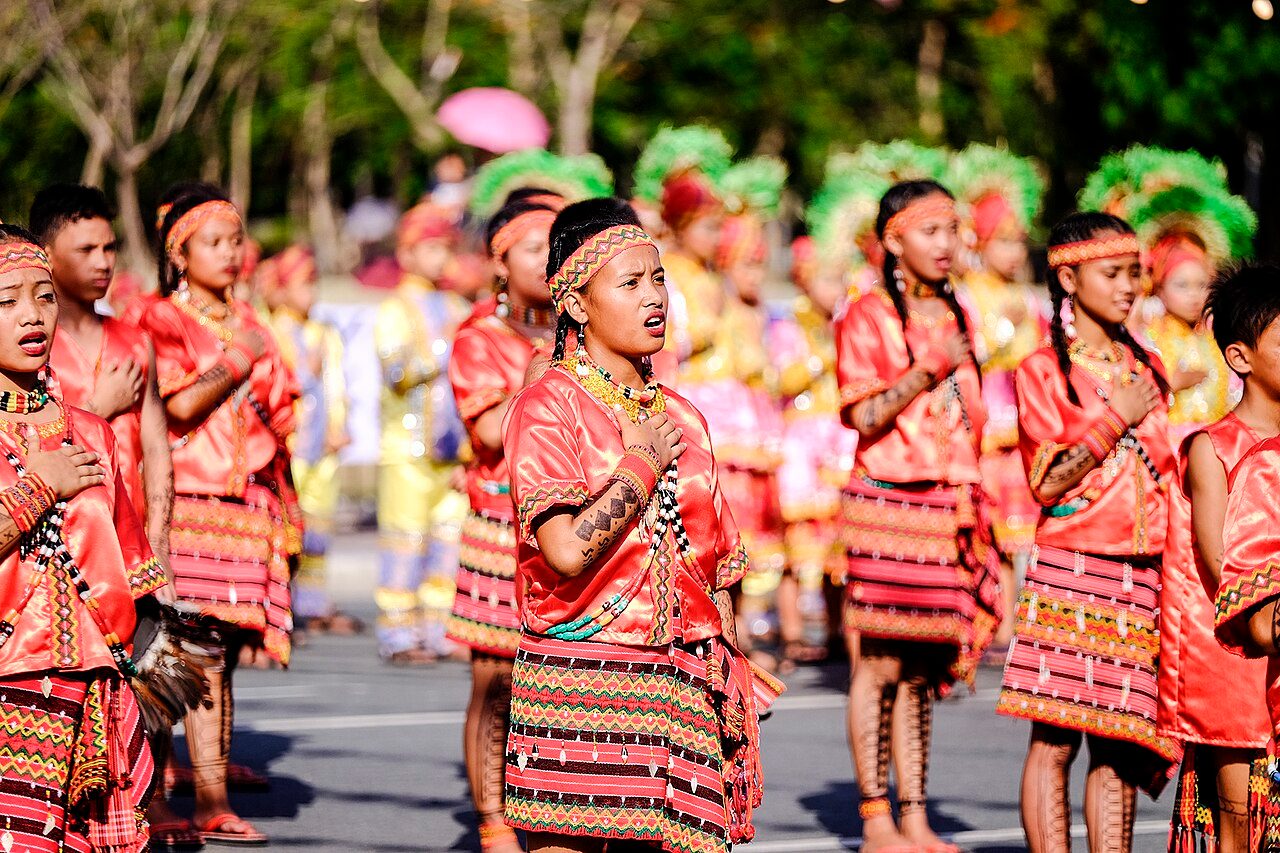
The tradition & historical record
5 min read · 2 sourcesFolk costume, also known as folk attire, traditional attire, traditional dress, or regalia is the clothing of an ethnic group, nation or region, and expresses cultural, religious or national identity. It includes both everyday and formal wear, including those which do not cater to Western dress codes. A specific ethnic group's clothing may be called ethnic clothing or ethnic dress. Those attributed to a certain place are often called national costume or regional costume; these may have official designation. 1
Overview
Following the rise of romantic nationalism in parts of Europe, pre-industrial peasantry came to serve as an ideal of authenticity. Garments evoking peasant dress were made from traditional pre-industrial textiles. In regions where Western dress codes are common, traditional garments are often worn during special events or celebrations. International events may cater to non-Western attendees with a compound dress code such as "business suit or national dress". In some contemporary societies, traditional garments are required by sumptuary laws. 1
Algeria
In Algeria, cultural dress includes the burnous, ghlila, caftan, gandoura, haik, jellaba, m'laya, and sarouel. In northern Algeria, clothing includes the karakou (in Algiers), labsa Naïlia (among Ouled Naïl), and labsa M'zabia (among Mozabite people). In northeastern Algeria, dress includes Gandoura Annabiya (in Annaba), qashabiya and melhfa chaouïa (among Chaoui people), labsa Kbaylia (among Kabyle people), and binouar Staifi (in Sétif). In northwestern Algeria, traditional dress includes the blouza in Oran and the chedda of Tlemcen. In southern Algeria, the tagelmust is traditional attire; traditional clothing of the Tuareg people includes the akhebay. In Western Algeria, Sahrawis wear the el-melhfa Sahraoui. 1
Egypt
Egypt has one of the most varied folk-costume traditions in North Africa, shaped by the country's different landscapes, communities, and cultural heritage. Rather than having a single national costume, Egyptian dress changes noticeably from the Nile Delta to Upper Egypt, Nubia, the Sinai Peninsula, the Western Desert, and the Red Sea coast. For men, the galabeya is the most recognizable traditional garment, a long and loose robe often accompanied by a shawl, vest, turban, or other head covering. In Nubia, men traditionally wear white galabeyas with shawls and turbans, while women are known for colorful dresses, embroidered garments, the gergar, and distinctive jewelry. In Upper Egypt, or the Sa'id, women's clothing is often characterized by long dark dresses enriched with embroidery, including telli work associated with Asyut. Among rural fellah communities, clothing was shaped by agricultural life and the warm climate, with loose galabeyas, trousers, dresses, veils, and practical head coverings. In the Nile Delta and along the northern coast, women's traditional dress included embroidered garments and the melaya leff, a large mantle wrapped around the body, while Alexandria developed its own coastal styles, including forms of the yashmak. Bedouin dress in the Sinai Peninsula is especially striking for its vivid embroidery, decorated belts, shawls, and elaborate face veils, some adorned with rows of silver or gold coins. In the Siwa Oasis and other Western Desert oases, traditional garments are distinguished by intricate embroidery, veils, shawls, and jewelry reflecting the local communities. Along the Red Sea, groups such as the Ababda people, Bishari people, and Rashaida maintain distinctive styles adapted to their environment and cultural traditions. 1
Sub-Saharan Africa
Transnational traditional attires in Sub-Saharan Africa include agbada and boubou, and dashiki for men, pagne/pano and kaftan for women. Xhosa people were umbhaco for both genders. For women, dress includes the faskoti, inxili (sling bag), ncebetha, iqhiya, and ibhayi. For men, it includes the ingqosha, isidanga, and unngqa. Among Zulu people, traditional clothing includes the isicholo, isidwaba, umutsha, and ibheshu. For Sotho people, traditional dress includes shweshwe, basotho blankets, and mokorotlo. Afrikaners and Rooineks may wear a slouch hat, safari shirt, veldskoen, knee-high socks, khaki Bermuda shorts or trousers. 1
Specific nations
In Botswana, traditional attire includes the ieteisi and tshega. The imvutano is traditional clothing in Burundi. In Cameroon, women also wear head tie, men also wear kwa and gandura. Dress is highly dependent on region and ethnicity. The Abacost suit is common in Zairian republics. Traditional attire of the Comoros includes lesso, shiromani, salouva, aanzu, bwibwi for women, and kofia for men. In Djibouti, traditional attire includes the macawiis and koofiyad for men, and the dirac and garbasaar for women. The Afar people have their own style of traditional clothing. Men in Eritrea wear Kidan Habesha as traditional dress. Women wear the zuria or Habesha kemis. Each ethnic group in Ethiopia has a traditional style of dress. Ethiopian traditional clothing includes the Ethiopian suit or Kidan Habesha for men, and the Habesha kemis for women. There is no official national costume of Kenya, but leso and kanga are worn throughout the country. Kikoi, similar to kanga fabric, is also widespread. All tribes have their respective traditional garments. For example, Maasai clothing includes traditional shuka and beadwork. The lamba is part of the traditional dress of Madagascar. In Mauritius and Réunion, the sega is part of traditional clothing. In Mozambique, cultural attire includes the capulana. In Namibia cultural dress includes Herero traditional clothing, like the ohorokova dress and the otjikaiva hat. The mushanana is traditional clothing in Rwanda and southwestern Uganda. Seychelles traditional dress includes the kanmtole. In Somalia, traditional dress includes the kanzu or khamiis and kitenge. For men, traditional clothing also includes the macawiis and koofiyad. 1
The text above is adapted from the Wikipedia article “Folk costume”, available under the Creative Commons Attribution-ShareAlike 4.0 licence. 1
traditional costume is expression of identity through costume, which is usually associated with a geographic area or a period of time in history, according to the structured record cited below. This entry was generated automatically from that record and has not yet been reviewed by a person familiar with the tradition. 2
The source record links this tradition to 28 external registers, which can be verified through the citation. 2