The tradition & historical record
6 min read · 2 sourcesTraditional Mexican handcrafted toys are those made by artisans rather than manufactured in factories. The history of Mexican toys extends as far back as the Mesoamerican era, but many of the toys date to the colonial period. Many of these were introduced as teaching tools by evangelists, and were associated with certain festivals and holidays. These toys vary widely, including cup and ball, lotería, dolls, miniature people, animals and objects, tops and more—made of many materials, including wood, metal, cloth, corn husks, ceramic, and glass. These toys remained popular throughout Mexico until the mid-20th century, when commercially made, mostly plastic toys became widely available. Because of the advertising commercial toys receive and because they are cheaper, most traditional toys that are sold as handcrafts, principally to tourists and collectors. 1
History
The origin of toys in what is now Mexico is not clear, but the oldest are considered the ball, dolls, and toy animals. There have been finds of what may have been toys from the Mesoamerican period, including ceramic figures of dogs and jaguars with wheels at Olmec sites, a musical instrument called a sonaja, whistles and dolls with movable arms and legs. Multiple possible ceramic toys have been found at Zapotec sites including small and medium sizes dolls and toy animals. These dolls are called Tonka or Tangu-yu in Zapotec. Some of these dolls carry a child on their shoulders or a basket with food on their heads. Animal figures include deer, monkeys, coyotes. Modified versions of these are still made today. However, since these have been found at grave sites, they may have had ritual purpose instead of recreational. According to the Codex Mendoza, Aztec games for children were geared towards incorporating them into society and many imitated adult activities. Toys included smaller versions of tools, with boys receiving weapons and agricultural implements and girls receiving those used for domestic chores. One known game from the Aztec period is cocoyocpatolli ("hole game"). A hole is created and from a certain distance, children competed tossing small stones or fruit pits into it. Another is chichinadas, from the word meaning to hit, and very similar to marbles. Mapepenas (“hand catch”) is a game, where a stone of a certain color is chosen, with more hidden on a mat. The winner is the first to get another stone of the same color. Many of Mexico's traditional toys have their origins in the colonial period, when new crafts and European style playthings were introduced by missionaries. 1
Types of toys
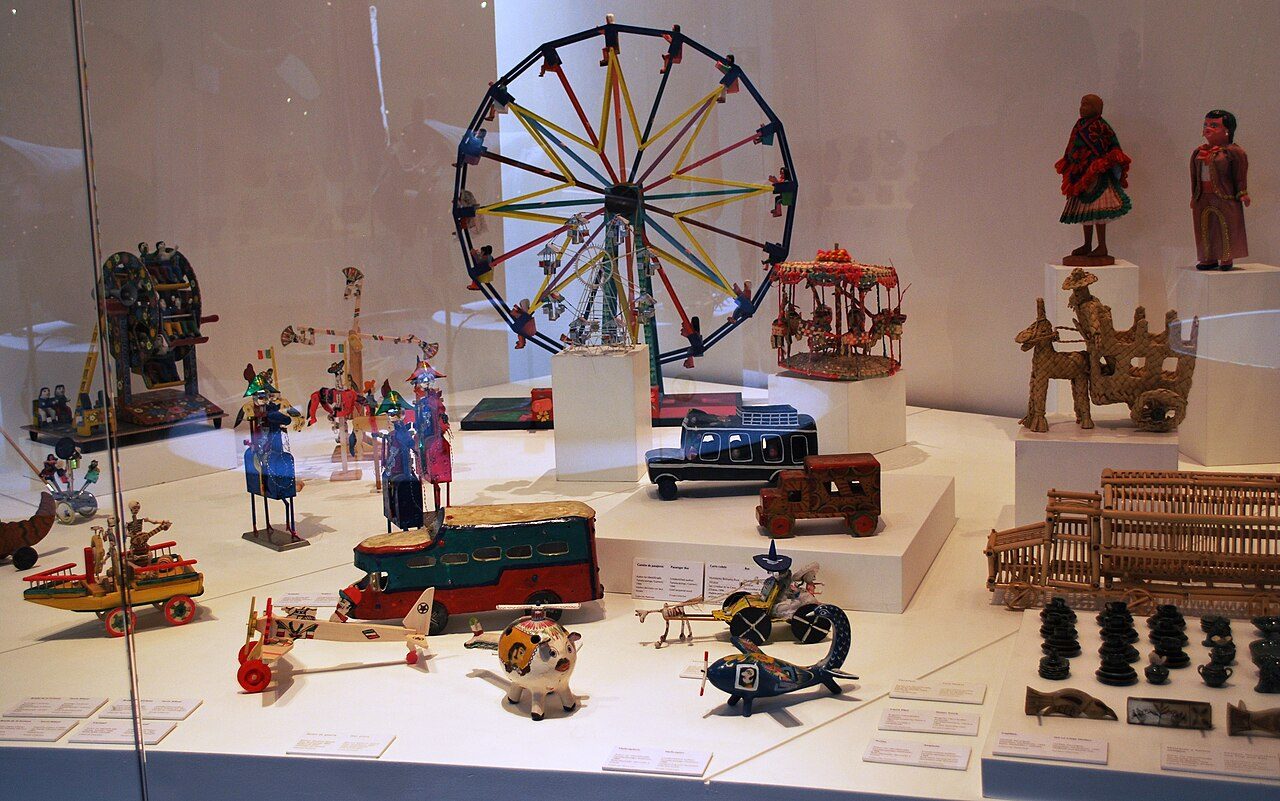
Few countries in the world have as large a selection of traditional toys. They have been made from many different types of materials including wood, cloth, tin, papier-mâché/cartonería, porcelain, clay, palm fronds, corn husks, straw, seeds, scrap metal, glass, and more. This is particularly true of miniatures. The toys tend to have simple designs in bright colors. Mexico is unusual in that it has a wide variety of toys fired from clay, especially in Oaxaca. Toys made with a very hard papier-mâché called cartonería have a long history in Mexico. These include dolls, horse figures, piñatas, swords and masks. Most are made in Silao and Celaya. In Mexico City they are also made including items such as piggy banks and bird figures. These toys are usually made by pressing the treated paper over molds. The most common toys include wooden tops, yo-yos, cup and ball, marionettes, kits, hobby horses, marbles, whistles, trains of wood and tin, jacks made of apricot pits, rag dolls, slingshots, mobiles, busses, dollhouses, doll kitchens and doll storefronts, sets of toys to imitate social scenes, and even elaborate miniatures such as carousels and ferris wheels. Traditional board games include oca and the still widely played lotería game. The latter is notable because the boards feature both innocent and evil images such as devils, drunks, scorpions, hearts and flowers. One important category of toys is that of dolls. They have been made from various materials and some have become iconic. Oaxaca is famous for rag dogs dressed in local indigenous dress. In Mexico City, dolls called “Marías” are also made from cloth and dressed to imitate indigenous women. These often carry babies and are also adorned with ribbons and fringe/lace. 1
Market
While Mexico has a robust market for toys, especially to give to children on Three King’s Day (instead of Christmas), this market does not generally include traditional handmade toys. Most toys sold and played with in Mexico today are commercially made from plastic and imported from places like China. Mexico is the third largest producer of toys in the world, after China and Spain, but most of these are commercially made as well. However, this manufacturing sector is diminishing. Of 300 toymaking companies registered in 1986, only eighty remained as of 2005. Those eighty companies only hold about forty percent of the domestic market. However about forty percent of the toys sold in Mexico are from the informal and unregulated market, including those who produce counterfeit toys. However, most of those toys come from China. There are two main reasons why traditional handmade toys have lost nearly all market share to commercial toys. First they are not promoted by large corporations through media such as television. Many Mexican children can be unfamiliar with them because of this. Another problem is that many of these toys are more expensive than mass-produced plastic ones. The market for these toys is now mostly to tourists and collectors. The toys are now generally found in markets and events, especially in outlets that sell handcrafts. Traditional toy makers have looked for new market niches, for example creating more decorative pieces for export and for holidays such as Halloween. Mexican toys, especially those made of wood, have found a market in Europe even though they are being replaced in Mexico by Chinese made ones. 1
The text above is adapted from the Wikipedia article “Traditional Mexican handcrafted toys”, available under the Creative Commons Attribution-ShareAlike 4.0 licence. 1
Traditional Mexican handcrafted toys is recorded in open cultural data. The structured record cited below does not describe the practice, and this entry has not yet been reviewed by a person familiar with the tradition. 2
The source record links this tradition to 1 external register, which can be verified through the citation. 2