The tradition & historical record
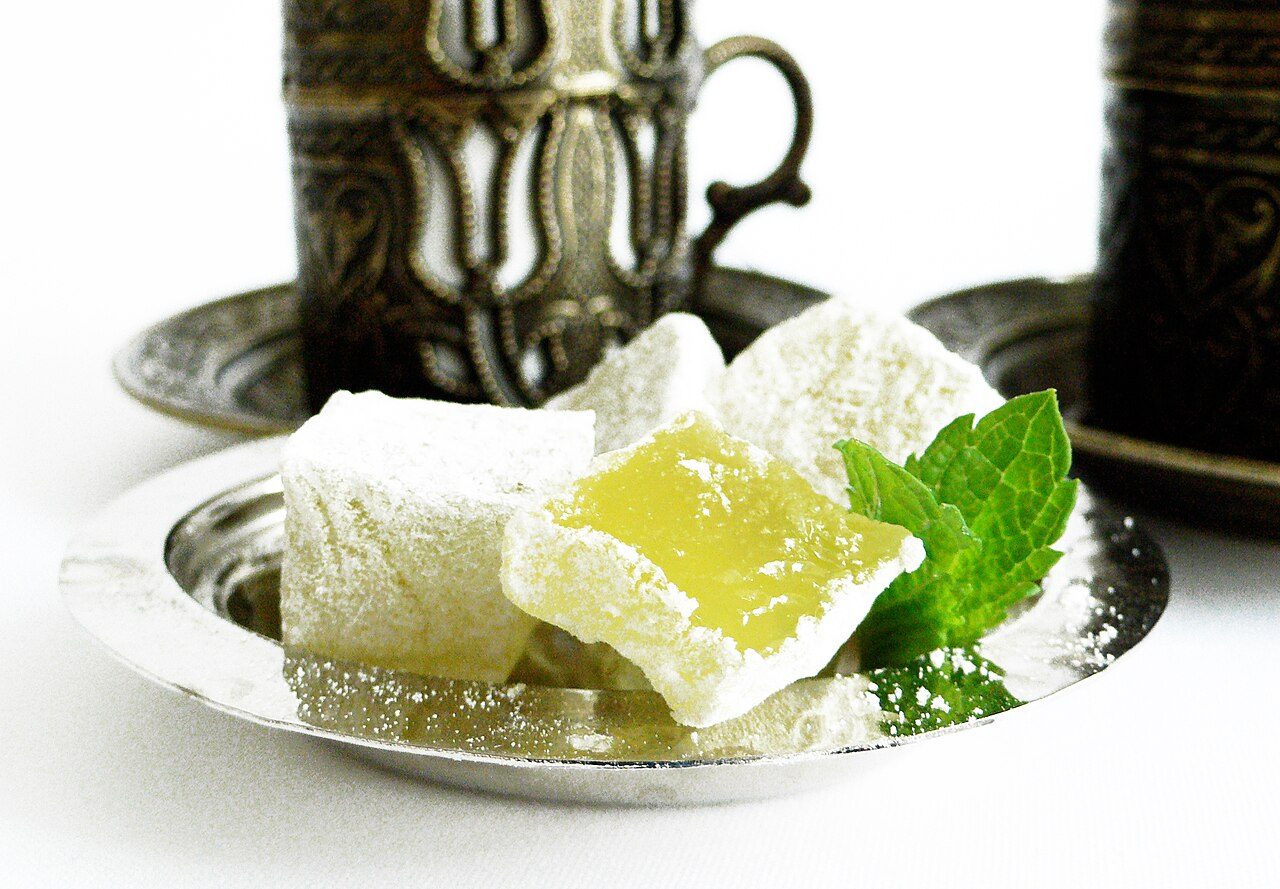
4 min read · 2 sourcesTurkish delight, lokum () or loqum () is a family of confections based on a gel of starch and sugar. Premium varieties consist largely of chopped dates, pistachios, hazelnuts or walnuts bound by the gel; traditional varieties are often flavored with rosewater, mastic gum, bergamot orange, or lemon. Other common flavors include cinnamon and mint. The confection is often packaged in small cubes dusted with icing sugar, copra, or powdered cream of tartar to prevent clinging. 1
Name
The Turkish names lokma and lokum are derived from the Arabic word luqma(t) (لُقْمَة) and its plural luqam (لُقَم), meaning 'morsel' and 'mouthful'. According to Nişanyan, the word lokma derives from the Turkish word lātiloḳum, meaning "a sweet made with starch" and this word derives from the Arabic word rāḥatu'l-ḥulḳūm راحت الحلقوم, meaning comfort of the throat. He also states that lokum is essentially the name of the fried dough dessert known today as lokma. The commercial product known as rahatül-hulkum, known from the 17th century, is understood to have been named after the sound similarity: latilokum > lokum. The form (رَاحَةُ ٱلْحُلْقُوم), meaning 'comfort of the throat', remains the name in formal Arabic. In Egyptian Arabic, Turkish delight is called malban (ملبن [ˈmælbæn]), or ʕagameyya. Although it is called "malban" in some regions, "malban" may also refer to other similar desserts, such as a type of grape fruit leather made with semolina and grape juice popular in the Levant. Its name in various languages of the Balkans comes from Ottoman Turkish lokum (لوقوم) or rahat-ul hulküm. Its name in Greek, λουκούμι (loukoumi) shares a similar etymology with the modern Turkish and it is marketed as Greek Delight. In Romania, it is called rahat. In Bulgaria, it is called lokum. In Hungary, it is called lokum or szultánkenyér (Sultan's bread). Its name in Serbia, Croatia and Bosnia and Herzegovina, is ratluk (ратлук), rahat or lokum. In Cyprus, where the dessert has protected geographical indication (PGI), it is also marketed as Cyprus Delight. In Armenian it is called lokhum (լոխում). It is läoma ܠܥܡܐ in Assyrian. 1
History
According to the Dani Valent "confectioner Hacı Bekir Effendi, who arrived in Constantinople (now Istanbul) from Anatolia in 1776, is often credited with its invention". However, historians of sweets, have questioned this popular attribution of the invention of Turkish delight to Hacı Bekir, writing that "specific names and dates are often erroneously associated with the invention of particular sweets, not least for commercial reasons". Similar Persian recipes, including the use of starch and sugar, predate Bekir by several centuries. The Oxford Companion to Food states that although Bekir is often credited with the invention, there is no real evidence for it. According to Tim Richardson, lokum was "most likely invented by Arab apothecaries some time around the ninth century, as a species of lohoch". A lokum-like dish also existed in the Byzantine Empire called paloudakin (Medieval Greek: παλουδάκιν) or apalodaton (Medieval Greek: ἀπαλοδᾶτον). It was borrowed from the Arabs. The Byzantines did not follow a specific recipe for the dish, which was instead described as "yellow by the color of honey and a starch candy of sugar dissolved with rosewater". The Byzantine paloudakin was related to the Persian pālūdah and the Arabic fālūdhaj, gelatinous starch-based sweets that have been described as the ancestors of Turkish delight. 1
The Balkans
Turkish delight was introduced to European portions of the Ottoman Empire under its rule and has remained popular. Today it is commonly consumed with coffee. Rosewater and walnut are the most common flavorings. 1
Greece and Cyprus
In Greece, Turkish delight, known as loukoumi (λουκούμι), has been popular since the 19th century or earlier, famously produced in the city of Patras (Patrina loukoumia) as well as on the island of Syros and the northern Greek cities Thessaloniki, Serres and Komotini but elsewhere as well. Loukoumi is a common traditional treat, routinely served instead of biscuits along with coffee. In addition to the common rosewater and bergamot varieties, mastic-flavored loukoumi is available and very popular. Another sweet, similar to loukoumi, that is made exclusively in the town of Serres, is akanés. Cyprus is the only country that has a protected geographical indication (PGI) for this product: Loukoumi made in Yeroskipou is called Λουκούμι Γεροσκήπου (loukoumi geroskipou). 1
Romania
In Romania, Turkish delight is called rahat and it is eaten as is or is added in many Romanian cakes called cornulețe, cozonac or salam de biscuiţi. 1
The text above is adapted from the Wikipedia article “Turkish delight”, available under the Creative Commons Attribution-ShareAlike 4.0 licence. 1
Turkish delight is Turkish gelatinous candy, according to the structured record cited below. This entry was generated automatically from that record and has not yet been reviewed by a person familiar with the tradition. 2
The source record links this tradition to 9 external registers, which can be verified through the citation. 2