The tradition & historical record
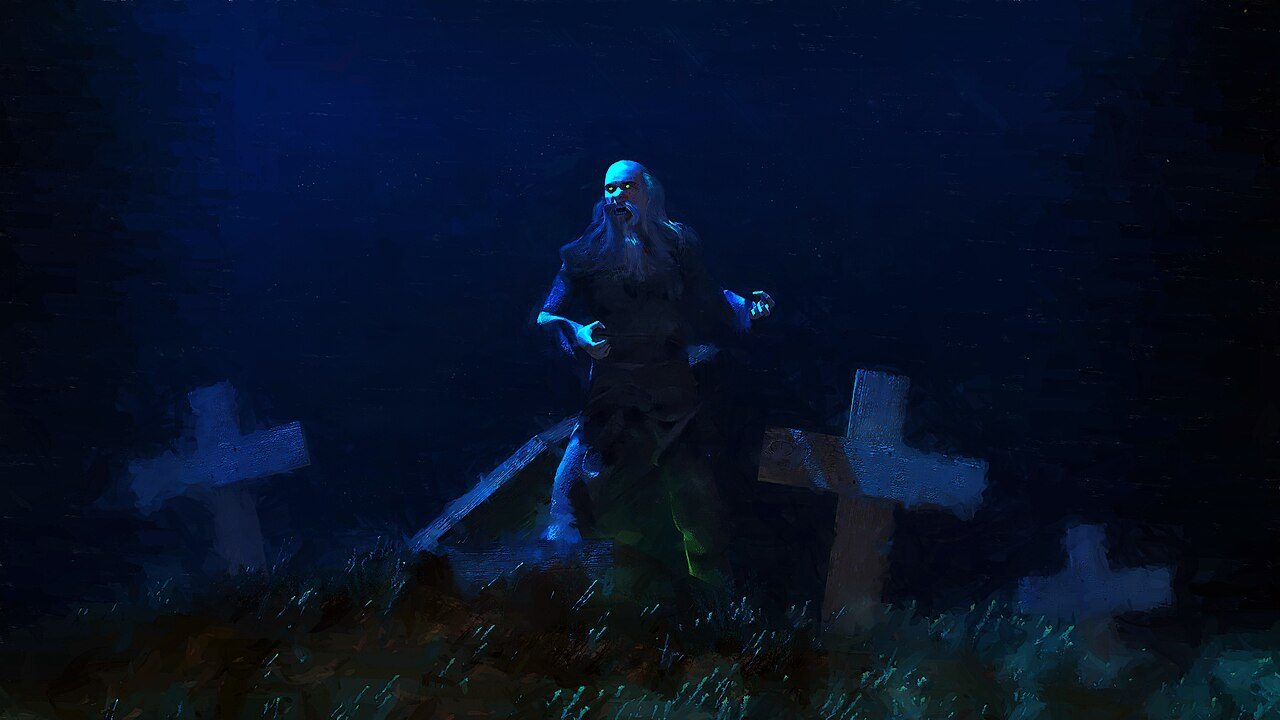
6 min read · 2 sourcesUpiór is a demonic being from Slavic and Turkic folklore, a prototype of the vampire. It is suggested that the ubır (upiór) belief spread across the Eurasian steppes through the migrations of the Kipchak-Cuman people, after having its origins in the regions surrounding the Volga (İtil) River and the Pontic steppes. The modern word "vampire" derives from the Old Slavic and Turkic form "онпыр" (onpyr), with the addition of the sound "v-" before a large nasal vowel (on), characteristic of Old Bulgarian, as evidenced by the traditional Bulgarian form "впир" (vpir). Other names include onpyr, vopir, vpir, upir, and upierz. 1
Etymology
The exact etymology is unclear. Among the proposed Proto-Slavic forms are *ǫpyrь and *ǫpirь. Another theory is that the Slavic languages have borrowed the word from a Turkic term for ubır or ubar 'witch, vampire, hortdan'. Czech linguist Václav Machek proposes the Slovak verb vrepiť sa ('stick to, thrust into'), or its hypothetical anagram vperiť sa (in Czech, the archaic verb vpeřit means 'to thrust violently') as an etymological background, and thus translates upír as 'someone who thrusts, bites'. An early use of the Old Russian or Old East Slavic word is in the anti-pagan treatise "Word of Saint Grigoriy" (Russian: Слово святого Григория), dated variously to the 11th–13th centuries, where pagan worship of upyri is reported. The term upiór (*upir – Proto-Slavic: *ǫpirь; Old Church Slavonic: ǫpyrь/ѫпырь) was introduced to the English-language culture as a "vampyre", mentioned by Lord Byron in The Giaour in 1813, described by John William Polidori in "The Vampyre" in 1819, and popularised by Bram Stoker's Dracula. With the development of mass culture, he returned as a "vampire" recognizable in literature and film. In Slavic folk culture, the upiór has features that are strongly present in strzyga, and so Adam Mickiewicz has theorized upiór developed from an ancient Roman and Greek strix. In Ukraine (e.g. in the Chigirinsky Uyezd), the term martvyets was used to describe the upiór. 1
In Slavic culture
Common Slavic belief indicates a stark distinction between soul and body. The soul is not considered to be perishable. The Slavs believed that upon death the soul would go out of the body and wander about its neighbourhood and workplace for 40 days before moving on to an eternal afterlife. Thus pagan Slavs considered it necessary to leave a window or door open in the house for the soul to pass through at its leisure. During this time the soul was believed to have the capability of re-entering the corpse of the deceased. Much like the spirits mentioned earlier, the passing soul could either bless or wreak havoc on its family and neighbours during its 40 days of passing. Upon an individual's death, much stress was placed on proper burial rites to ensure the soul's purity and peace as it separated from the body. The death of an unbaptized child, a violent or an untimely death, or the death of a grievous sinner (such as a sorcerer or murderer) were all grounds for a soul to become unclean after death. A soul could also be made unclean if its body were not given a proper burial. Alternatively, a body not given a proper burial could be susceptible to possession by other unclean souls and spirits. Slavs feared unclean souls because of their potential for taking vengeance. From these deep beliefs pertaining to death and the soul derives the invention of the Slavic concept of Ubır. A vampire is the manifestation of an unclean spirit possessing a decomposing body. This undead creature needs the blood of the living to sustain its body's existence and is considered to be vengeful and envious towards the living. 1
Origin, appearance, and activity of the upiór
An upiór was a person cursed before death, a person who died suddenly, or someone whose corpse was desecrated. Other origins included a dead person over whom an animal jumped, suicide victims, witches, unchristened children, and, less often, those who were killed by another upiór. Opposite to most vampire-related beliefs, Upiórs were commonly thought to roam in bright daylight, although they preferred to attack by night. It was believed that those who were physically different in a community were potential upiór candidates: redheads, the left-handed, those with a limp, unibrow, a double set of teeth or with a gray mark on their back and religiously "other" (e.g. Lutherans in Catholic communities). Suspicious traits among the living also included walking by moonlight, having a big head, or no armpit or pubic hair. Many of these ideas are reproduced in the legends and ethnographic records of strzygas, and upiórs are often described as having two hearts and two souls, just like strzygas. Women who died during or after childbirth were particularly vulnerable to the transformation. It was feared that they would return to the orphaned child as upiórs to feed it at night. That is why in Silesia, for example, those who died in childbirth were buried by the edge of the cemetery, near the wall. Lack of rigor mortis, a flushed face or blood beneath the nails were signs that a deceased person could become an upiór/wąpierz. The signs of its misdeeds among family or neighbours could be fatigue, pallor, sweating, or recurring nightmares. A upiór could haunt its family if the family burned the photograph or portrait of the deceased. 1
Remedies against upiórs
It was said that the dead should be taken out of the house through a special exit or hole, because if they were taken out via the main door they could become upiórs. Dead people thought to be upiórs had garlic heads, bricks, or iron chunks placed in their mouths before burial. Branches of wild rose, hawthorn, or blackthorn were put into their coffins. The coffins were sprinkled with poppy-seed, so the upiórs would have a chore (picking all the seeds up) to occupy them. Another method of keeping the upiórs busy was to give them little knots or nets or other small things to untangle in the grave (Pomerania). 1
If a person thought to be an upiór died, or if someone's grave was believed to be an upiór's grave, a vampire burial was performed. The head could be cut off and put between the legs of the corpse, the corpse could be burned, nailed to the coffin, or repositioned to lie face-down. If an upiór harassed a human at night, the remedy was to stop the upiór returning to its grave - at dawn it would disappear or change into black tar. Another protective measure was to drink the upiór's blood or eat soil off its grave. 1
Local variations
Near Słupia, a young man who committed suicide due to unrequited love was thought to be an upiór. After burying him in a secluded hole, the upiór supposedly appeared and attacked people and cattle. It disappeared when the rooster called at dawn. Near Warsaw, a body found on the road was treated as a potential upiór, and branches were thrown over it. 1
The text above is adapted from the Wikipedia article “Upiór”, available under the Creative Commons Attribution-ShareAlike 4.0 licence. 1
upiór is Figure of Slavic mythology, according to the structured record cited below. This entry was generated automatically from that record and has not yet been reviewed by a person familiar with the tradition. 2
The source record links this tradition to 2 external registers, which can be verified through the citation. 2