The tradition & historical record
6 min read · 2 sourcesVictorian majolica properly refers to two types of majolica made in the second half of the 19th century in Europe and America. Firstly, and best known, there is the mass-produced majolica decorated with coloured lead glazes, made in Britain, Europe and the US; typically hard-wearing, surfaces moulded in relief, vibrant translucent glazes, in occasionally classical but mostly naturalistic styles, often with an element of High Victorian whimsy. Secondly, there is the much less common tin-glazed majolica made primarily by Mintons from 1848 to circa 1880, typically with flat surfaces, opaque white glaze with fine brush painted decoration in imitation of the Italian Renaissance maiolica process and styles. 1
Glazes
Glaze is a vitreous coating on a ceramic. Types of glazing include feldspathic or alkali-glazed, salt-glazed, lead-glazed, and tin-glazed. Lead oxide is a key ingredient of both lead and tin glazes. Lead oxide is a flux that causes lead and tin glazes to fuse to the earthenware biscuit body at a low oven temperature, about 800 °C. The other ingredients in lead and tin glazes are typically an equally large quantity of silicates, and a small proportion of alkali (feldspar or similar) ground up with a little water and the large proportion of lead oxide to form a paste. A coloured glaze results from adding a small amount of particular metal oxides to plain lead glaze, different metal oxides producing different colours. Since mid-19th century coloured glazes earthenware has been known as majolica. An opaque white tin-glaze results from adding a small amount of tin oxide to plain lead glaze. Decorated with brush-painted enamels, tin-glazed earthenware from mid-15th century onwards has been known as maiolica, also later as faience, delftware, talavera, or rarely majolica, though commonly majolica in the US. 1
Coloured glazes
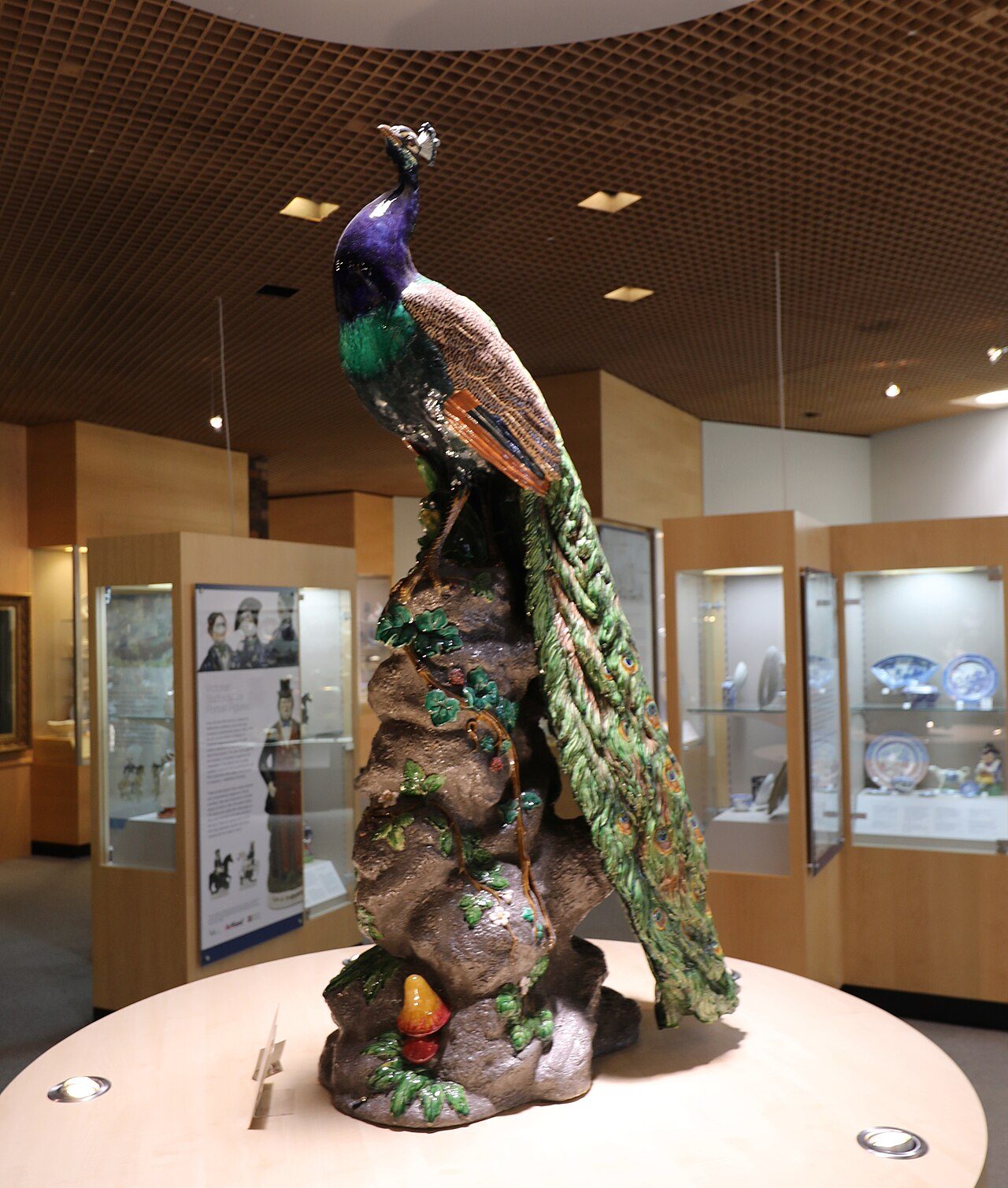
majolica n. 1. is earthenware decorated with coloured lead glazes applied directly to an unglazed body. Victorian majolica is the familiar mass-produced earthenware decorated with coloured lead glazes made during the Victorian era (1837–1900) in Britain, Europe and the US, typically hard-wearing, surfaces frequently moulded in relief, vibrant translucent glazes, in a variety of styles and forms (some examples below). Shown in Britain at the Exhibitions of 1851 and 1862, it became fashionable, widely copied and mass-produced worldwide. Also known as: maiolica, Palissy ware, coloured glazes majolica, coloured-glazed majolica, lead-glazed majolica, and misleadingly 'lead or tin glazed' majolica. Some coloured glazes majolica was produced in traditional Classical or Revivalist styles, but Darwinism, natural history, their English country gardens, expeditions abroad, and trade in oriental products generated more exciting styles appealing to the upcoming merchant classes. There was a boom in naturalistic pottery, often with an element of whimsy, to which Minton's inexpensive, durable, multi-purpose product was well suited. A strong interest in the world at large generated passing fashions for Egyptian forms, Japanese styles, Chinoiserie and High Victorian style. Conservatories became a fashion statement. Adorning them were spectacular majolica garden seats, flower pots, jardinières, stands, large birds and animals. The irrepressible urge to impress guests with rare food led to the growing of pineapples and egg-plants (aubergines) formerly only available overseas. These too appeared as decorative objects for admiration around the home. Minton's Palissy ware boomed. 1
Tin-glaze
majolica n. 2. is earthenware, coated with opaque white tin-glaze and ornamented with metallic oxide colours. Tin-glazed Victorian majolica is the rare tin-glazed earthenware made primarily by Mintons from 1848 to circa 1880, typically with flat surfaces, and opaque whitish glaze with brush painted decoration in the style(s) of Italian Renaissance maiolica tin-glazed pottery. Also known as: maiolica; and 'lead or tin' glazed majolica. Minton's tin-glazed majolica in imitation of Italian maiolica, praised at Exhibitions and purchased by Royalty and museums, made little commercial impact. Other pottery makers shunned the process. Interest in Renaissance styles was waning, fashion moving on with the usual protestations from older generations: "...the current of fashion, however contrary to right, wisdom, and good taste..." Cost of production was high. Compared to the lead-glaze process whereby thick, temperature-compatible coloured lead glazes were applied direct to the biscuit, simultaneously, then fired, (paint, fire), the tin-glaze process required extra stages for dipping/coating and drying the tin-glaze before decoration could even begin, (dip, dry, paint, fire). Added to this, the expense of brushwork decoration, especially the fine painting of pictures and designs, was very time-consuming, requiring highly skilled, higher paid artists. 1
Meanings of majolica
The term majolica has been dogged by confusion starting with the English anglicisation of the word maiolica into majolica following the appearance of the letter j in the English alphabet mid-17th century. Leon Arnoux, the artistic and technical director of Mintons, wrote in 1852 "We understand by majolica a pottery formed of a calcareous clay gently fired, and covered with an opaque enamel composed of sand, lead, and tin..." He was describing the Minton & Co. tin-glazed product made in imitation of Italian maiolica both in process and in styles. Remember, tin-glaze is simply plain lead glaze with a little tin oxide added. His description is often referenced, in error, as a definition of Minton's other new product, the much copied and later mass-produced ceramic sensation of the Victorian era, Minton's coloured lead glazes 'Palissy ware'. The 16th-century French pottery of Bernard Palissy was well known and much admired. Mintons adopted the name 'Palissy ware' for their new coloured glazes product, but this soon became known also as majolica. Minton & Co. appear to have done little to promote the clear distinction between their tin-glazed and coloured glazes products. 1
Minton archive first design for majolica
Thomas Kirkby's design G144 in the Minton Archive is inscribed "This is the First Design for Majolica ...". The design is Italian Renaissance in style. Close-up images illustrate a design suited for fine brushwork on flat surfaces. The design is for Minton's rare tin-glaze Majolica imitation of Italian tin-glaze maiolica. Minton's designs for Palissy ware, also known as majolica, were suited for 'thick' painting of coloured lead glazes onto surfaces moulded in relief to make best use of the intaglio effect. 1
The text above is adapted from the Wikipedia article “Victorian majolica”, available under the Creative Commons Attribution-ShareAlike 4.0 licence. 1
Victorian majolica is 19th C pottery, according to the structured record cited below. This entry was generated automatically from that record and has not yet been reviewed by a person familiar with the tradition. 2
The source record links this tradition to 2 external registers, which can be verified through the citation. 2