The tradition & historical record
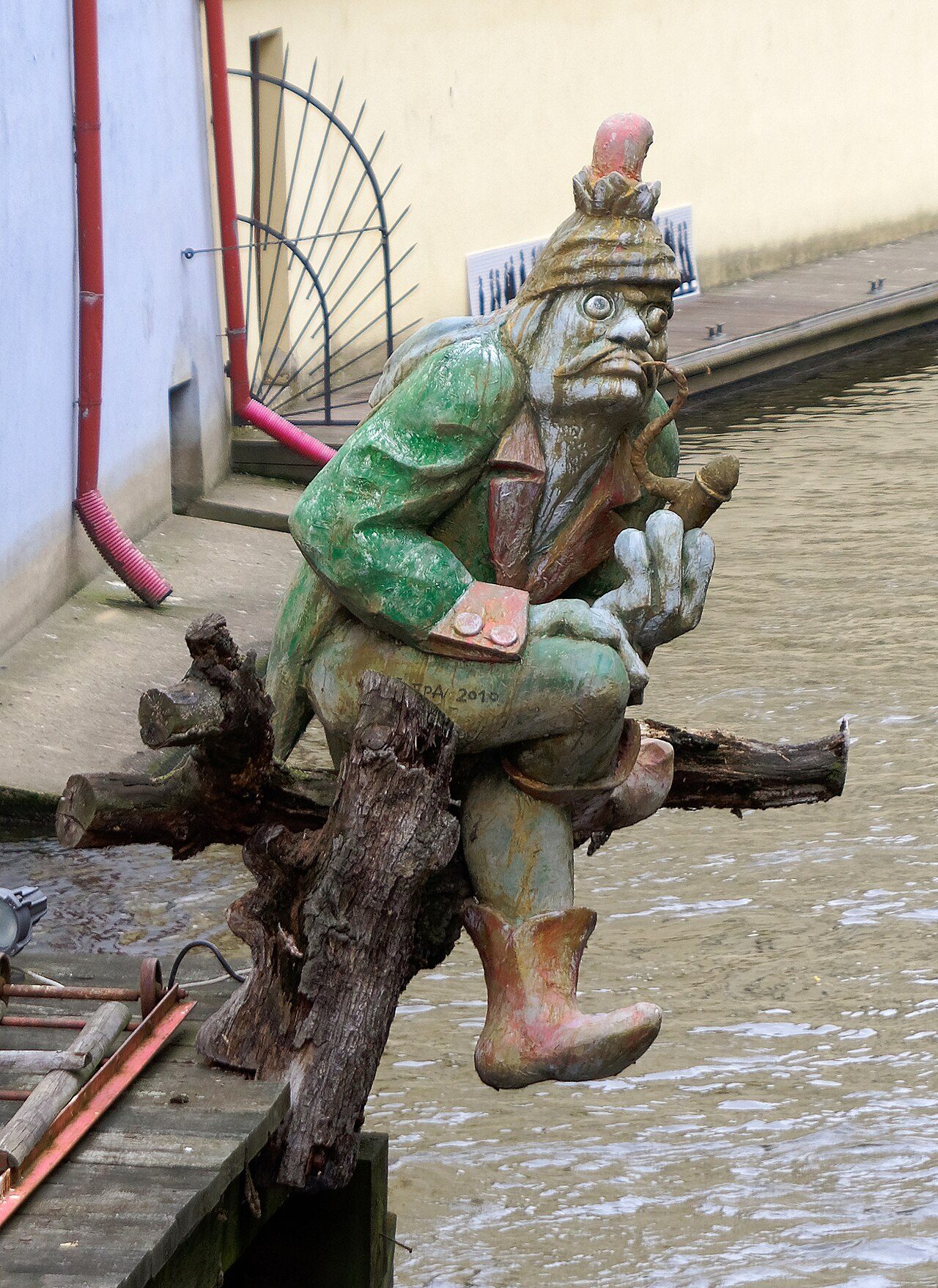
5 min read · 2 sourcesIn Slavic mythology, vodyanoy (Russian: водяной, IPA: [vədʲɪˈnoj]; lit. '[he] from the water' or 'watery') is a water spirit. In Czech and Slovak fairy tales, he is called vodník (or in Germanized form: Hastrman), and often referred to as Wassermann in German sources. In Ukrainian fairy tales, he is called “водяник“ (vodyanyk). He may appear to be a naked man with a pot belly (and bald-headed) wearing a hat and belt of reeds and rushes, conflicting with other accounts ascribing him green hair and a long green beard, while many depictions restore him as an anthropormophic frog. The varying look has been attributed in commentary to his shape-shifting ability. When angered, the vodyanoy breaks dams, washes down water mills, and drowns people and animals. Consequently, fishermen, millers, and also bee-keepers make sacrifices to appease him. The vodyanoy would sometimes drag people down to his underwater dwelling to serve him as slaves. The vodník in Czechia or Slovakia were said to use colored ribbons (sometimes impersonating peddlers, but also tying them to grass, etc., as lures in the landscape) to attract humans near water in order to snatch them. 1
Russia
In Russia, the vodyanoy is sometimes called the dedushka vodyanoy (Дѣдушка-водяной, "Water-Grandfather") or vodyanik (водяник). 1
Habitat
He is said to dwell in a slough (омут), kettle hole (Котловина), or a whirlpool of a river, pond or lake, and liked especially to live near a watermill. One that dwells in marshlands may be called a bolotnyanik (Болотняник). 1
Appearance
His usual appearance is that of a naked old man with a fat paunch of a belly and swollen face according to the Russian folklore collector, but a later English commentary using similar phraseology insisted the creature was not nude but bald, and concatenates additional commentary from the Russian source which says he is seen naked but covered in slime (тина), wearing a high boyar hat) made of green "club-rush" (or other sedges) and a green belt of that same "grass". He is also described as an old man with green hair and (long) green beard The green beard turns white with when the moon wanes, as the immortal Vodyanoy ages or rejuvenates with the phases of the moon. Or, rather than wearing plant-based clothing, a different source states he is covered in weeds and slime, and is scaly-skinned in his true form. Or rather a figure of giant stature covered in grass and moss. Or be "quite black with enormous red eyes and a nose as long as a fisherman's boot". Or that he is human-faced, but has huge toes, paws instead of hands, long horns, a tail, and eyes that burn like red-hot coals. He has the capability of shape-shifting, which has been suggested as an explanation of its varied descriptions. He may crawl out of water in the dark of the night and comb his (green) hair on shore, but he can also appear in the form of a naked woman combing her hair. He may be heard all along the shore while he is slapping the water with his palm (ладонь, or paw) on moonlit nights. He can appear as a giant moss-covered fish, a log or even a flying tree-trunk with small-wings, skimming over the water's surface. 1
Offering and boon
Since he tampers with the waterwheel, the dikes, or control of water if he is not pleased, an operator of a mill must know how to have a good relationship with him. When a watermill is built, a sacrifice of pig, cattle, sheep, or even human (or a chicken) must be made to appease the vodyanik. There are reported cases of watermills destroyed by him (at Lake Ilmen for instance), and may drown a person as forewarned. The fisherman can also benefit from the boon of the vodyanoy, receiving a bountiful harvest in their fishing nets. He may receive this reward after returning a child which was accidentally netted. The fishermen offer sacred libation, especially melted butter or oil (масло) into the river. There seems to have been a cult recognizing vodyanoy as a patron saint of bee-keeping, as evidenced by the old custom of bagging the first swarm of bees and sacrificing it in water. And the bee-keeper wishing for a bounty of honey would choose the midnight hour of the feast days of Saints Zosimus and Sabbatius and dip a honeycomb into the water by the mill, while pronouncing an incantation. He will also foretell the coming harvest. He comes into the village disguised as human, but the edge of his coat (балахон) will be visibly wet, and gives himself away. If he buys corn (grain) at a high price it forewarns spike in market price, i.e., crop failure. But if he buys at low price, the bread will remain cheap. 1
Mount
The vodyanik "owns" all the fish and aquatic creatures, and his control over them explains his ability to deliver fish. The vodyanik selects in particular the sheatfish (сом; Silurus glanis, aka "wels catfish") as his mount to ride on. But he will catch the farmers' cattle or horses (in water) and ride them till they drop dead in the wetlands. The farmer fording his livestock will make a sign of cross (emblem of Perun's weapon) over the river as protection from this happening. 1
The text above is adapted from the Wikipedia article “Vodyanoy”, available under the Creative Commons Attribution-ShareAlike 4.0 licence. 1
vodyanoy is male water spirit or fairy-tale character from Slavic mythology, tutelary deity, according to the structured record cited below. This entry was generated automatically from that record and has not yet been reviewed by a person familiar with the tradition. 2
The source record links this tradition to 9 external registers, which can be verified through the citation. 2