The tradition & historical record
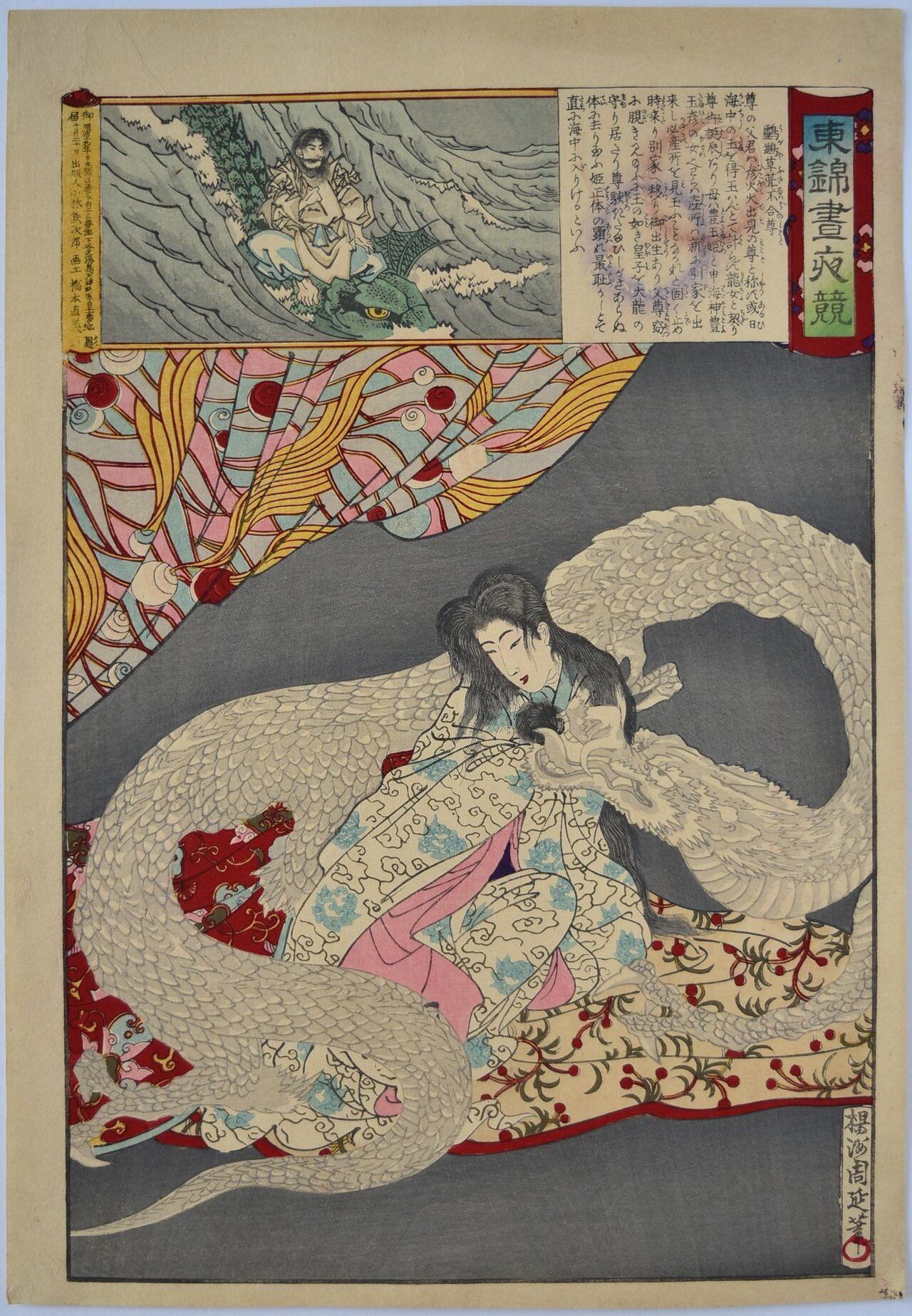
2 min read · 2 sourcesWani (鰐) was a dragon or sea monster in Japanese mythology. Since it is written using the kanji 鰐 (from Chinese e 鰐 or 鱷 "crocodile; alligator") wani is translated as "crocodile", or sometimes "shark" (from wanizame 鰐鮫 "shark"). 1
Description
Wani first occurs in two ancient Japanese "mytho-histories", the ca. 680 CE Kojiki and ca. 720 CE Nihongi. They write wani with the Man'yōgana phonetic transcription 和邇 and the kanji 鰐. The Kojiki uses wani 和邇 several times as a proper name (e.g., the Confucianist scholar Wani) and as a sea-monster in two contexts. First, in the "White Hare of Inaba" fable, the gods try and fail to help a shiro 白 (lit. "white") "naked; hairless" hare that they found crying on a beach. 1
But the Deity Great-Name-Possessor, who came last of all, saw the hare, and said: "Why liest thou weeping?" The hare replied, saying: "I was in the Island of Oki, and wished to cross over to this land, but had no means of crossing over. For this reason I deceived the crocodiles of the sea, saying: 'Let you and me compete, and compute the numbers of our [respective] tribes. So do you go and fetch every member of your tribe, and make them all lie in a row across from this island to Cape Keta. Then I will tread on them, and count them as I run across. Hereby shall we know whether it or my tribe is the larger.' Upon my speaking thus, they were deceived and lay down in a row, and I trod on them and counted them as I came across, and was just about to get on land, when I said: 'You have been deceived by me.' As soon as I had finished speaking, the crocodile who lay the last of all seized me and stripped off all my clothing. 1
The text above is adapted from the Wikipedia article “Wani (dragon)”, available under the Creative Commons Attribution-ShareAlike 4.0 licence. 1
wani is dragon, according to the structured record cited below. This entry was generated automatically from that record and has not yet been reviewed by a person familiar with the tradition. 2
The source record links this tradition to 1 external register, which can be verified through the citation. 2