The tradition & historical record
3 min read · 2 sourcesWaraji (草鞋) (Japanese pronunciation: [w̜aɺadʑi]) are light tie-on sandals, made from ropemaking fibers (usually straw), that were the standard footwear of the common people in Japan. 1
Use
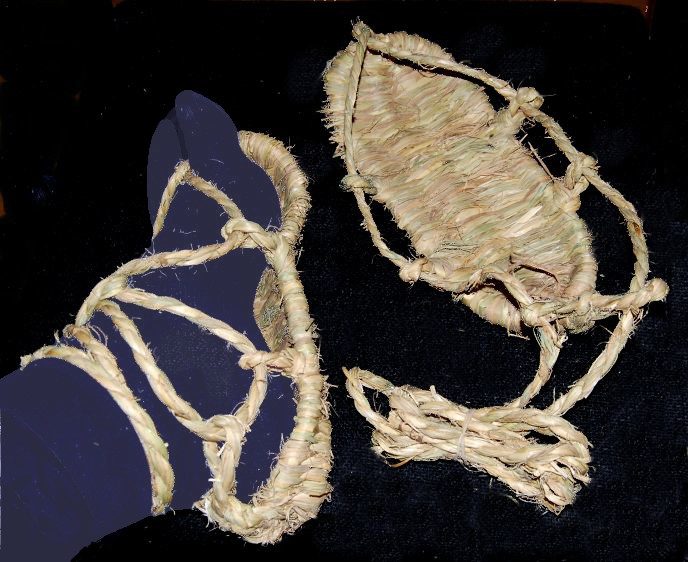
Waraji resemble other forms of traditional Japanese footwear, such as zori and geta, with a few key differences. They were historically the simplest form of outdoor footwear (sandals of any type were not worn indoors). Waraji, due to their cheap and rustic nature, are considered to be a very informal type of footwear, and are not worn with formal kimono. They are typically worn with tabi socks, and are woven so that the wearer's toes generally protrude slightly over the edge of the shoe. Waraji were once common footwear in Japan. There are records of waraji in the Heian period (794–1185 CE), with the possibility of waraji having existed before this time. In the Edo period (1603–1867 CE), geta were worn in cities, but anyone making a long journey wore waraji. They were also worn for energetic or prolonged labour. Their light weight and grip were valued. In modern-day Japan, waraji are worn by Buddhist monks, and by some fishers of mountain streams. Zori and geta are worn far more commonly by the general population. 1
Construction
In constant use, rice-straw waraji only last three or four days, or roughly 24 hours of active use and so people would have to make about a hundred pairs a year, on average, if they wore them constantly. As waraji could be homemade from cheap materials, and many people learned how to make them in childhood, that was not a problem. Waraji could also be cheaply bought. Travellers carried a supply and discarded them when they were worn out. 1
Materials
Rice straw is the common and traditional material for weaving waraji. Long straw (not broken by the processing methods) must be beaten to soften the fibers before use. Most other ropemaking fibers can also be used, such as cotton, hemp, palm fibers, or even strips of rag. The straps of the waraji might be covered, often with paper. Cardboard soles are used on some modern commercial designs. 1
Tying
There are a number of different ways of tying waraji straps; even historically, there was no standardised method of attaching the shoes to one's feet. 1
Ceremonial use
Traditionally, waraji were donated to temples as offerings for healthy feet and protection on journeys. This practice, while now less common, is still followed. More modernly, giant waraji ('o-waraji') kept in temples are touched as a charm for tireless endurance in walking. 1
The text above is adapted from the Wikipedia article “Waraji”, available under the Creative Commons Attribution-ShareAlike 4.0 licence. 1
waraji is Japanese straw sandals, according to the structured record cited below. This entry was generated automatically from that record and has not yet been reviewed by a person familiar with the tradition. 2
The source record links this tradition to 5 external registers, which can be verified through the citation. 2