The tradition & historical record
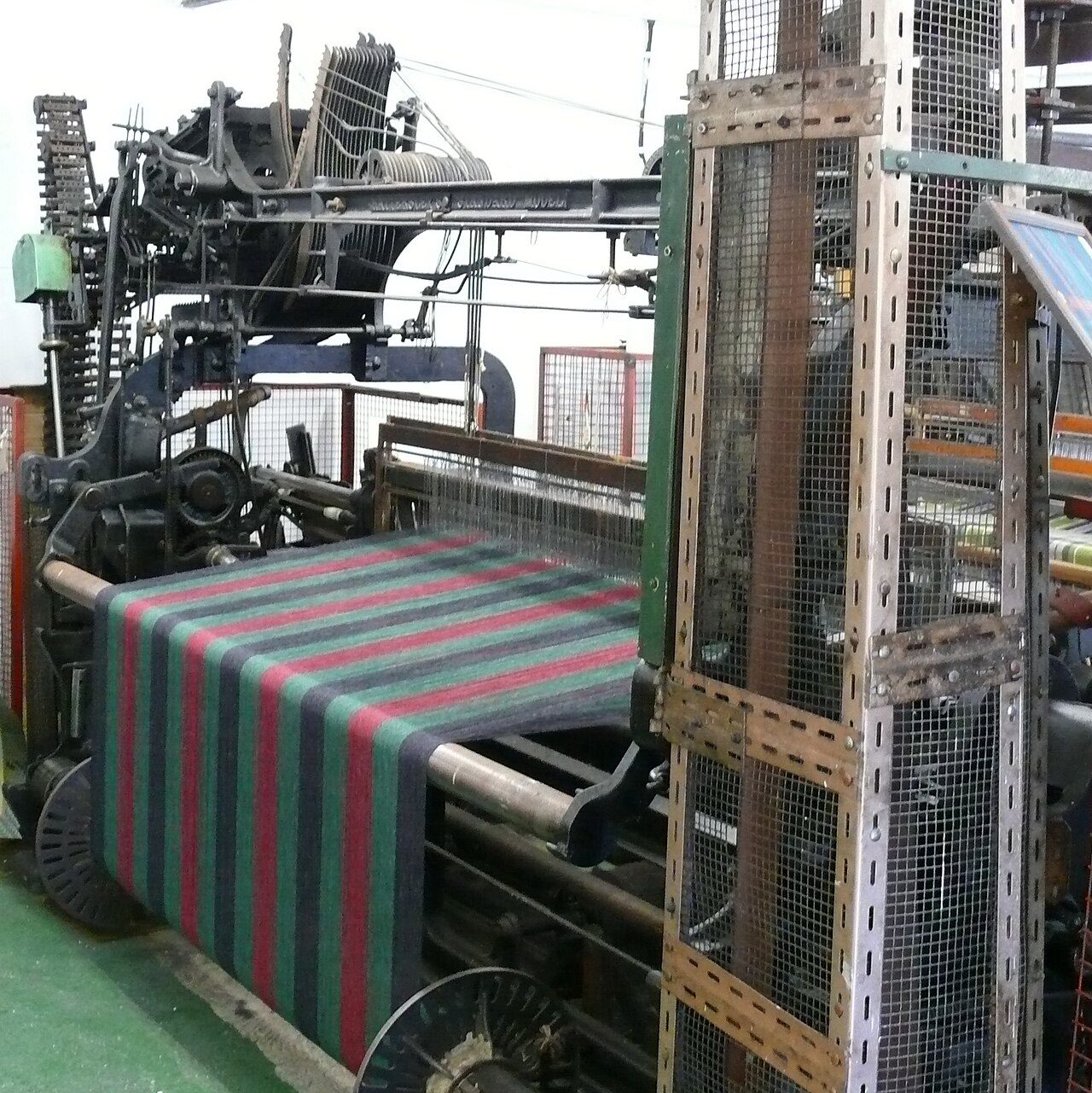
6 min read · 2 sourcesWeaving is a method of textile production in which two distinct sets of yarns or threads are interlaced at right angles to form a fabric or cloth. The longitudinal threads are called the warp and the lateral threads are the weft, woof, or filling. The method in which these threads are interwoven affects the characteristics of the cloth. Cloth is usually woven on a loom, a device that holds warp threads in place while filling threads are woven through them. A fabric made of warp threads with a weft thread winding between can also be made using other methods, including tablet weaving, backstrap loom, or other techniques that can be done without looms. The way the warp and filling threads interlace with each other is called the weave. The majority of woven products are created with one of three basic weaves: plain weave, satin weave, or twill weave. Woven cloth can be plain or classic (in one colour or a simple pattern), or can be woven in decorative or artistic design. 1
Process and terminology
In general, weaving involves using a loom to interlace two sets of threads at right angles to each other: the warp which runs longitudinally and the weft (older woof) that crosses it. (Weft is an Old English word meaning "that which is woven"; compare leave and left.) One warp thread is called an end and one weft thread is called a pick. The warp threads are held taut and in parallel to each other, typically in a loom. There are many types of looms. Weaving can be summarized as a repetition of these three actions, also called the primary motions of the loom. 1
Shedding: where the warp threads (ends) are separated by raising or lowering heald frames (heddles) to form a clear space, referred to as the shed where the pick can pass Picking: where the weft or pick is propelled across the loom by hand, an air-jet, a rapier or a shuttle Beating-up or battening: where the weft is pushed up against the fell of the cloth by the reed The warp is divided into two overlapping groups, or lines (most often adjacent threads belonging to the opposite group) that run in two planes, one above another, so the shuttle can be passed between them in a straight motion. Then, the upper group is lowered by the loom mechanism, and the lower group is raised (shedding), allowing the shuttle to pass in the opposite direction, also in a straight motion. 1
Archaeology
There are some indications that weaving was already known in the Paleolithic Era, as early as 27,000 years ago. An indistinct textile impression has been found at the Dolní Věstonice site. According to the find, the weavers of the Upper Palaeolithic were manufacturing a variety of cordage types, produced plaited basketry and sophisticated twined and plain woven cloth. The artifacts include imprints in clay and burned remnants of cloth. The oldest known textiles found in the Americas are remnants of six finely woven textiles and cordage found in Guitarrero Cave, Peru. The weavings, made from plant fibres, are dated between 10,100 and 9080 BCE. In 2013 a piece of cloth woven from hemp was found in burial F. 7121 at the Çatalhöyük site, suggested to be from around 7000 BCE. Further finds come from the Neolithic civilisation preserved in the pile dwellings in Switzerland. Another extant fragment from the Neolithic was found in Fayum, at a site dated to about 5000 BCE. This fragment is woven at about 12 threads by 9 threads per centimetre in a plain weave. Flax was the predominant fibre in Egypt at this time (3600 BCE) and had continued popularity in the Nile Valley, though wool became the primary fibre used in other cultures around 2000 BCE. The oldest-known weavings in North America come from the Windover Archaeological Site in Florida. Dating from 4900 to 6500 BCE and made from plant fibres, the Windover hunter-gatherers produced "finely crafted" twined and plain weave textiles. Eighty-seven pieces of fabric were found associated with 37 burials. Researchers have identified seven different weaves in the fabric. One kind of fabric had 26 strands per inch (10 strands per centimetre). There were also weaves using two-strand and three-strand wefts. 1
History
Weaving was known in all the great civilisations, but no clear line of causality has been established. Early looms required two people to create the shed and one person to pass through the filling. Early looms wove a fixed length of cloth, but later ones allowed warp to be wound out as the fell progressed. Weaving became simpler when the warp was sized. 1
Africa
Around the 4th century BCE, the cultivation of cotton and the knowledge of its spinning and weaving in Meroë reached a high level. Export of textiles was one of the main sources of wealth for Kush. Aksumite King Ezana boasted in his inscription that he destroyed large cotton plantations in Meroë during his conquest of the region. 1
Latin America
The Indigenous people of the Americas wove textiles of cotton throughout tropical and subtropical America and in the South American Andes of wool from camelids, primarily domesticated llamas and alpacas. Cotton and the camelids were both domesticated by about 4000 BCE. American weavers are "credited with independently inventing nearly every non-mechanized technique known today." In the Inca Empire of the Andes, both men and women produced textiles. Women mostly did their weaving using backstrap looms to make small pieces of cloth and vertical frame and single-heddle looms for larger pieces. Men used upright looms. The Inca elite valued cumbi, which was a fine tapestry-woven textile produced on upright looms. The elite often offered cumbi as gifts of reciprocity to lords (other elite) in the Empire. In regions under direct control of the Inca, special artisans produced cumbi for the elite. Women who created cumbi in these regions were called acllas or mamaconas and men were called cumbicamayos. Andean textile weavings were of practical, symbolic, religious, and ceremonial importance and used as currency, tribute, and as a determinant of social class and rank. Sixteenth-century Spanish colonists were impressed by both the quality and quantity of textiles produced by the Inca Empire. Some of the techniques and designs are still in use in the 21st century. Whereas European cloth-making generally created ornamentation through "suprastructural" means—by adding embroidery, ribbons, brocade, dyeing, and other elements onto the finished woven textile—pre-Columbian Andean weavers created elaborate cloth by focusing on "structural" designs involving manipulation of the warp and weft of the fabric itself. 1
The text above is adapted from the Wikipedia article “Weaving”, available under the Creative Commons Attribution-ShareAlike 4.0 licence. 1
weaving is technology for the production of textiles, according to the structured record cited below. This entry was generated automatically from that record and has not yet been reviewed by a person familiar with the tradition. 2
The source record links this tradition to 43 external registers, which can be verified through the citation. 2