The tradition & historical record
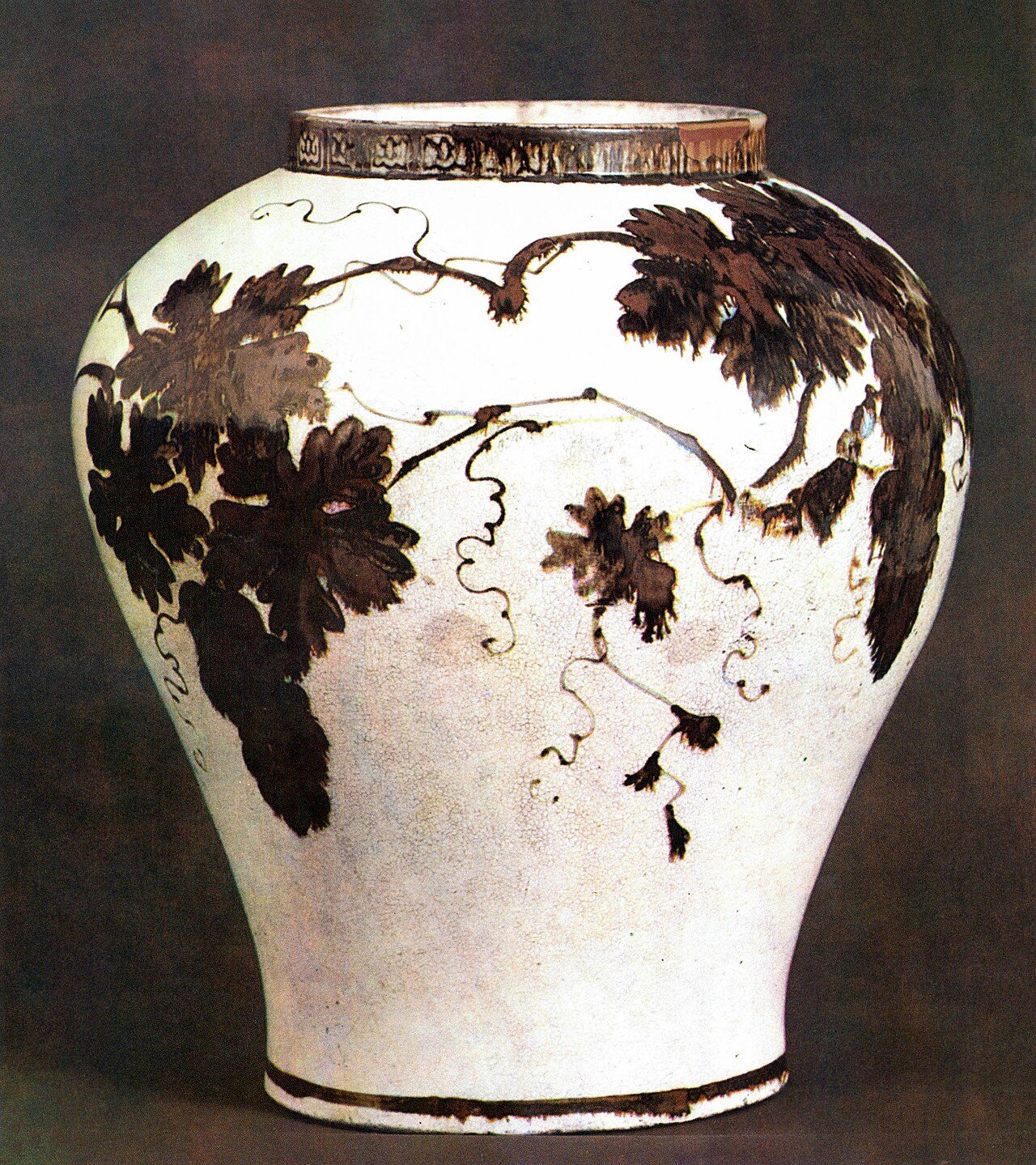
3 min read · 2 sourcesThe white porcelain jar with grape and monkey design in underglaze iron (Korean: 백자 철화포도원숭이문 항아리) is a masterpiece of mid-Joseon period Korean ceramics. Standing 30.8 cm tall, this jar features brushwork depicting a monkey swinging from grapevine tendrils using underglaze iron-brown pigment (cheolhwa). The piece exemplifies the artistic transition and resourceful ceramic techniques developed during the 17th century, following the devastation of the Imjin War (1592–1598) and the Qing invasion of Joseon (1627, 1636–1637). It is currently preserved in the collection of the National Museum of Korea in Seoul. 1
Historical Background
From the late 16th to the mid 17th century, Korea suffered severe socio-economic hardship and a critical disruption in the supply of cobalt oxide (cheonghwa), an expensive imported blue pigment from China used for royal ceramics. Consequently, royal potters at the Bunwon (official court kilns in Gwangju, Gyeonggi) adopted iron oxide, an abundant domestic material, as a primary decorative medium. This jar reflects the aesthetic preferences and cultural resilience of the 17th-century Joseon court and Yangban class. Although cobalt porcelain resumed dominance in the 18th century, 17th-century iron-underglaze porcelain achieved a unique pinnacle of artistic expressiveness, characterized by bold, spontaneous, and painterly qualities. 1
Characteristics
The artifact was formed from high-grade white kaolin clay and covered with a translucent glaze exhibiting a subtle grayish-milky white tone. The vessel features a short, slightly out-curved rim, broad and rounded shoulders that taper smoothly down to a narrower base, showcasing balanced proportion and steady volume. Iron-oxide pigment was painted onto the un-fired white clay body before glaze application and high-temperature reduction firing. Variations in pigment thickness created dramatic tonal contrasts, ranging from dark brownish-black to warm reddish-brown hues. 1
Motifs
The decorative execution highlights an extraordinary painterly quality reminiscent of traditional Joseon ink-wash paintings. Due to their abundant fruit on interconnected vines, grapes symbolize fertility, prosperity, and the continuation of a thriving family lineage through many generations. Twisted grapevine stems wind fluently across the shoulder and belly of the jar. Broad grape leaves are depicted using subtle wash techniques, while delicate curling tendrils and heavy clusters of grapes add rhythmic movement around the vessel's surface. Another principal subject is a monkey picking grapes thus expresses a dual wish: high rank/success in official appointments and continuous family prosperity. 1
The text above is adapted from the Wikipedia article “White Porcelain Jar with Grape and Monkey Design in Underglaze Iron”, available under the Creative Commons Attribution-ShareAlike 4.0 licence. 1
White Porcelain Jar with Grape and Monkey Design in Underglaze Iron is Korean cultural heritage item, according to the structured record cited below. This entry was generated automatically from that record and has not yet been reviewed by a person familiar with the tradition. 2
The source record links this tradition to 2 external registers, which can be verified through the citation. 2