The tradition & historical record
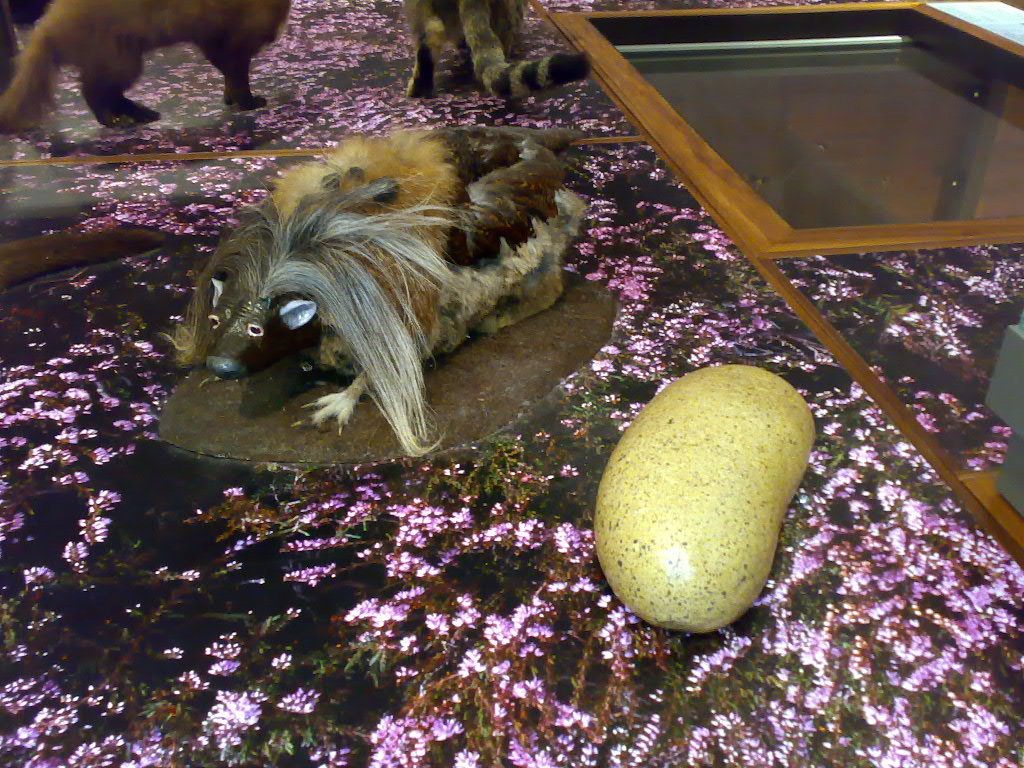
2 min read · 2 sourcesWild haggis (given the humorous taxonomic designation Haggis scoticus) is a fictional creature of Scottish folklore, said to be native to the Scottish Highlands. It is comically claimed to be the source of haggis, a traditional Scottish dish that is in fact made from the innards of sheep (including heart, lungs, and liver). According to some sources, the wild haggis's left and right legs are of different lengths (like the sidehill gouger and the dahu), allowing it to run quickly around the steep mountains and hillsides which make up its natural habitat, but only in one direction. It is further claimed that there are two varieties of haggis, one with longer left legs and the other with longer right legs. The former variety can run clockwise around a mountain (as seen from above) while the latter can run anticlockwise. The two varieties coexist peacefully but are unable to interbreed in the wild because in order for the male of one variety to mate with a female of the other, he must turn to face in the same direction as his intended mate, causing him to lose his balance before he can mount her. As a result of this difficulty, differences in leg length among the haggis population are accentuated. According to an online survey commissioned by haggis manufacturers Hall's of Broxburn, released on 26 November 2003, one-third of U.S. visitors to Scotland believed the wild haggis to be a real creature. 1
The text above is adapted from the Wikipedia article “Wild haggis”, available under the Creative Commons Attribution-ShareAlike 4.0 licence. 1
wild haggis is fictional animal said to be the source of haggis, according to the structured record cited below. This entry was generated automatically from that record and has not yet been reviewed by a person familiar with the tradition. 2
The source record links this tradition to 1 external register, which can be verified through the citation. 2