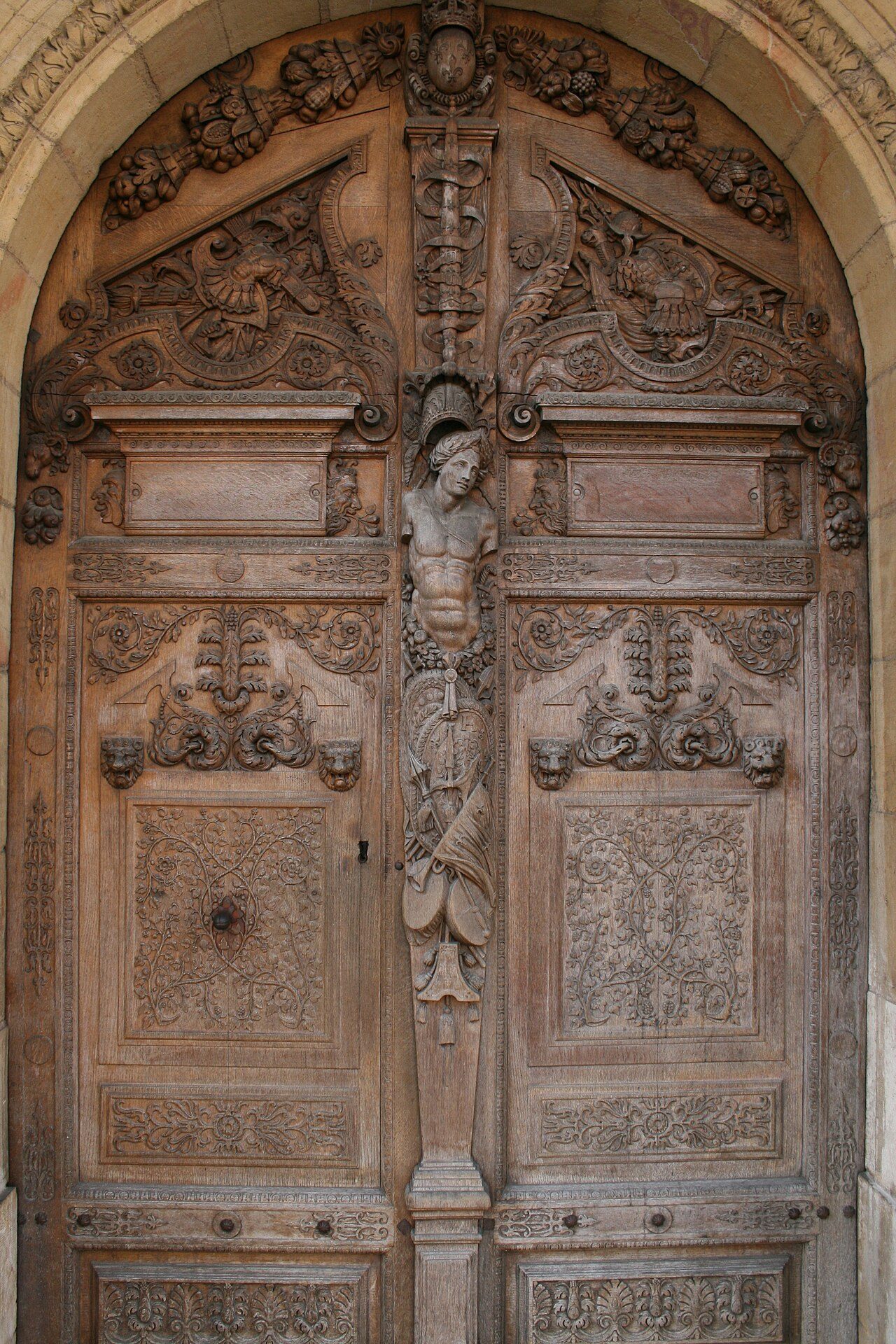
The tradition & historical record
6 min read · 2 sourcesWood carving, also spelt woodcarving, is a form of woodworking by means of a cutting tool (knife) in one hand or a chisel by two hands or with one hand on a chisel and one hand on a mallet, resulting in a wooden figure or figurine, or in the sculptural ornamentation of a wooden object. The phrase may also refer to the finished product, from individual sculptures to hand-worked mouldings composing part of a tracery. 1
History
The making of sculpture in wood has been extremely widely practised, but does not survive undamaged as well as the other main materials like stone and bronze, as it is vulnerable to decay, insect damage, and fire. Therefore, it forms a more hidden element in the art history of many cultures. Outdoor wood sculptures do not last long in most parts of the world, so it is still unknown how the totem pole tradition developed. Many of the most important sculptures of China and Japan, in particular, are in wood, and so are the great majority of African sculpture and that of Oceania and other regions. Wood is light and can take very fine detail so it is highly suitable for masks and other sculpture intended to be worn or carried. It is also much easier to work on than stone and can be carved more thinly and precisely due to its fibrous strength. Some of the finest extant examples of early European wood carving are from the Middle Ages in Germany, Russia, Italy, and France, where the typical themes of that era were Christian iconography. In England, many complete examples remain from the 16th and 17th centuries, where oak was the preferred medium. The oldest wood carved sculpture, the Shigir Idol carved from larch, is around 12,000 years old. 1
Methods and styles
Methods and styles of wood carving include: 1
Chip carving Relief carving Scandinavian flat-plane Lovespoon Treen Whittling Chainsaw carving Florentine carving 1
Tools
A number of types of hand tools are used for wood carving, including various types of gouges and mallets. It can also be done using mechanical means, such as with a chainsaw. 1
Selection
The nature of the wood being carved limits the scope of the carver in that wood is not equally strong in all directions: it is an anisotropic material. The direction in which wood is strongest is called "grain" (grain may be straight, interlocked, wavy or fiddleback, etc.). It is smart to arrange the more delicate parts of a design along the grain instead of across it. Often, however, a "line of best fit" is instead employed, since a design may have multiple weak points in different directions, or orientation of these along the grain would necessitate carving detail on end grain, (which is considerably more difficult). Carving blanks are also sometimes assembled, as with carousel horses, out of many smaller boards, and in this way, one can orient different areas of a carving in the most logical way, both for the carving process and for durability. Less commonly, this same principle is used in solid pieces of wood, where the fork of two branches is utilized for its divergent grain, or a branch off of a larger log is carved into a beak (this was the technique employed for traditional Welsh shepherd's crooks, and some Native American adze handles). The failure to appreciate these primary rules may constantly be seen in damaged work, when it will be noticed that, whereas tendrils, tips of birds beaks, etc., arranged across the grain have been broken away, similar details designed more in harmony with the growth of the wood and not too deeply undercut remain intact. Probably the two most common woods used for carving in North America are basswood (aka tilia or lime) and tupelo; both are hardwoods that are relatively easy to work with. 1
Sculpture
A wood carver begins a new carving by selecting a chunk of wood the approximate size and shape of the figure they wish to create or if the carving is to be large, several pieces of wood may be laminated together to create the required size. The type of wood is important. Hardwoods are more difficult to shape but have greater luster and longevity. Softer woods may be easier to carve but are more prone to damage. Any wood can be carved but they all have different qualities and characteristics. The choice will depend on the requirements of carving being done: for example, a detailed figure would need a wood with a fine grain and very little figure as a strong figure can interfere with 'reading' fine detail. Once the sculptor has selected their wood, they begin a general shaping process using gouges of various sizes. The gouge is a curved blade that can remove large portions of wood smoothly. For harder woods, the sculptor may use gouges sharpened with stronger bevels, about 35 degrees, and a mallet similar to a stone carver's. The terms gouge and chisel are open to confusion. Correctly, a gouge is a tool with a curved cross-section and a chisel is a tool with a flat cross-section. However, professional carvers tend to refer to them all as 'chisels'. Smaller sculptures may require the woodcarver to use a knife, and larger pieces might require the use of a saw. No matter what wood is selected or tool used, the wood sculptor must always carve either across or with the grain of the wood, never against the grain. Once the general shape is made, the carver may use a variety of tools for creating details. For example, a "veiner" or "fluter" can be used to make deep gouges into the surface, or a "v-tool" for making fine lines or decorative cuts. 1
The text above is adapted from the Wikipedia article “Wood carving”, available under the Creative Commons Attribution-ShareAlike 4.0 licence. 1
wood carving is form of working wood by means of a cutting tool, according to the structured record cited below. This entry was generated automatically from that record and has not yet been reviewed by a person familiar with the tradition. 2
The source record links this tradition to 33 external registers, which can be verified through the citation. 2