The tradition & historical record
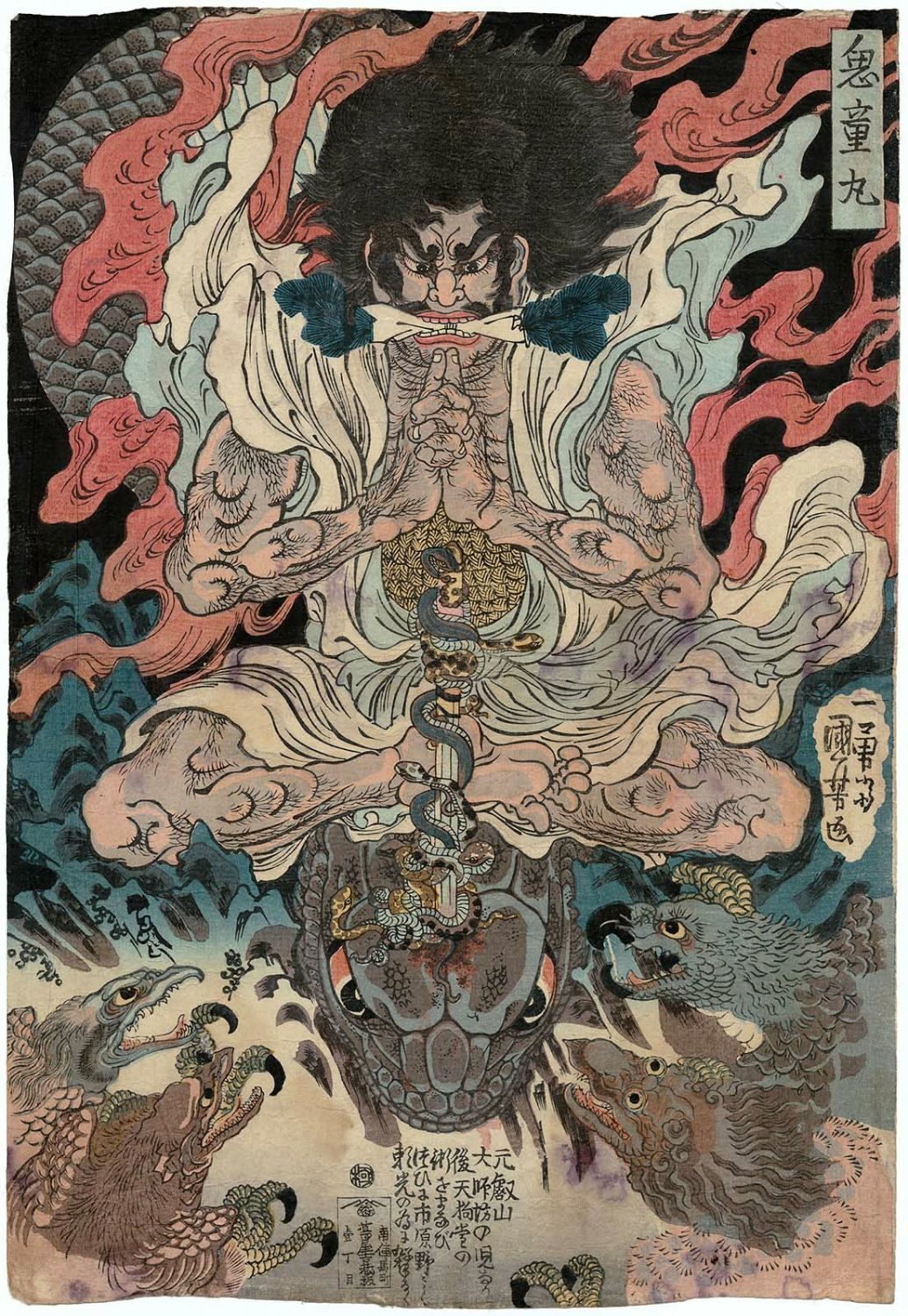
6 min read · 2 sourcesYōkai (妖怪; Japanese pronunciation: [joː.kai]) are a class of supernatural entities and spirits in Japanese folklore. Yōkai are a vast range of beings, including shapeshifters, ghosts, demons, and tricksters. They can be mischievous, helpful, or malevolent, often appearing as animal-like figures, possessed objects, or humanoids. They embody the mysterious and uncanny aspects of nature and human emotions. Yōkai are also referred to as ayakashi (あやかし), mononoke (物の怪) or mamono (魔物). Some academics and Shinto practitioners acknowledge similarities within the seeming dichotomy between the natures of yōkai and most kami, which are generally regarded as relatively beneficent in comparison, and class the two as ultimately the same type of spirits of nature or of a mythological realm. Their behavior can range from malevolent or mischievous to benevolent towards humans. Yōkai often have animal-like features (such as the kappa, depicted as appearing similar to a turtle, and the tengu, commonly depicted with wings), but may also appear humanoid in appearance, such as the kuchisake-onna (口裂け女). Some yōkai resemble inanimate objects (such as the tsukumogami), while others have no discernible shape. Yōkai are typically described as having spiritual or supernatural abilities, with shapeshifting being the most common trait associated with them. 1
Concept
The concept of yōkai varies greatly throughout Japanese culture and historical periods; typically, the older the time period, the higher the number of phenomena deemed to be supernatural and the result of yōkai. According to Japanese ideas of animism, spirit-like entities were believed to reside in all things, including natural phenomena and objects. Such spirits possessed emotions and personalities: peaceful spirits were known as nigi-mitama, who brought good fortune; violent spirits, known as ara-mitama, brought ill fortune, such as illness and natural disasters. Neither type of spirit was considered to be yōkai. One's ancestors and particularly respected departed elders could also be deemed to be nigi-mitama, accruing status as protective spirits who brought fortune to those who worshiped them. Animals, objects and natural features or phenomena were also venerated as nigi-mitama or propitiated as ara-mitama depending on the area. Rituals for converting ara-mitama into nigi-mitama were performed, aiming to quell malevolent spirits, prevent misfortune and alleviate the fear arising from phenomena and events that otherwise had no explanation. The ritual for converting ara-mitama into nigi-mitama was known as the chinkon (鎮魂, lit. 'the calming of the spirits' or 'requiem'). Chinkon rituals for ara-mitama that failed to achieve deification as benevolent spirits, whether through a lack of sufficient veneration or through losing worshippers and thus their divinity, became yōkai. Over time, phenomena and events thought to be supernatural became fewer and fewer, with the depictions of yōkai in picture scrolls and paintings beginning to standardize, evolving more into caricatures than fearsome spiritual entities. 1
Types
The folklorist Tsutomu Ema studied the literature and paintings depicting yōkai and henge (変化, lit. 'changed things/mutants'), dividing them into categories as presented in the Nihon Yōkai Henge Shi and the Obake no Rekishi: 1
Categories based on a yōkai's "true form": Human Animal Plant Object Natural phenomenon Categories depending on the source of mutation: Mutation related to this world Spiritual or mentally related mutation Reincarnation or afterworld related mutation Material related mutation Categories based on external appearance: Human Animal Plant Artifact Structure or building Natural object or phenomenon Miscellaneous or appearance compounding more than one category In other folklorist categorizations, yōkai are classified, similarly to the nymphs of Greek mythology, by their location or the phenomena associated with their manifestation. Yōkai are indexed in the book Sogo Nihon Minzoku Goi (綜合日本民俗語彙, A Complete Dictionary of Japanese Folklore) as follows: 1
dōbutsu no ke (動物の怪; animals, either real or imaginary) ki no ke (木の怪; trees) michi no ke (道の怪; paths) mizu no ke (水の怪; water) oto no ke (音の怪; sound) umi no ke (海の怪; the sea) yama no ke (山の怪; mountains) yuki no ke (雪の怪; snow) 1
Ancient history
772 CE: In the Shoku Nihongi, there is the statement "Shinto purification is performed because yōkai appear very often in the imperial court," using the word yōkai to not refer to any one phenomenon in particular, but to strange phenomena in general. Middle of the Heian period (794–1185/1192): In The Pillow Book by Sei Shōnagon, there is the statement "there are tenacious mononoke," as well as a statement by Murasaki Shikibu that "the mononoke have become quite dreadful," which are the first appearances of the word mononoke. 1370: In the Taiheiki, in the fifth volume, there is the statement, "Sagami no Nyudo was not at all frightened by yōkai." 1
The ancient times were a period abundant in literature and folktales mentioning and explaining yōkai. Literature such as the Kojiki, the Nihon Shoki, and various Fudoki expositioned on legends from the ancient past, and mentions of oni, orochi, among other kinds of mysterious phenomena can already be seen in them. In the Heian period, collections of stories about yōkai and other supernatural phenomena were published in multiple volumes, starting with publications such as the Nihon Ryōiki and the Konjaku Monogatarishū, and in these publications, mentions of phenomena such as Hyakki Yagyō can be seen. The yōkai that appear in this literature were passed on to later generations. Despite the literature mentioning and explaining these yōkai, they were never given any visual depictions. 1
Post-classical history
Medieval Japan was a time period where publications such as emakimono, Otogi-zōshi, and other visual depictions of yōkai started to appear. While there were religious publications such as the Jisha Engi (寺社縁起), others, such as the Otogizōshi, were intended more for entertainment, starting the trend where yōkai became more and more seen as subjects of entertainment. For examples, tales of yōkai extermination could be said to be a result of emphasizing the superior status of human society over yōkai. Publications included: 1
The Ooe-yama Shuten-doji Emaki (about an oni), the Zegaibou Emaki (about a tengu), the Tawara no Tōda emaki (俵藤太絵巻) (concerning serpent/dragon-folk oppressed by a giant centipede yōkai), the Tsuchigumo Zoshi (土蜘蛛草紙) (about tsuchigumo), and the Dojo-ji Engi Emaki (about a giant snake). These emaki were about yōkai that come from even older times. The Kitano Tenjin Engi Emaki, in which Sugawara no Michizane was a lightning god who took on the form of an oni, and despite attacking people after doing this, he was still deified as a god in the end. The Junirui Emaki, the Tamamono Soshi, (both about Tamamo-no-Mae), and the Fujibukuro Soushi Emaki (about a monkey). 1
Edo period
1677: Publication of the Shokoku Hyakumonogatari, a collection of tales of… 1
The text above is adapted from the Wikipedia article “Yōkai”, available under the Creative Commons Attribution-ShareAlike 4.0 licence. 1
yōkai is supernatural beings from Japanese folklore, according to the structured record cited below. This entry was generated automatically from that record and has not yet been reviewed by a person familiar with the tradition. 2
The source record links this tradition to 30 external registers, which can be verified through the citation. 2