The tradition & historical record
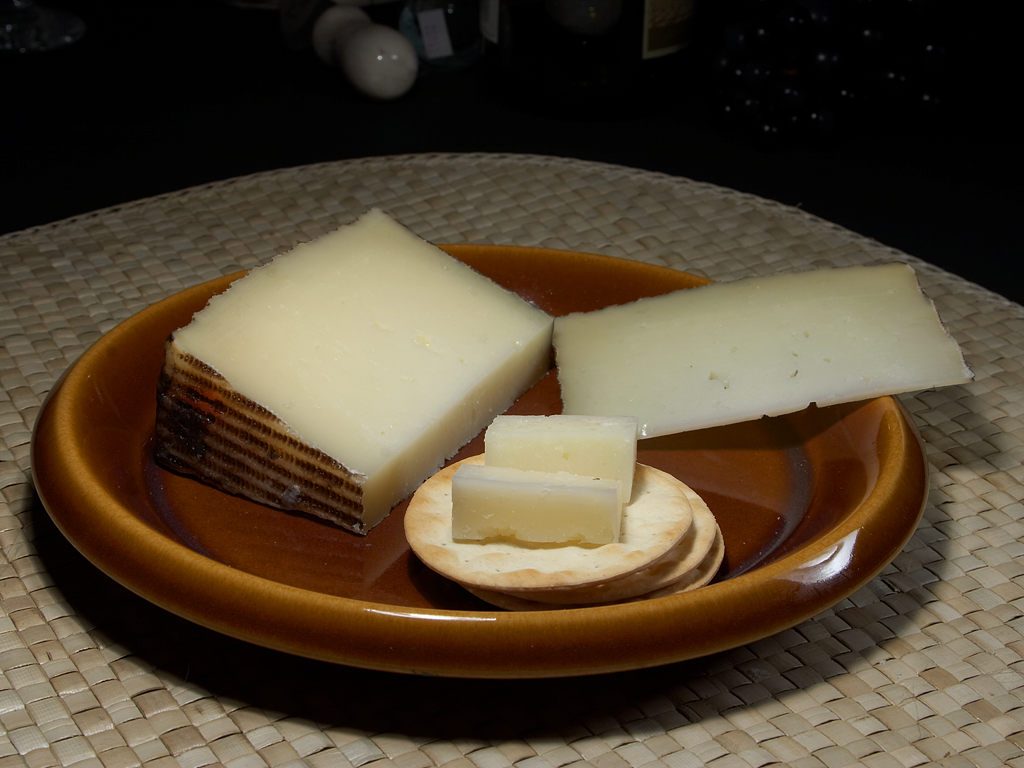
3 min read · 2 sourcesZamorano (Spanish: Queso zamorano) is a sheep's milk cheese made in the province of Zamora, Spain. This is a hard cheese which is typically aged about 6 months. The cheeses are turned often and rubbed with olive oil, giving the cheese its characteristic dark color. This cheese owes its flavor character to the breed of sheep, the "small, scruffy" Churra and the Castilian sheep, predominant in the region, to the cold and humid climate conditions, and to its long aging in cellars. 1
Features
Zamorano has a "very creamy, sweet, savory flavor", with "a hint of piquancy". Others describe it as hearty and nutty. The shape is cylindrical with "a distinctive zigzag pattern" on the rind similar to Castellano or Manchego, which it resembles in taste also. The size is approximately 11 kg (24 lb). Zamorano cheese is protected by its Denominación de Origen, which specifies its production, ingredients, and maturation. 1
History
Cheese is one of the oldest foods in the human diet. Its elaboration in the province of Zamora could begin with the beginning of the cattle activity of its first sedentary settlers. Vestiges of this cheese tradition are the encellas from the Bronze Age that are preserved in the Museum of Zamora, used to mold and drain the cheese. This craft tradition was maintained over the centuries in the province of Zamora. References to its history are the treaty of Columella that, at the time of Roman domination, informs about the usual procedures for the elaboration and conservation of cheese. Subsequently, continuous references to this product are detected in the different jurisdictions and municipal ordinances of the Zamora populations, in which rules are not only established on the sale of cheese, but also on its preparation. There are also references in feudal agrarian contracts, in which the delivery of cheese is usually contemplated as part of the personal benefits that the vassal has with his lord. The references to the cheese also continue in the books in which the payments for tithes to the different churches, bishoprics and monasteries of the province of Zamora are recorded. Of special mention in this matter are the monastic foundations of Santa María de Moreruela and San Martín de Castañeda. The cadastre of the Marqués de la Ensenada (1752), also includes continuous references to the cattle herd and the production of cheese in the different towns of Zamora. 1
The text above is adapted from the Wikipedia article “Zamorano cheese”, available under the Creative Commons Attribution-ShareAlike 4.0 licence. 1
Zamorano cheese is Spanish cheese, Castilian sheep cheese and churra, according to the structured record cited below. This entry was generated automatically from that record and has not yet been reviewed by a person familiar with the tradition. 2
The source record links this tradition to 4 external registers, which can be verified through the citation. 2