The tradition & historical record
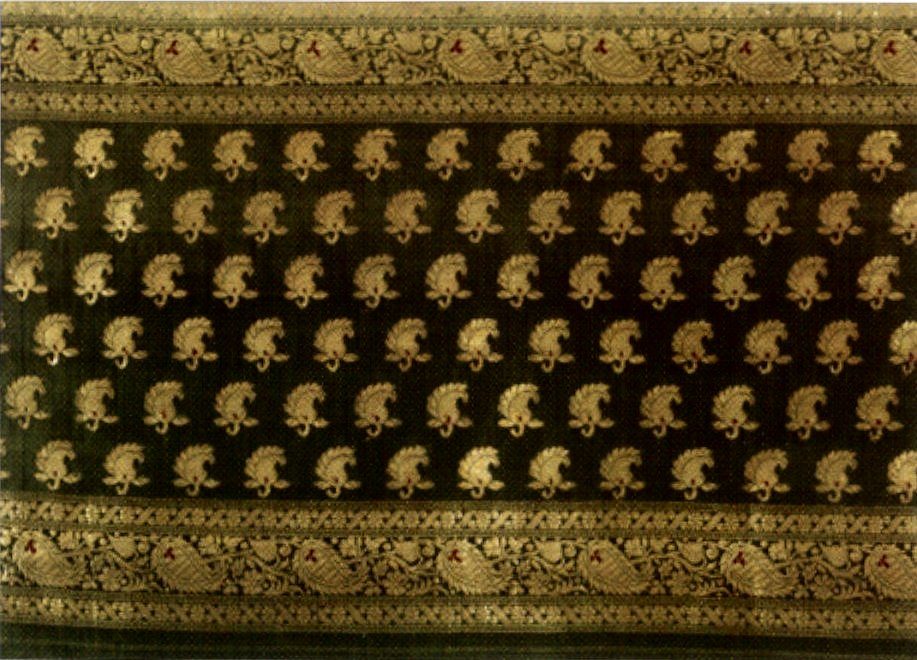
3 min read · 2 sourcesZari (in Persian: زری) ([ˈzəɾiː]) is an even thread traditionally made of fine gold or silver used in traditional Indian, Bangladeshi and Pakistani garments, especially as brocade in saris etc. This thread is woven into fabrics, primarily silk, to make intricate patterns and elaborate designs of embroidery called zardozi. Zari was popularised during the Moghul era; the port of Surat was linked to the Meccan pilgrimage route which served as a major factor for re-introducing this ancient craft in India. Zari is the main decorative material in most silk saris and ghararas. It is also used in other garments made of silk, like lehengas (skirts), cholis (blouses), kurtas, and dhotis. 1
Manufacture
The etymological root of the word is Persian. Zari is basically a brocade of tinsel thread meant for weaving and embroidery. It is manufactured by winding or wrapping (covering) a flattened metallic strip made from pure gold, silver or slit metallised polyester film, on a core yarn, usually of pure silk, viscose, cotton, nylon, polyester, P.P., mono/multi filament, wire, etc. Nowadays, it can broadly be divided into three types. Real zari, imitation zari, and metallic zari. Real zari is made from fine silver or gold thread is drawn from silver or gold alloys, which is flattened by passing it under equal pressure rotating rollers. The flattened silver threads are wound on the base yarn that is usually made of silk. These spools with silk and silver threads are further flattened for electroplating. The threads are then plated with gold by the process of electroplating. The lustre of the gilded threads is further increased by passing them through a brightener. These threads are then wound on a reel. In ancient times, when precious metals were cheaply and easily available, only real zari threads were produced. Due to the industrial revolution and the invention of the electroplating process, imitation techniques came into existence to cut the cost of precious metals. As copper is the most malleable and ductile metal after gold and silver, silver electroplated copper wire replaced pure silver. Various modern colours and chemicals are used to create/impart a golden hue instead of pure gold. The precious metals and copper too became dearer due to huge demand in various modern industries. Thus, a cheap and durable alternative was invented with non-tarnishing properties. Metallic zari came into vogue replacing traditional metals like gold, silver & copper. 1
Kalabattun
Kalabattun is an ancient term for metallic threads, such as gold-wrapped threads, that are used in a variety of brocade and embroidery arts. 1
Quality of pure zari
245 grams of zari is called one mark. It contains 191 grams of silver (78 percent), 51.55 grams of silk (21 percent), and 2.45 grams of gold (1 percent). 1
The text above is adapted from the Wikipedia article “Zari”, available under the Creative Commons Attribution-ShareAlike 4.0 licence. 1
Zari is fabric, according to the structured record cited below. This entry was generated automatically from that record and has not yet been reviewed by a person familiar with the tradition. 2
The source record links this tradition to 1 external register, which can be verified through the citation. 2