The tradition & historical record
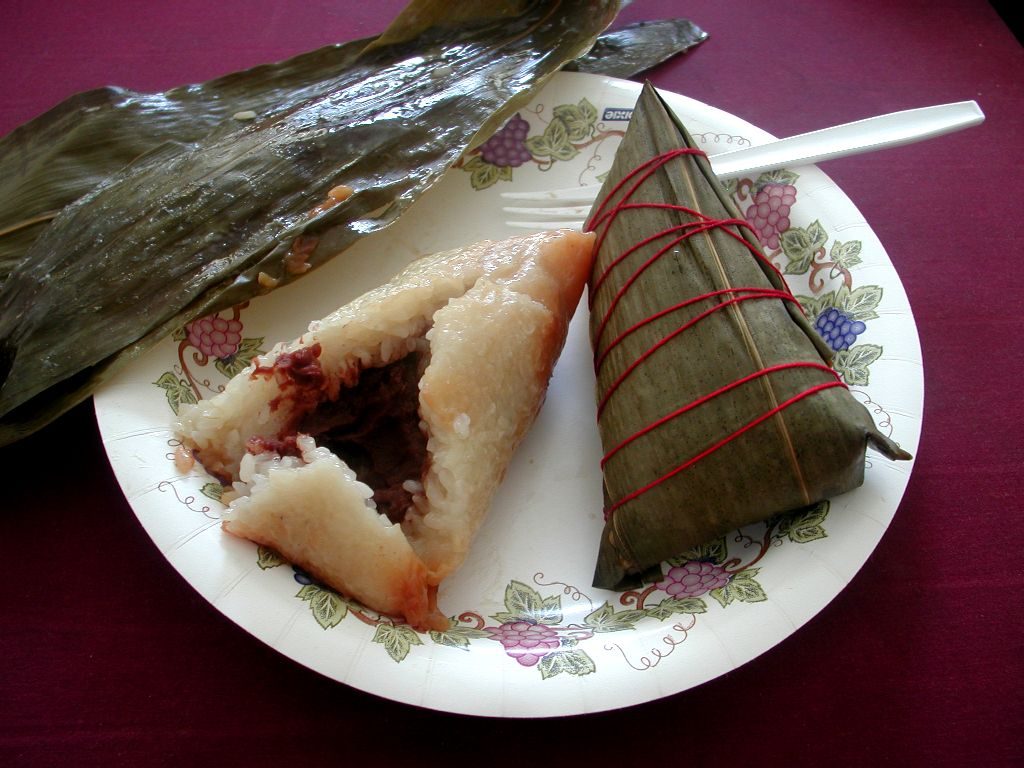
6 min read · 2 sourcesZongzi (Chinese: 粽子; pinyin: zòngzi), simply zong (Chinese: 粽; pinyin: zòng; Jyutping: zung2) or translated as rice dumplings and, alternatively, as Chinese tamales, is a traditional Chinese rice dish made of glutinous rice stuffed with a range of fillings and wrapped in bamboo leaves. Fillings can be either sweet, such as red bean paste, or savory, such as pork belly or Chinese sausage. The bamboo for wrapping the zongzi is generally of the species Indocalamus tessellatus, although sometimes reed or other large flat leaves may be used. Zongzi are cooked by steaming or boiling. 1
Names
As it diffused to other regions of Asia over many centuries, zongzi became known by various names in different languages and cultures, including phet htok (ဖက်ထုပ်) in Burmese-speaking areas (such as Myanmar), nom chang (នំចាំង) in Cambodia, machang in Philippines, bacang in Indonesia, khanom chang (ຂະໜົມຈັ້ງ) or ba chang (ບ๊ะຈ່າງ) in Laos, and ba-chang (บ๊ะจ่าง) in Thailand. Vietnamese cuisine also has a variation on this dish known as bánh ú tro or bánh tro. In Malaysia, Indonesia, Singapore, and Taiwan, zongzi is known as bakcang, bacang, or zang (from Hokkien Chinese: 肉粽; Pe̍h-ōe-jī: bah-chàng; lit. 'meat zong', as Hokkien is commonly used among overseas Chinese); Straits Peranakans also know them as the derivative kueh chang (粿粽, Hokkien: kóe-chàng, ) in their Malay dialect. Similarly, zongzi is more popularly known as machang among Chinese Filipinos in the Philippines. Japanese cuisine has leaf-wrapped glutinous rice flour dumplings called chimaki (粽). They may be tetrahedral, square, rectangular, or long narrow conical in shape. In some areas of the United States, particularly California and Texas, zongzi are often known as "Chinese tamales". In Mauritius, zongzi (typically called zong), is a traditional dish which continues to be eaten by the Sino-Mauritian and by the Overseas Chinese communities. 1
Popular origin myths
What has become established popular belief amongst the Chinese is that zongzi has since the days of yore been a food offering to commemorate the death of Qu Yuan, a famous poet from the kingdom of Chu who lived during the Warring States period. Known for his patriotism, Qu Yuan tried to counsel his king to no avail, and drowned himself in the Miluo River in 278 BC. The Chinese people were grateful for Qu Yuan's talent and loyalty to serve the country. They cast rice dumplings into the Miluo River on the day when Qu Yuan drowned in the river every year, hoping that the fish in the river would eat the rice dumplings without harming Qu Yuan's body. Qu Yuan died in 278 BC, but the earliest known documented association between him and the zong dumplings occurs much later, in the mid 5th century (Chinese: 世说新语; pinyin: Shìshuō Xīnyǔ, or A New Account of the Tales of the World), And a widely observed popular cult around him did not develop until the 6th century AD, as far as can be substantiated by evidence. But by the 6th century, sources attest to the offering of zongzi on the Double Fifth Festival (5th day of the 5th month of the lunar calendar) being connected with the figure of Qu Yuan. As for the origin myth, a fable recounts that the people commemorated the drowning death of Qu Yuan on the Double Fifth day by casting rice stuffed in bamboo tubes; but the practice changed in the early Eastern Han dynasty (1st century AD), when the ghost of Qu Yuan appeared in a dream to a man named Ou Hui (Chinese: 區回, 歐回) and instructed him to seal the rice packet with chinaberry (or Melia) leaves and bind it with colored string, to repel the dragons (jiaolong) that would otherwise consume them. 1
History
Zongzi (sticky rice dumplings) are traditionally eaten during the Duanwu Festival (Double Fifth Festival) which falls on the fifth day of the fifth month of the Chinese lunisolar calendar, and commonly known as the "Dragon Boat Festival" in English. The festival falls each year on a day in late-May to mid-June in the International calendar. The practice of eating zongzi on the Double Fifth or summer solstice is concretely documented in literature from around the late Han (2nd–3rd centuries). At the end of the Eastern Han dynasty, people made zong, also called jiao shu, lit. "horned/angled millet") by wrapping sticky rice with the leaves of the Zizania latifolia plant (Chinese: 菰; pinyin: gu, a sort of wild rice) and boiling them in lye (grass-and-wood ash water). The name jiao shu may imply "ox-horn shape", or cone-shape. That the zong or ziao shu prepared in this way was eaten on the occasion of the Double Fifth (Duanwu) is documented in works as early as the Fengsu Tongyi, AD 195). These festive rice dumplings are also similarly described in General Zhou Chu (236–297)'s Fengtu Ji, "Record of Local Folkways" Various sources claim that this Fengtu Ji contains the first documented reference regarding zongzi, even though it dates somewhat later than the Fengsu Tongyi. In the Jin dynasty (晋, AD 266–420), zongzi was officially a Dragon Boat Festival food. Anecdotally, an official called Lu Xun from the Jin dynasty once sent zongzi which used yizhiren (Chinese: 益智仁, the fruit of Alpinia oxyphylla or sharp leaf galangal) as additional filling; this type of dumpling was then dubbed yizhi zong (Chinese: 益智粽, literally "dumplings to increase wisdom"). 1
Description
The shapes of zongzi vary, and range from being approximately tetrahedral in southern China to an elongated cone in northern China. In the Chiang Kai-shek Memorial Hall in Taipei, plastic mock-ups of rectangular zongzi are displayed as an example of the zongzi eaten by Chiang Kai-shek. Wrapping zongzi neatly is a skill that is passed down through families, as are the recipes. Making zongzi is traditionally a family event in which everyone helps out. While traditional zongzi are wrapped in bamboo leaves, the leaves of lotus, reed, maize, banana, canna, shell ginger, and pandan sometimes are used as substitutes in other countries. Each kind of leaf imparts its own unique aroma and flavor to the rice. The fillings used for zongzi vary from region to region, but the rice used is almost always glutinous rice (also called "sticky rice" or "sweet rice"). Depending on the region, the rice may be lightly precooked by stir-frying or soaked in water before using. In the north, fillings are mostly red bean paste and tapioca or taro. Northern style zongzi tend to be sweet and dessert-like. In the northern region of China, zongzi filled with jujubes are popular. Southern-style zongzi, however, tend to be more savoury or salty. Fillings of Southern-style zongzi include ham, salted duck egg, pork belly, taro, shredded pork or chicken, Chinese sausage, pork fat, and shiitake mushrooms. 1
Fillings
Sweet: 1
Salty or savory: 1
Either or neutral: 1
The text above is adapted from the Wikipedia article “Zongzi”, available under the Creative Commons Attribution-ShareAlike 4.0 licence. 1
zongzi is traditional Chinese food, according to the structured record cited below. This entry was generated automatically from that record and has not yet been reviewed by a person familiar with the tradition. 2
The source record links this tradition to 7 external registers, which can be verified through the citation. 2