The tradition & historical record
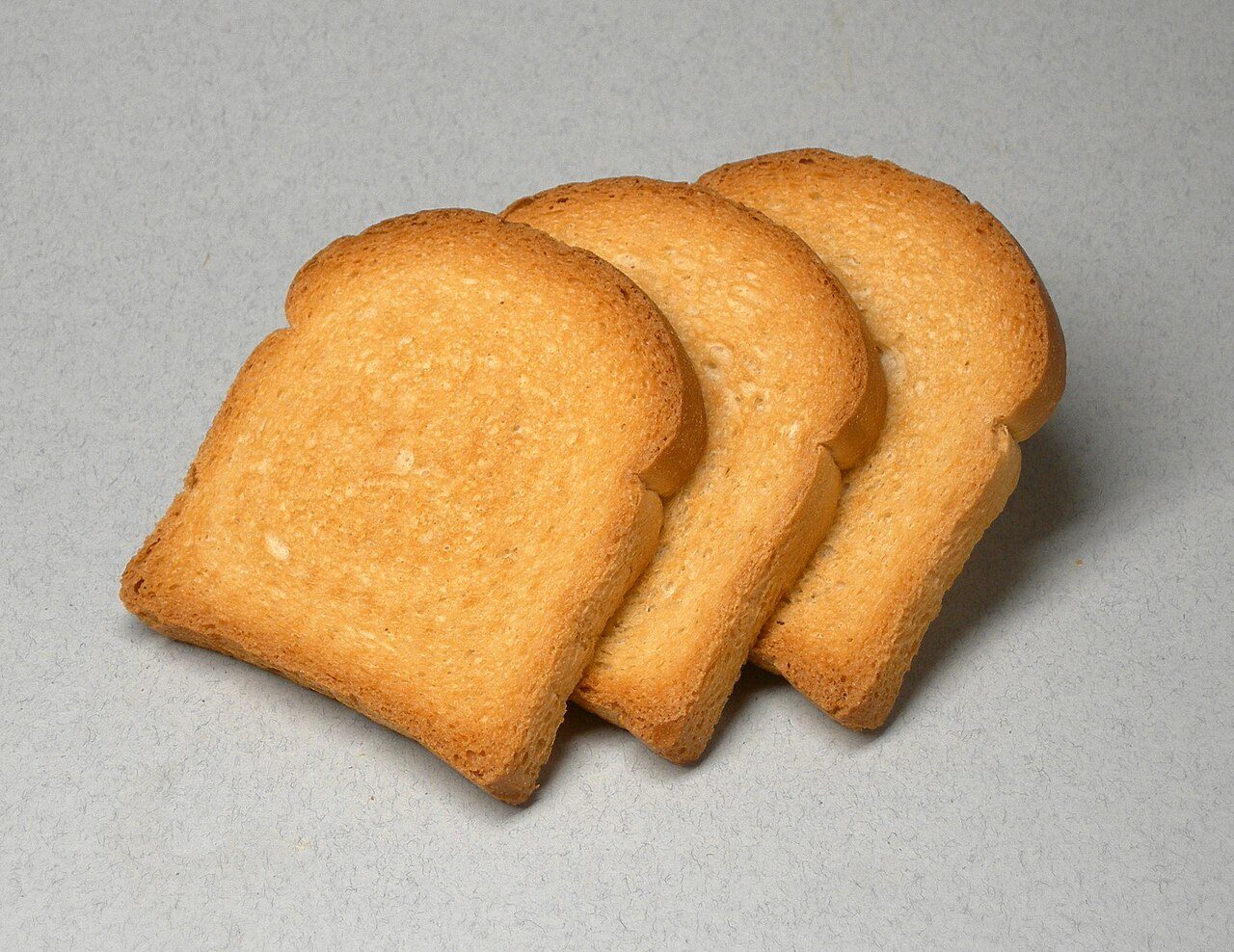
1 min read · 2 sourcesZwieback (German: [ˈt͡sviːbak] ) is a form of rusk from German cuisine eaten throughout Europe. It is a type of crisp, sweetened bread, made with eggs and baked twice. It originated in East Prussia. According to Fabian Scheidler, Albrecht von Wallenstein invented Zwieback to feed his mercenary army during the Thirty Years' War. Zwieback is commonly used to feed teething babies and as the first solid food for patients with an upset stomach. The name comes from German zwei ('two') or zwie ('twi-', 'two-'), and backen, meaning 'to bake'. Zwieback hence literally translates to 'twice-baked'. Names for similar types of rusk in other cultures have parallel derivations, including French biscotte and Italian fette biscottate (from Latin bis- 'twice' and coctus 'baked'), the Slovene prepečenec ('baked over ordinary' or 'overbaked') and the Serbo-Croatian dvopek (dvo- 'twice', pek 'baked'). 1
The text above is adapted from the Wikipedia article “Zwieback”, available under the Creative Commons Attribution-ShareAlike 4.0 licence. 1
rusk is form of rusk, according to the structured record cited below. This entry was generated automatically from that record and has not yet been reviewed by a person familiar with the tradition. 2
The source record links this tradition to 10 external registers, which can be verified through the citation. 2