The tradition & historical record
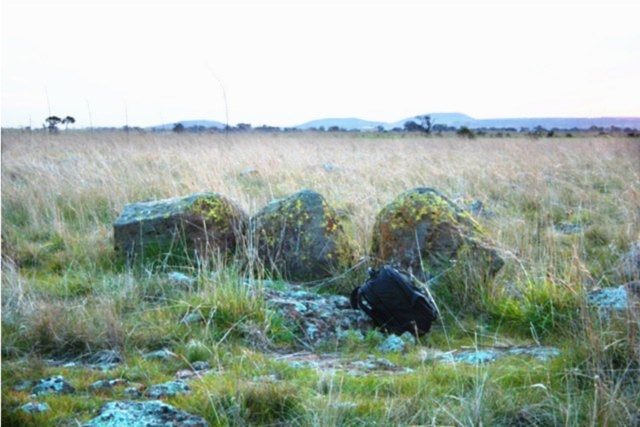
2 min read · 2 sourcesAboriginal stone arrangements are a form of rock art constructed by Aboriginal Australians. Typically, they consist of stones, each of which may be about 30 centimetres (12 in) in size, laid out in a pattern extending over several metres or tens of metres. Notable examples have been made by many different Australian Aboriginal cultures, and in many cases are thought to be associated with spiritual ceremonies. Particularly fine examples are in Victoria, where the stones can be very large (up to 1 metre (3 ft 3 in) high). For example, the stone arrangement at Wurdi Youang consists of about 100 stones arranged in an egg-shaped oval about 50 metres (160 ft) across. Each stone is well-embedded into the soil, and many have "trigger-stones" to support them. The appearance of the site is very similar to that of the megalithic stone circles found throughout Britain (although the function and culture are presumably completely different). Although its association with Aboriginal Australians is well-authenticated and beyond doubt, the purpose is unclear, although it may have a connection with initiation rites. It has also been suggested that the site may have been used for astronomical purposes (Morieson 2003). Other well-known examples in Victoria include the stone arrangements at Carisbrook and Lake Bolac. At Murujuga in Western Australia, there are many forms of ancient rock art, including petroglyphs and tall standing stones. 1
The text above is adapted from the Wikipedia article “Aboriginal stone arrangement”, available under the Creative Commons Attribution-ShareAlike 4.0 licence. 1
Aboriginal stone arrangement is Type of rock art, according to the structured record cited below. This entry was generated automatically from that record and has not yet been reviewed by a person familiar with the tradition. 2
The source record links this tradition to 1 external register, which can be verified through the citation. 2