The tradition & historical record
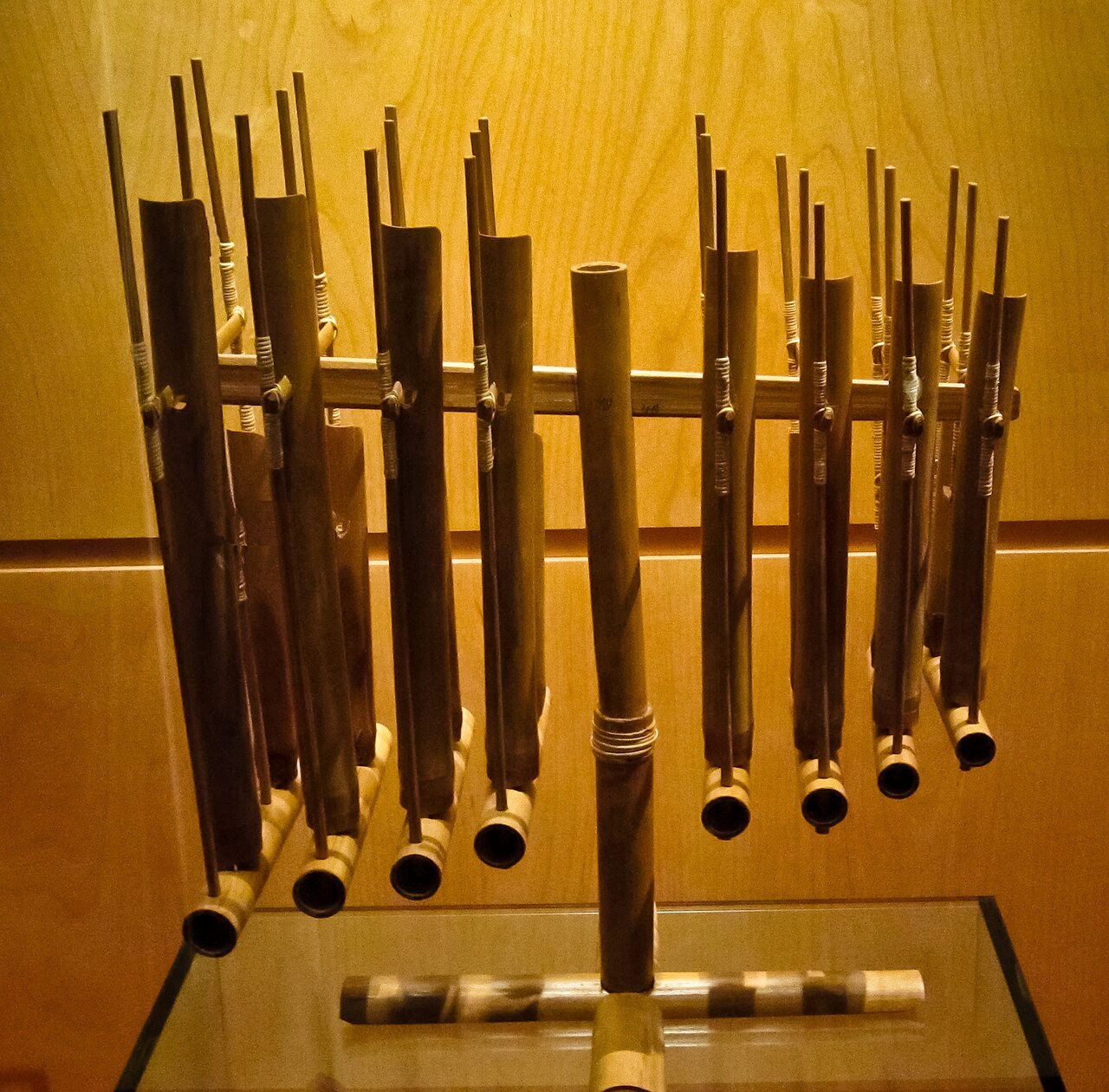
4 min read · 2 sourcesThe angklung (Sundanese: ᮃᮀᮊᮣᮥᮀ) is a musical instrument from the Sundanese in Indonesia that is made of a varying number of bamboo tubes attached to a bamboo frame. The tubes are carved to produce a resonant pitch when struck and are tuned to octaves, similar to Western handbells. The base of the frame is held in one hand, while the other hand shakes the instrument, causing a repeating note to sound. Each performer in an angklung ensemble is typically responsible for just one pitch, sounding their individual angklung at the appropriate times to produce complete melodies (see Kotekan). 1
The angklung originated in what is now West Java and Banten provinces in Indonesia, and has been played by the Sundanese for many centuries. The angklung and its music have become an important part of the cultural identity of Sundanese communities. Playing the angklung as an orchestra requires cooperation and coordination, and is believed to promote the values of teamwork, mutual respect and social harmony. On 18 November 2010, UNESCO included the Indonesian angklung in the Representative List of the Intangible Cultural Heritage of Humanity, and encouraged the Indonesian people and the Indonesian government to safeguard, transmit, promote performances and to encourage the craftsmanship of the angklung. 1
Etymology
The word angklung may have originated from Sundanese angkleung-angkleungan, suggesting the movement of the angklung player and the onomatopoeic klung sound that comes from the instrument. 1
History
According to Dr. Groneman, the angklung had already been a favorite musical instrument of the entire archipelago even before the Hindu era. According to Jaap Kunst in Music in Java, besides West Java, angklung also exists in South Sumatra and Kalimantan. Lampung, East Java and Central Java are also familiar with the instrument. In the Hindu period and the time of the Kingdom of Sunda, the instrument played an important role in ceremonies. The angklung was played to honor Dewi Sri, the goddess of Rice, so she would bless their land and lives. The angklung also signaled the time for prayers, and was said to have been played since the 7th century in the Kingdom of Sunda. In the Kingdom of Sunda, it provided martial music during the Battle of Bubat, as told in the Kidung Sunda. The oldest surviving angklung is the Angklung Gubrag, made in the 17th century in Jasinga, Bogor. Other antique angklung are stored in the Sri Baduga Museum, Bandung. The oldest angklung tradition is called angklung buhun ("ancient angklung") from Lebak Regency, Banten. The angklung buhun is an ancient type of angklung played by Baduy people of the inland Banten province during the seren taun harvest ceremony. In 1938, Daeng Soetigna (Sutigna), from Bandung, created an angklung that is based on the diatonic scale instead of the traditional pélog or sléndro scales. Since then, the angklung has returned to popularity and is used for education and entertainment, and may even accompany Western instruments in an orchestra. One of the first performances of angklung in an orchestra was in 1955 during the Bandung Conference. 1
Angklung kanekes
Angklung kanekes or Angklung buhun or Angklung baduy is an ancient angklung originating from the Baduy in Lebak, the Banten province of Indonesia. This angklung is used to accompany the ritual of planting rice on the fields passed down by their ancestors. Angklung kanekes are only made by the Baduy Dalam tribe who still maintain the pure traditions of their ancestors. The names of angklung instruments in Kanekes from the biggest are: indung, ringkung, dongdong, gunjing, engklok, indung leutik, torolok, and roel. 1
Angklung dogdog lojor
Angklung dogdog lojor is an angklung that originates from the Dogdog Lojor culture found in the Kasepuhan Pancer Pangawinan community or Kesatuan Banten Kidul scattered around Mount Halimun. Angklung dogdog lojor is used to accompany the tradition of farming, circumcision, and marriage. This angklung is played by six players consisting of two players playing the angklung dogdog lojor and four players playing the large angklung. 1
Angklung gabrag
Angklung gabrag is an angklung originating from Cipinang village, Cigudeg, Bogor, West Java. This angklung is very old and is used to honor the goddess of rice, Dewi Sri. Angklung is played during melak pare (rice planting), ngunjal pare (transporting rice), and ngadiukeun (storage) in the leuit (barn). According to legend, gubrag angklung began to exist when Cipining village experienced a dry season because Dewi Sri did not make it rain. 1
The text above is adapted from the Wikipedia article “Angklung”, available under the Creative Commons Attribution-ShareAlike 4.0 licence. 1
angklung is Indonesian musical instrument made of bamboo, according to the structured record cited below. This entry was generated automatically from that record and has not yet been reviewed by a person familiar with the tradition. 2
The source record links this tradition to 17 external registers, which can be verified through the citation. 2