The tradition & historical record
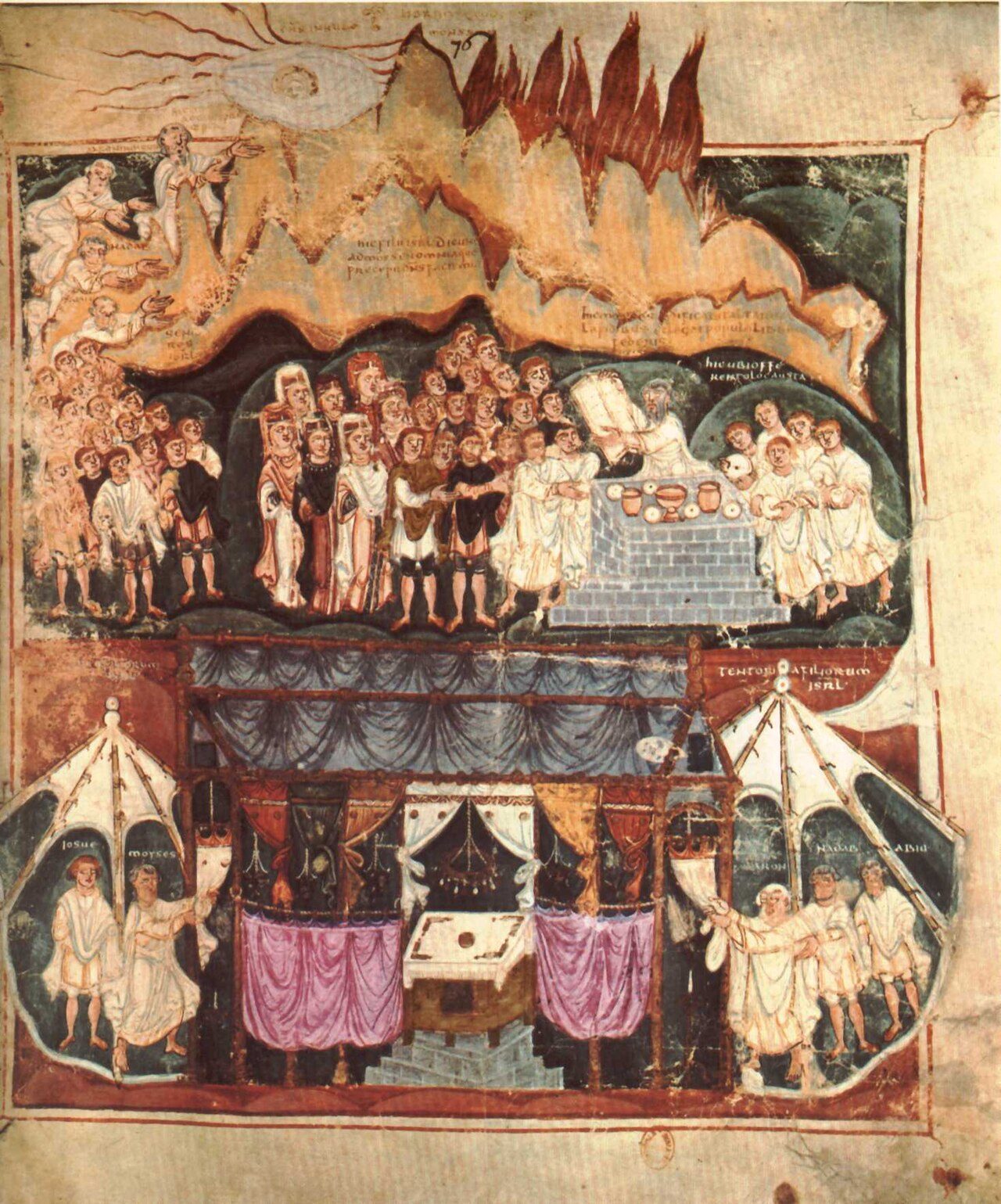
2 min read · 2 sourcesThe Ashburnham Pentateuch (Paris, Bibliothèque Nationale de France, MS nouv. acq. lat. 2334, also known as the Tours Pentateuch and the Codex Turonensis) is a late 6th- or early 7th-century Latin illuminated manuscript of the Pentateuch (the first five books of the Old Testament). Although it originally contained all five books of the Pentateuch, it is now missing the whole of Deuteronomy as well as sections of the other five books. It has 142 folios and 19 miniatures, and measures 372mm by 321mm. It is thought to have originally included as many as 68 full page miniatures. A full page table containing the Latin names of the books and Latin transliterations of the Hebrew names serves as a frontispiece to the Genesis. The table is enclosed within a curtained arch. Some of the full page miniatures, such as that containing the miniature of Noah's Ark (folio 9r), contain a single scene. Other full page miniatures, such as that telling the story of Cain and Abel, contain many scenes which are placed in a register, with each scene having a different color background. The origin of this manuscript is uncertain. Although it has been described by some scholars as Spanish, it may have come from North Africa, Syria or Italy. The miniatures were used as the source of a later cycle of wall-paintings at the church of St Julian in Tours. 1
The text above is adapted from the Wikipedia article “Ashburnham Pentateuch”, available under the Creative Commons Attribution-ShareAlike 4.0 licence. 1
Ashburnham Pentateuch is illuminated manuscript, according to the structured record cited below. This entry was generated automatically from that record and has not yet been reviewed by a person familiar with the tradition. 2
The source record links this tradition to 6 external registers, which can be verified through the citation. 2