The tradition & historical record
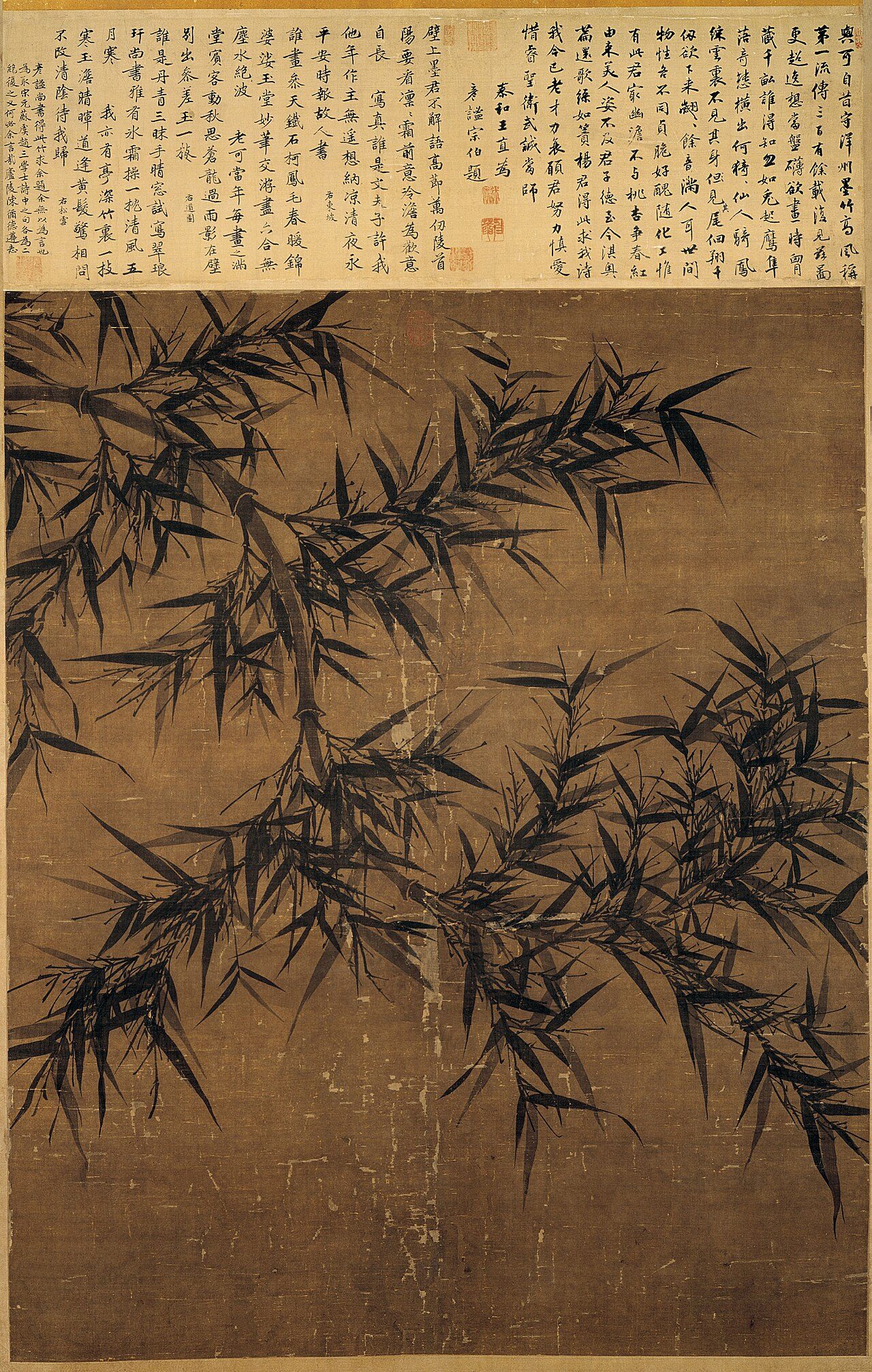
3 min read · 2 sourcesWorks of bamboo painting, usually in ink, are a recognized genre of East Asian painting. In a work of bamboo painting in ink, a skilled artist and calligrapher will paint a bamboo stalk or group of stalks with leaves. The contrast between the foreground and background, and between the varying textures represented by the stalks and the leaves, gave scope to the painter to demonstrate his or her mastery with an inkpot and a brush. The bamboo painter often inscribes a poem that accompanies the painting and further elucidates the motif. The poem is often an integral part of the work as a whole. A viewer of the work can compare the calligraphy of the poem with the calligraphy of the painting, as both are typically inscribed with the same brush and reflect a similar mood and state of awareness. A standard primer on classical East Asian bamboo painting is Hu Zhengyan's "Ten Bamboo Studio Manual of Painting and Calligraphy" (1633), with woodblock print illustrations. Because of the volume of bamboo works painted over time, the production of a work of ink bamboo became one of the standard subjects to which an East Asian student could be set in a competitive examination. Like bamboo painting, bambooworking is found across East Asia as bamboo is regarded as culturally significant. 1
Appreciation
From the days of their common origin, Chinese painting and Chinese writing have been allied arts. They use the same equipment and share aims, techniques, and standards. Ever since the beginning, bamboo has been written and also been painted in the same manner, in other words, a work depicting bamboo is both a painting and a piece of calligraphy. There are so-called “bamboo painters” who all their lives paint only bamboo. The bamboo is strong, upright, and dependable. He may bend with the wind, the storm and the rain, but he never breaks. He is a true gentleman of courage and endurance (Ju 1989). 1
The first principle of bamboo composition is, the four parts of the plant should be considered in the following order: stem, knot, branches and leaves. If the basic rule is not followed, time and effort will be wasted and the picture will never be completed.” This is the beginning of the early Book of Bamboo, a part of the Mustard Seed Garden manual of painting which was prepared and published by Chinese master in the year 1701 A.D. No bamboo painting is a photographic copy of some bamboo at some particular place, seen from a particular angle; instead it is a suggestion of the true essence of the bamboo, an expression of the qualities of a true Chinese gentleman, whom the bamboo symbolizes (Ju 1989). The bamboo plant came under close observation by many East Asians because of its persistence and vegetative productivity. The plant was especially appreciated by men and women educated in the tradition of Confucius. It came to be seen as an exemplar of moral force, and appreciating the bamboo was seen as an act of self-cultivation. 1
The text above is adapted from the Wikipedia article “Bamboo painting”, available under the Creative Commons Attribution-ShareAlike 4.0 licence. 1
bamboo painting is genre of East Asian painting, according to the structured record cited below. This entry was generated automatically from that record and has not yet been reviewed by a person familiar with the tradition. 2
The source record links this tradition to 1 external register, which can be verified through the citation. 2