The tradition & historical record
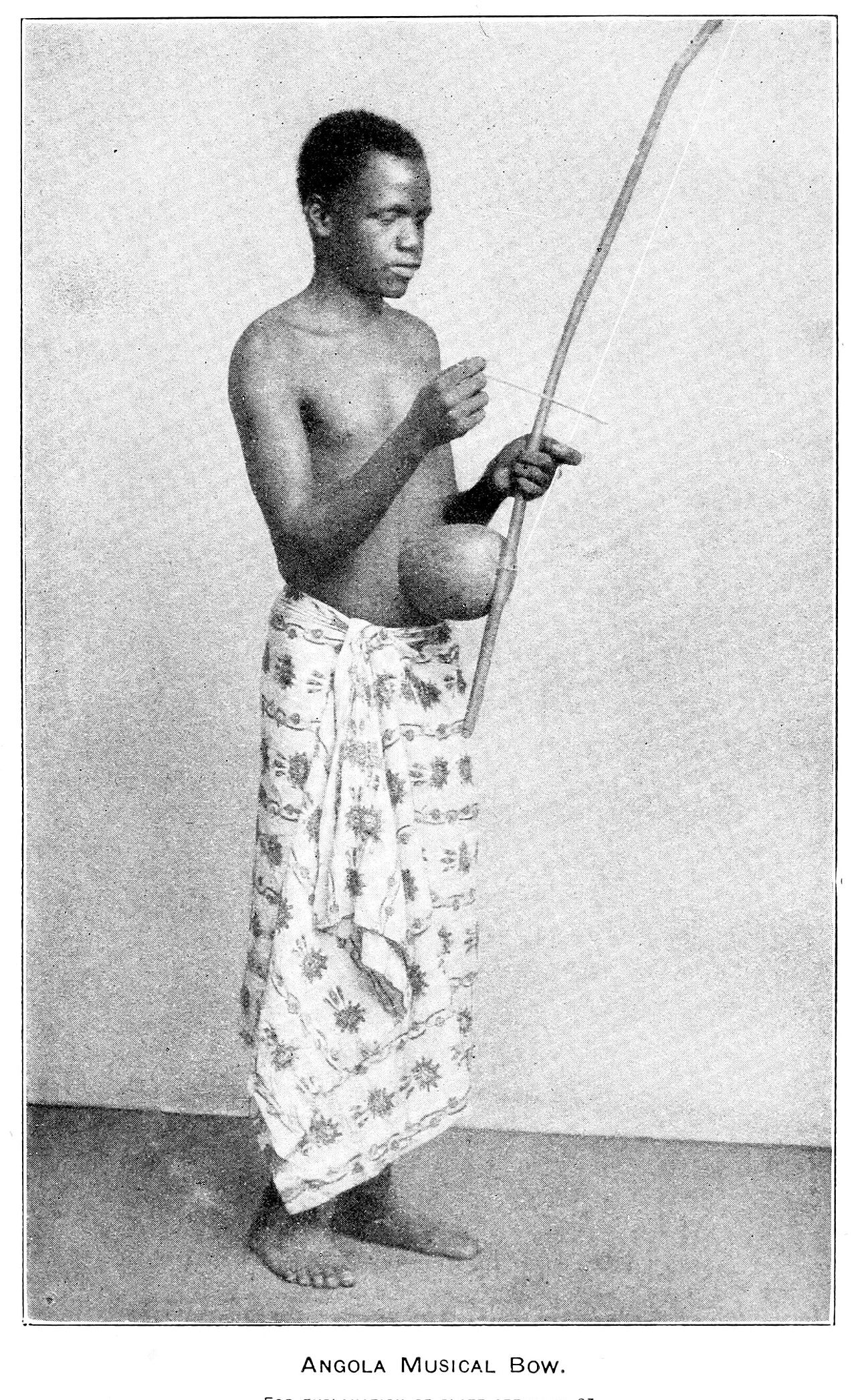
7 min read · 2 sourcesThe berimbau (Portuguese pronunciation: [beɾĩˈbaw], borrowed from Kimbundu mbirimbau) is a traditional Angolan musical bow that is commonly used in Brazil. It is also known as sekitulege among the Baganda and Busoga. It consists of a single-stringed bow attached to a gourd resonator and is played with a stick and a coin or stone to create different tones and rhythms. The berimbau was used in many parts of Africa and Brazil during the 19th century to accompany chants and storytelling. It is part of the candomblé tradition, later incorporated into the Afro-Brazilian art capoeira. Until the mid-20th century, it was used almost exclusively within the black community, but after the popularization of capoeira, it gained wider popularity. Today, berimbau is used in various genres of popular music. 1
History
Berimbau is an adaptation of African gourde musical bows, as no Indigenous Brazilian or European people use musical bows. According to the musicologist Gerard Kubik, the berimbau and the "southwest Angolan variety called mbulumbumba are identical in construction and playing technique, as well as in tuning and in a number of basic patterns played." The assimilation of this Angolan instrument is evident also in other Bantu terms used for musical bow in Brazilian Portuguese, including urucungo, and madimba lungungu. In 1859, French journalist Charles Ribeyrolles described free practices of African slaves on a plantation in Rio de Janeiro province, linking the berimbau to the batuque: 1
Saturday evening, after the last working task of the week, and on holidays that give idleness and rest, the blacks have an hour or two of the evening for dancing. They assemble in their terreiro, calling, gathering and inciting each other, and the celebration starts. Here it is the capoeira, a kind of Pyrrhic dance, with daring combat evolutions, regulated by the Congo drum; there it is the batuque, with its cold or indecent postures which the urucungo, viola with thin cords, accelerates or contains; further away it is a frenzied dance where the gaze, the breasts and the hips provoke. It is a kind of inebriated convulsion one calls the lundu. The berimbau first appeared as an instrument accompanying capoeira in the early 20th century in Bahia. The berimbau slowly came to replace the drum as the central instrument for the capoeira game, which it is now famous for and widely associated with. 1
As a weapon
Mestre Pastinha recalls that the capoeiristas during the prohibition used to attach a double-edged sickle to the instrument, turning it into a deadly weapon when necessary: "In the moment of truth it would cease to be a musical instrument and would turn into a hand sickle." Mestre Noronha also claimed that the berimbau was a very useful weapon to the old capoeira masters of the 1920s who resisted police repression. The berimbau was used as a weapon either with one end sharpened or by attaching a blade to one end, making it the capoeira's longest-range weapon. The practice of hiding weapons inside musical instruments dates back to at least the early 19th century. On November 16, 1832, the police inspector in Rio reported that capoeiras conceal spears and weapons in marimbas and sugarcane pieces. 1
Design
The berimbau consists of a wooden bow (verga – traditionally made from biribá wood, which grows in Brazil), about 4 to 5 feet (1.2 to 1.5 metres) long, with a steel string (arame – often pulled from the inside of an automobile tire) tightly strung and secured from one end of the verga to the other. A calabash gourd (cabaça), dried, opened and hollowed-out, attached to the lower portion of the verga by a loop of tough string, acts as a resonator. Starting in the 1950s, Brazilian berimbaus were painted in bright colors, following local Brazilian taste; today, most makers follow the tourist consumer's quest for (faux) authenticity, and use clear varnish and discreet decoration. To play the berimbau, one holds it in one hand, wrapping the two middle fingers around the verga, and placing the little finger under the cabaça's string loop (the anel), and balancing the weight there. A small stone or coin (pedra or dobrão) is held between the index and thumb of the same hand that holds the berimbau. The cabaça is rested against the abdomen. In the other hand, one holds a stick (baqueta or vaqueta – usually wooden, very rarely made of metal) and a shaker (caxixi). One strikes the arame with the baqueta to produce the sound. The caxixi accompanies the baqueta. The dobrão is moved back and forth from the arame to change the pitch produced by the berimbau. The sound can also be altered by moving the cabaça back and forth from the abdomen, producing a wah-like sound. Parts and accessories of the berimbau: 1
Verga: wooden bow that makes up the main body of the Berimbau Arame: steel string Cabaça: opened, dried and hollowed out gourd-like fruit secured to the lower portion of the berimbau, used to amplify and resonate the sound Calling the cabaça a gourd is technically a mistake. 1
Sound
The berimbau, as played for capoeira, basically has three sounds: the open string sound, the high sound, and the buzz sound. 1
In playing the buzz sound, one holds easily the gourd closed against one's belly, while touching the string with the dobrão. A muted "tch" sound emerges. To play the open string sound, one strikes the string less than an inch up from the gourd string, with the bow balanced on the little finger so that the gourd is opened. One can grossly tune the open sound, by loosening the arame, and by sliding the gourd a little up or down from the place where the sound is best. To produce the high sound, one must hold the bow in the same way, gourd opened, and forcefully press the dobrão on the string. The sound differs from the low sound in tone and in timbre. Old recordings and musicians report that the difference in tone used to be about 1 tone (the interval from C to D). One can press the dobrão away enough from the gourd for this only if the bow is about 4 feet (1.2 m) to 4 feet 2 inches (122 to 127 cm); that was the length of the bows in the 1940s and 1950s. Today, many berimbaus are overgrown to 5 feet (150 cm), and tuning options are limited in berimbau ensembles. Other sounds may appear in a berimbau performance, but only these define capoeira's rhythmic patterns (except Iuna). Closing and opening the gourd while the string resounds produces a wah-wah effects, which depends on how large the gourd opening is. Whether this effect is desirable or not is a matter of controversy. Pressing the dobrão after striking the string is a widely used technique; so is closing neatly the gourd while the string resounds to shut off the sound. A specific toque requires the open string sound with closed gourd. 1
In capoeira music
Whatever style the berimbaus call, the capoeirista must play, no matter if it is fast, slow, a fight, or only a playful game. 1
In capoeira, the berimbau commands the roda, the circle where capoeiristas engage in the game, and by extension, the game itself. 1
The text above is adapted from the Wikipedia article “Berimbau”, available under the Creative Commons Attribution-ShareAlike 4.0 licence. 1
berimbau is type of musical bow from Brazil, according to the structured record cited below. This entry was generated automatically from that record and has not yet been reviewed by a person familiar with the tradition. 2
The source record links this tradition to 14 external registers, which can be verified through the citation. 2