The tradition & historical record
6 min read · 2 sourcesBhutanese art (Dzongkha: འབྲུག་པའི་སྒྱུ་རྩལ) is similar to Tibetan art. Both are based upon Vajrayana Buddhism and its pantheon of teachers and divine beings. The major orders of Buddhism in Bhutan are the Drukpa Lineage and the Nyingma. The former is a branch of the Kagyu school and is known for paintings documenting the lineage of Buddhist masters and the 70 Je Khenpo (leaders of the Bhutanese monastic establishment). The Nyingma school is known for images of Padmasambhava ("Guru Rinpoche"), who is credited with introducing Buddhism into Bhutan in the 7th century. According to legend, Padmasambhava hid sacred treasures for future Buddhist masters, especially Pema Lingpa, to find. Tertöns are also frequent subjects of Nyingma art. Each divine being is assigned special shapes, colors, and/or identifying objects, such as lotus, conch-shell, thunderbolt, and begging bowl. All sacred images are made to exact specifications that have remained remarkably unchanged for centuries. Bhutanese art is particularly rich in bronzes of different kinds that are collectively known by the name Kham-so (made in Kham) even though they are made in Bhutan because the technique of making them was originally imported from that region of Tibet. Wall paintings and sculptures, in these regions, are formulated on the principal ageless ideals of Buddhist art forms. 1
Traditional Bhutanese arts
In Bhutan, the traditional arts are known as zorig chusum (zo = the ability to make; rig = science or craft; chusum = thirteen). These practices have been gradually developed through the centuries, often passed down through families with long-standing relations to a particular craft. These traditional crafts represent hundreds of years of knowledge and ability that has been passed down through generations. The great 15th century tertön, Pema Lingpa is traditionally credited with introducing the arts into Bhutan. In 1680, Ngawang Namgyal, the Zhabdrung Rinpoche, ordered the establishment of the school for instruction in the thirteen traditional arts. Although the skills existed much earlier, it is believed that the zorig chusum was first formally categorized during the rule of Gyalse Tenzin Rabgye (1680-1694), the 4th Druk Desi (secular ruler). The thirteen traditional arts are: 1
Dezo - Paper Making: Handmade paper made mainly from the Daphne plant and gum from a creeper root. Dozo - Stonework: Stone arts used in the construction of stone pools and the outer walls of dzongs, gompas, stupas and some other buildings. Garzo - Blacksmithing: The manufacture of iron goods, such as farm tools, knives, swords, and utensils. Jinzo - Clay arts: The making of religious statues and ritual objects, pottery and the construction of buildings using mortar, plaster, and rammed earth. Lhazo - Painting: From the images on thangkas, walls paintings, and statues to the decorations on furniture and window-frames. Lugzo - Bronze casting: Production of bronze roof-crests, statues, bells, and ritual instruments, in addition to jewelry and household items using sand casting and lost-wax casting. 1
Characteristics of Bhutanese arts
Articles for everyday use are still fashioned today as they were centuries ago. Traditional artisanship is handed down from generation to generation. Bhutan's artisans are skilled workers in metals, wood and slate carving, and clay sculpture. Artifacts made of wood include bowls and dishes, some lined with silver. Elegant yet strong woven bamboo baskets, mats, hats, and quivers find both functional and decorative usage. Handmade paper is prepared from tree bark by a process passed down the ages. Each region has its specialties: raw silk comes from eastern Bhutan, brocade from Lhuntshi (Kurtoe), woolen goods from Bumthang, bamboo wares from Kheng, woodwork from Tashi Yangtse, gold and silver work from Thimphu, and yak-hair products from the north or the Black Mountains. Most Bhutanese art objects are produced for use of the Bhutanese themselves. Except for goldsmiths, silversmiths, and painters, artisans are peasants who produce these articles and fabrics in their spare time, with the surplus production being sold. Most products, particularly fabrics, are relatively expensive. In the highest qualities, every step of production is performed by hand, from dyeing hanks of thread or hacking down bamboo in the forest, to weaving or braiding the final product. The time spent in producing handicrafts is considerable and can involve as much as two years for some woven textiles. At the same time, many modern innovations are also used for less expensive items, especially modern dyes, and yarns - Bhutan must be one of the few places where hand-woven polyester garments can be bought. 1
Products
Textiles Bhutanese textiles are a unique art form inspired by nature made in the form of clothing, crafts and different types of pots in eye-catching blend of colour, texture, pattern and composition. This art form is witnessed all over Bhutan and in Thimphu in the daily life of its people. It is also a significant cultural exchange garment that is gifted to mark occasions of birth and death, auspicious functions such as weddings and professional achievements and in greeting dignitaries. Each region has its own special designs of textiles, either made of vegetable dyed wool known as yathra or pure silk called Kishuthara. It is the women, belonging to a small community, who weave these textiles as a household handicrafts heritage. 1
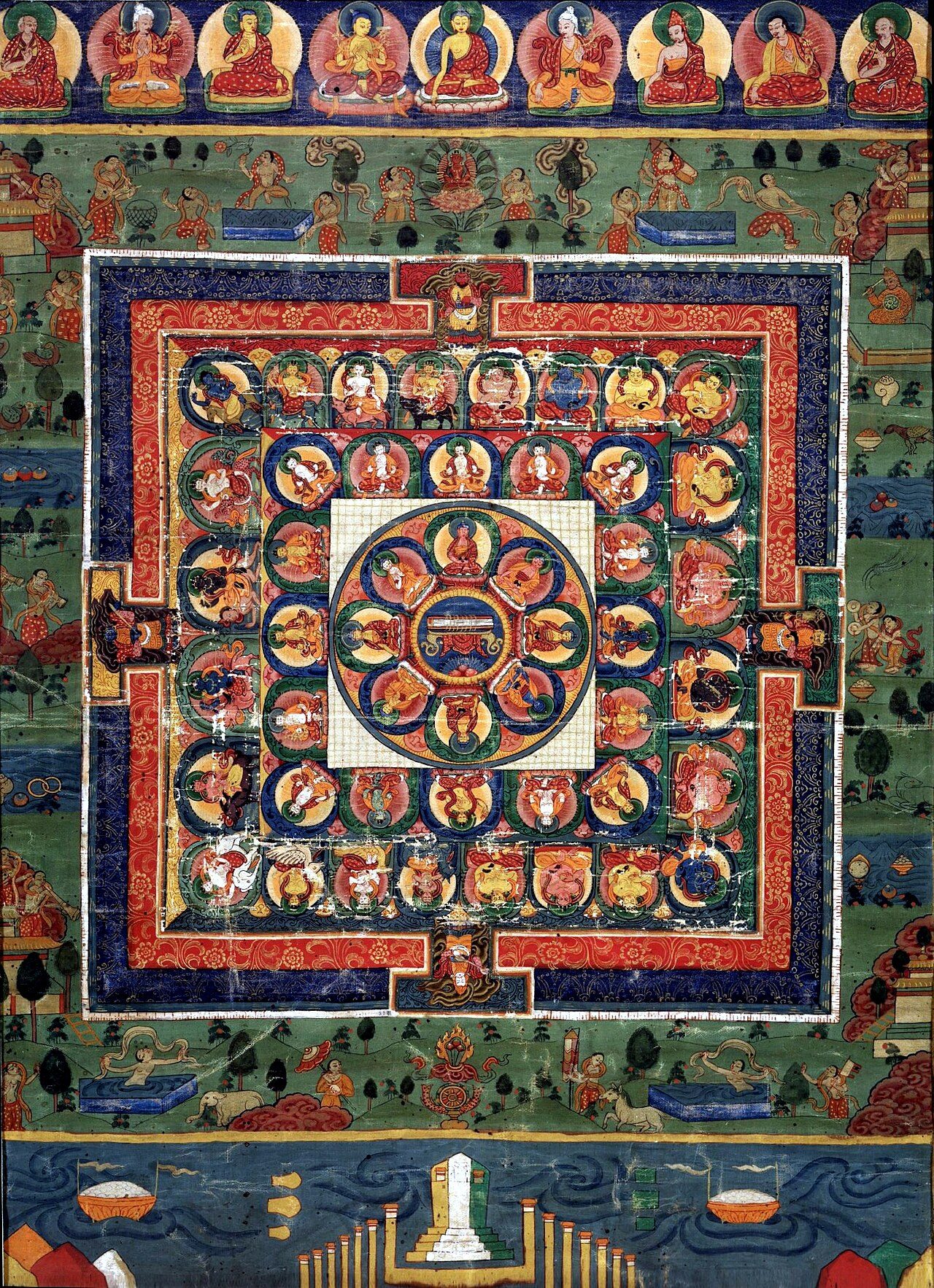
Paintings Most Bhutanese art, including ‘Painting in Bhutanese art’, known as lhazo, is invariably religion centric. These are made by artists without inscribing their names on them. The paintings encompass various types including the traditional thangkas, which are scroll paintings made in “highly stylised and strict geometric proportions” of Buddhist iconography that are made with mineral paints. Most houses in Bhutan have religious and other symbolic motifs painted inside their houses and also on the external walls. 1
Sculptures The art of making religious sculptures is unique in Bhutan and hence very popular in the Himalayan region. The basic material used for making the sculptures is clay, which is known as jinzob. The clay statues of Buddhist religious icons, made by well-known artists of Bhutan, embellish various monasteries in Bhutan. 1
Institutions
National Institute of Zorig Chusum The National Institute of Zorig Chusum is the centre for Bhutanese Art education. Painting is the main theme of the institute, which provides 4–6 years of training in Bhutanese traditional art forms. The curricula cover a comprehensive course of drawing, painting, wood carving, embroidery, and carving of statues. Images of Buddha are a popular painting done here. 1
Handicrafts emporiums There is a large government run emporium close to the National Institute of Zorig Chusum, which deals with exquisite handicrafts, traditional arts and jewelry; gho and kira, the national dress of Bhutanese men and women, are available in this emporium. 1
Exhibitions
The Honolulu Museum of Art spent several years developing and curatin… 1
The text above is adapted from the Wikipedia article “Bhutanese art”, available under the Creative Commons Attribution-ShareAlike 4.0 licence. 1
Bhutanese art is art from Bhutan, according to the structured record cited below. This entry was generated automatically from that record and has not yet been reviewed by a person familiar with the tradition. 2
The source record links this tradition to 2 external registers, which can be verified through the citation. 2