The tradition & historical record
6 min read · 2 sourcesBody painting is a form of body art where artwork is painted directly onto the human skin. Unlike tattoos and other forms of body art, body painting is temporary, lasting several hours or sometimes up to a few weeks (in the case of mehndi or "henna tattoos" about two weeks). Body painting that is limited to the face is known as face painting. Body painting is also referred to as (a form of) "temporary tattoo". Large scale or full-body painting is more commonly referred to as body painting, while smaller or more detailed work can sometimes be referred to as temporary tattoos. 1
Indigenous
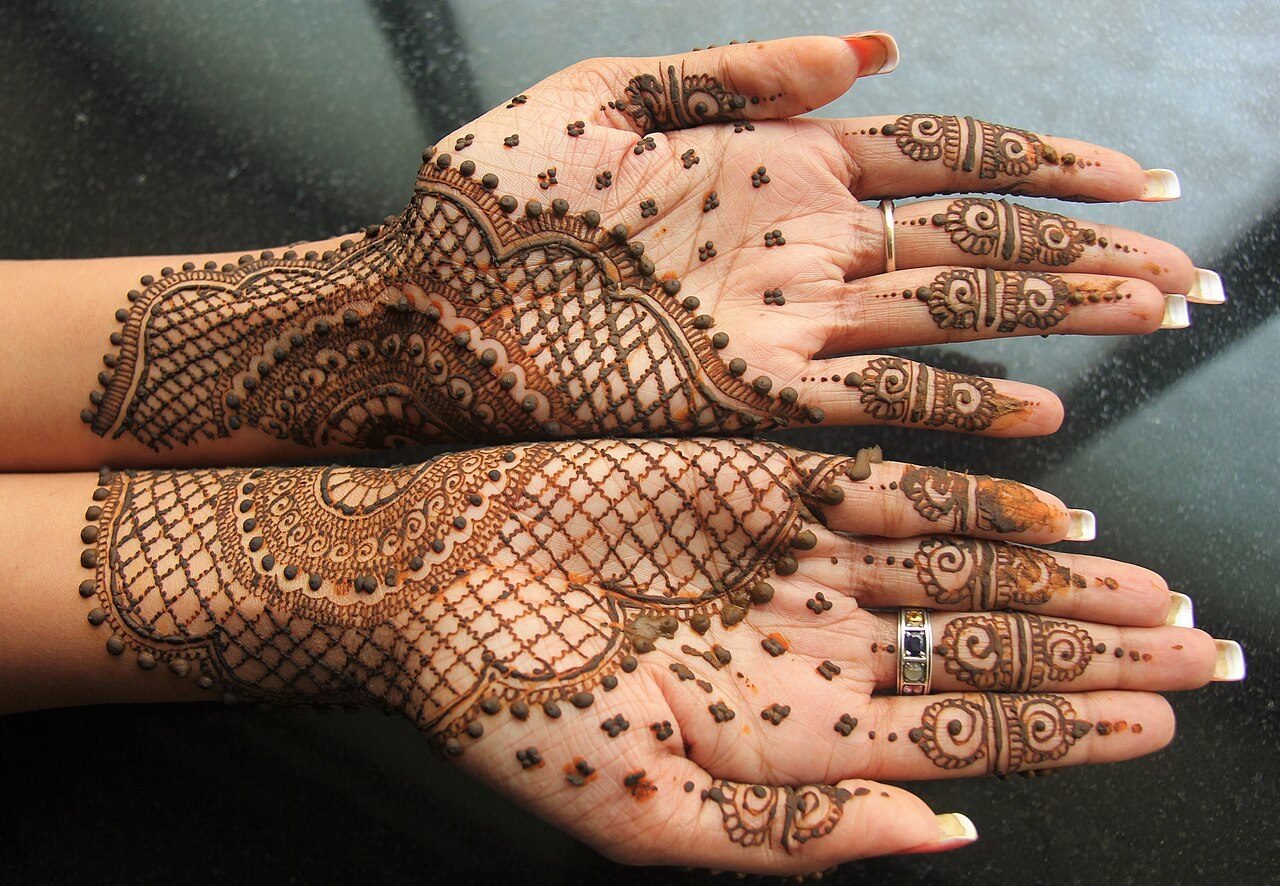
Body painting with a grey or white paint made from natural pigments including clay, chalk, ash and cattle dung is traditional in many tribal cultures. Often worn during cultural ceremonies, it is believed to assist with the moderation of body heat and the use of striped patterns may reduce the incidence of biting insects. It still survives in this ancient form among Indigenous Australians and in parts of Africa and Southeast Asia, as well as in New Zealand and the Pacific islands. A semi-permanent form of body painting known as Mehndi, using dyes made of henna leaves (hence also known rather erroneously as "henna tattoo"), is practiced in India, especially on brides. Since the late 1990s, Mehndi has become popular amongst young women in the Western world. Many indigenous peoples of Central and South America paint jagua tattoos, or designs with Genipa americana juice on their bodies. Indigenous peoples of South America traditionally use annatto, huito, or wet charcoal to decorate their faces and bodies. Huito is semi-permanent, and it generally takes weeks for this black dye to fade. 1
Western
Body painting is not always large pieces on fully nude bodies, but can involve smaller pieces on displayed areas of otherwise clothed bodies. There has been a revival of body painting in Western society since the 1960s, in part prompted by the liberalization of social mores regarding nudity and often comes in sensationalist or exhibitionist forms. Even today there is a constant debate about the legitimacy of body painting as an art form. The current modern revival could be said to date back to the 1933 World's Fair in Chicago when Max Factor Sr. and his model Sally Rand were arrested for causing a public disturbance when he body-painted her with his new make-up formulated for Hollywood films. Body art today evolves to the works more directed towards personal mythologies, as Jana Sterbak, Rebecca Horn, Michel Platnic, Youri Messen-Jaschin or Javier Perez. 1
Body painting is sometimes used as a method of gaining attention in political protests, for instance those by PETA against Burberry. Joanne Gair is a body paint artist whose work appeared for the tenth consecutive year in the 2008 Sports Illustrated Swimsuit Issue. She came to prominence with an August 1992 Vanity Fair Demi's Birthday Suit cover of Demi Moore. Her Disappearing Model was part of an episode of Ripley's Believe It or Not!. 1
Festivals
Body painting festivals happen annually across the world, bringing together professional body painters and keen amateurs. Body painting can also be seen at some football matches, at rave parties, and at certain festivals. The World Bodypainting Festival is a three-day festival which originated in 1998 and which has been held in Klagenfurt, Austria since 2017; the associated World Bodypainting Association promotes the art of bodypainting. Body painting festivals that take place in North America include the North American Body Painting Championship, Face and Body Art International Convention in Orlando, Florida, Bodygras Body Painting Competition in Nanaimo, BC and the Face Painting and Body Art Convention in Las Vegas, Nevada. 1
Australia also has a number of body painting festivals, most notably the annual Australian Body Art Festival in Eumundi, Queensland and the Australian Body Art Awards. In Italy, the Rabarama Skin Art Festival is an event focused on the artistic side of body painting, highlighting the emotional impact of the painted body in a live performance. This form of body painting is known as "Skin Art". 1
Fine art
The 1960s supermodel Veruschka has inspired bodypaint artists, after influential images of her appeared in the 1986 book Transfigurations by photographer Holger Trulzsch. Other well-known works include Serge Diakonoff's books A Fleur de Peau and Diakonoff and Joanne Gair's Paint a licious. More recently Dutch art photographer Karl Hammer has created combinations of body painting and narrative art (fantastic realism). Following the already established trend in Western Europe, body painting has become more widely accepted in the United States since the early 1990s. In 2006 the first gallery dedicated exclusively to fine art body painting was opened in New Orleans by World Bodypainting Festival Champion and Judge, Craig Tracy. The Painted Alive Gallery is on Royal Street in the French Quarter. In 2009, the late-night talk show Last Call with Carson Daly featured the New York-based artist Danny Setiawan who creates reproductions of masterpieces by famous artists such as Salvador Dalí, Vincent van Gogh, and Gustav Klimt on human bodies. Since 2005 the Australian visual artist Emma Hack has been creating photographs of painted naked human bodies that visually merge with a patterned background wall inspired by the wallpaper designs of Florence Broadhurst. Hack is best known for the Gotye music video for the song "Somebody That I Used to Know", which uses stop-motion animation body painting and has received over 800 million views on YouTube. 1
Michel Platnic is a French–Israeli contemporary visual artist known for his "living paintings". He uses multiple mediums including photography, video, performance body-painting and painting. 1
In the commercial arena
Professional artists are employed as body painters for television commercials. For example, models were painted to look like trees as part of a TV advertising campaign for Natrel Plus. Still photography of body painting is also used in print advertising, with hundreds of images of body painting appearing in magazines every year. Body painters also frequently work in the film industry, especially in science fiction, with body painting used to create elaborate alien designs. The Sports Illustrated Swimsuit Issue, published annually, has frequently featured a section in which body-painted models appear to be wearing swimsuits or sports jerseys. Playboy magazine has frequently made use of body painted models. In the 2005 Playmates at Play at the Playboy Mansion calendar, all the Playmates appeared in bikinis apart from Playmates Karen McDougal and Hiromi Oshima, who instead had painted-on bikinis. The success of body painting has led to many notable international competitions and a specific trade magazine (Illusion Magazine) for this industry, showcasing work around the world. 1
The text above is adapted from the Wikipedia article “Body painting”, available under the Creative Commons Attribution-ShareAlike 4.0 licence. 1
body painting is form of art, according to the structured record cited below. This entry was generated automatically from that record and has not yet been reviewed by a person familiar with the tradition. 2
The source record links this tradition to 25 external registers, which can be verified through the citation. 2