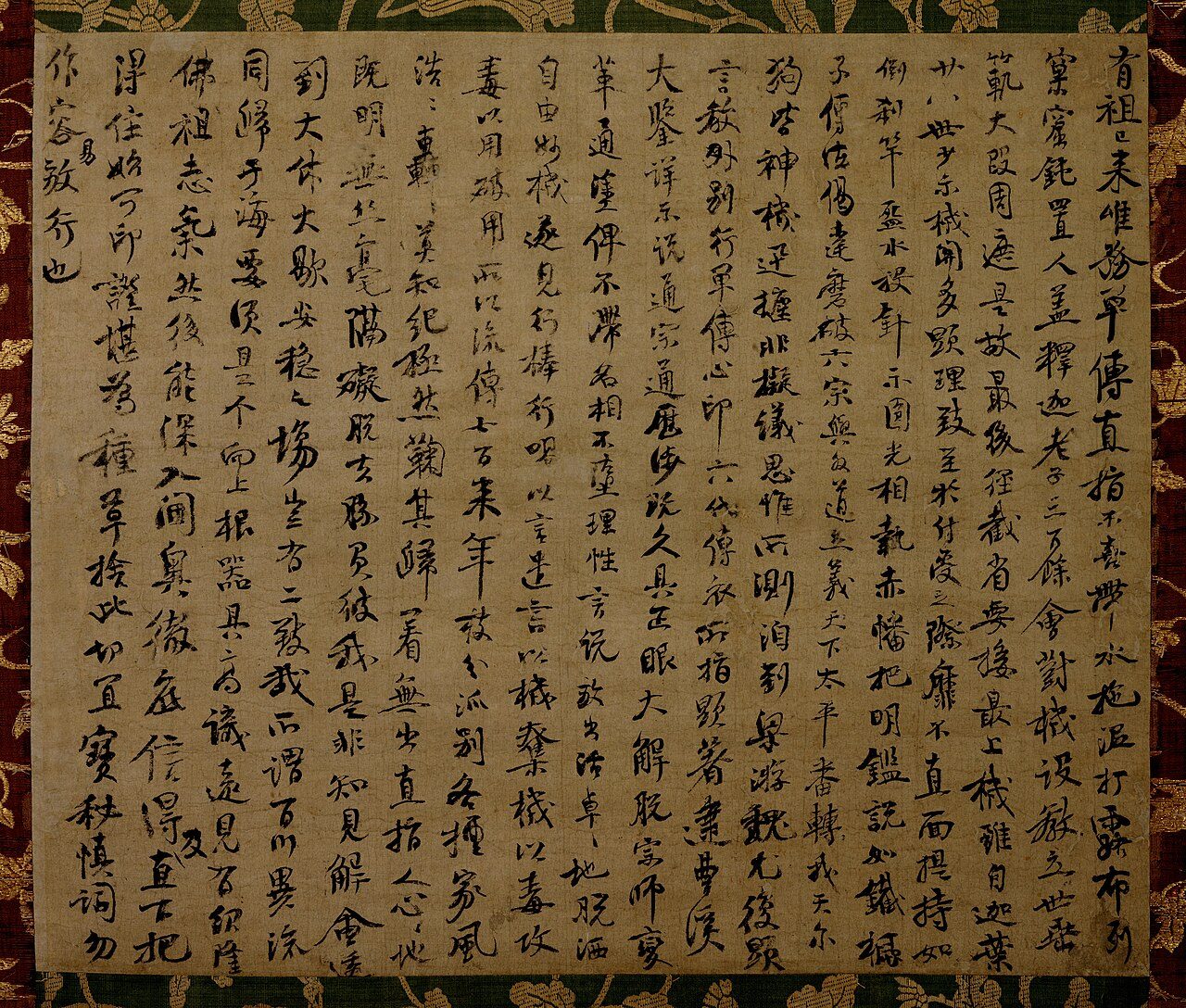
The tradition & historical record
1 min read · 2 sourcesBokuseki (墨跡) is a Japanese term meaning “ink trace”, and refers to a form of Japanese calligraphy (shodō) and more specifically a style of zenga developed by Zen monks. Bokuseki is often characterized by bold, assertive, and often abstract brush strokes meant to demonstrate the calligrapher’s pure state of mind (see Samadhi). The aim in making Bokuseki is to represent one’s single-moment awareness by brushing each word or passage with a single breath, ultimately realizing Zen and manifesting one’s zazen practice into physical and artistic action. Fundamentally bokuseki is a reflection of one’s spontaneous action (see: Buddha-nature, katsu) free from one’s superficial or rationally oriented mind. 1
The text above is adapted from the Wikipedia article “Bokuseki”, available under the Creative Commons Attribution-ShareAlike 4.0 licence. 1
bokuseki is Japanese calligraphy by Zen Buddhist monks, according to the structured record cited below. This entry was generated automatically from that record and has not yet been reviewed by a person familiar with the tradition. 2
The source record links this tradition to 4 external registers, which can be verified through the citation. 2