The tradition & historical record
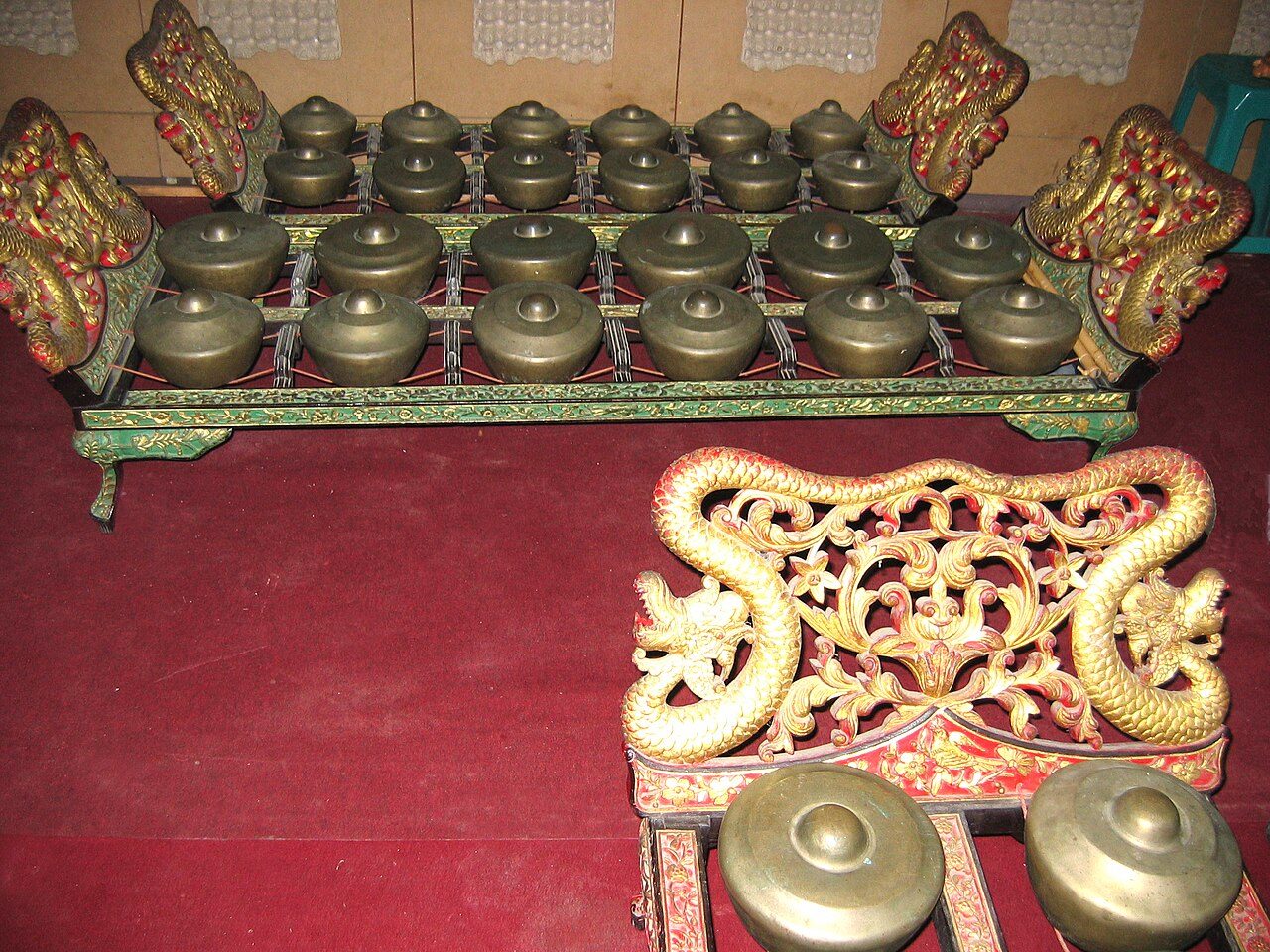
2 min read · 2 sourcesThe bonang is an Indonesian musical instrument used in the Javanese gamelan. It is a collection of small gongs (sometimes called "kettles" or "pots") placed horizontally onto strings in a wooden frame (rancak), either one or two rows wide. All of the kettles have a central boss, but around it the lower-pitched ones have a flattened head, while the higher ones have an arched one. Each is tuned to a specific pitch in the appropriate scale; thus there are different bonang for pelog and slendro. They are typically hit with padded sticks (tabuh). This is similar to the other cradled gongs in the gamelan, the kethuk, kempyang, and kenong. Bonang may be made of forged bronze, welded and cold-hammered iron, or a combination of metals. In addition to the gong-shaped form of kettles, economical bonang made of hammered iron or brass plates with raised bosses are often found in village gamelan, in Suriname-style gamelan, and in some American gamelan. In central Javanese gamelan there are three types of bonang used: 1
Bonang panerus is the highest of them and uses the smallest kettles. It generally covers two octaves (sometimes more in slendro on Solonese-style instruments), covering approximately the same range as the saron and peking combined. 1
The text above is adapted from the Wikipedia article “Bonang”, available under the Creative Commons Attribution-ShareAlike 4.0 licence. 1
bonang is Indonesian musical instrument used in the Javanese gamelan, according to the structured record cited below. This entry was generated automatically from that record and has not yet been reviewed by a person familiar with the tradition. 2
The source record links this tradition to 7 external registers, which can be verified through the citation. 2