The tradition & historical record
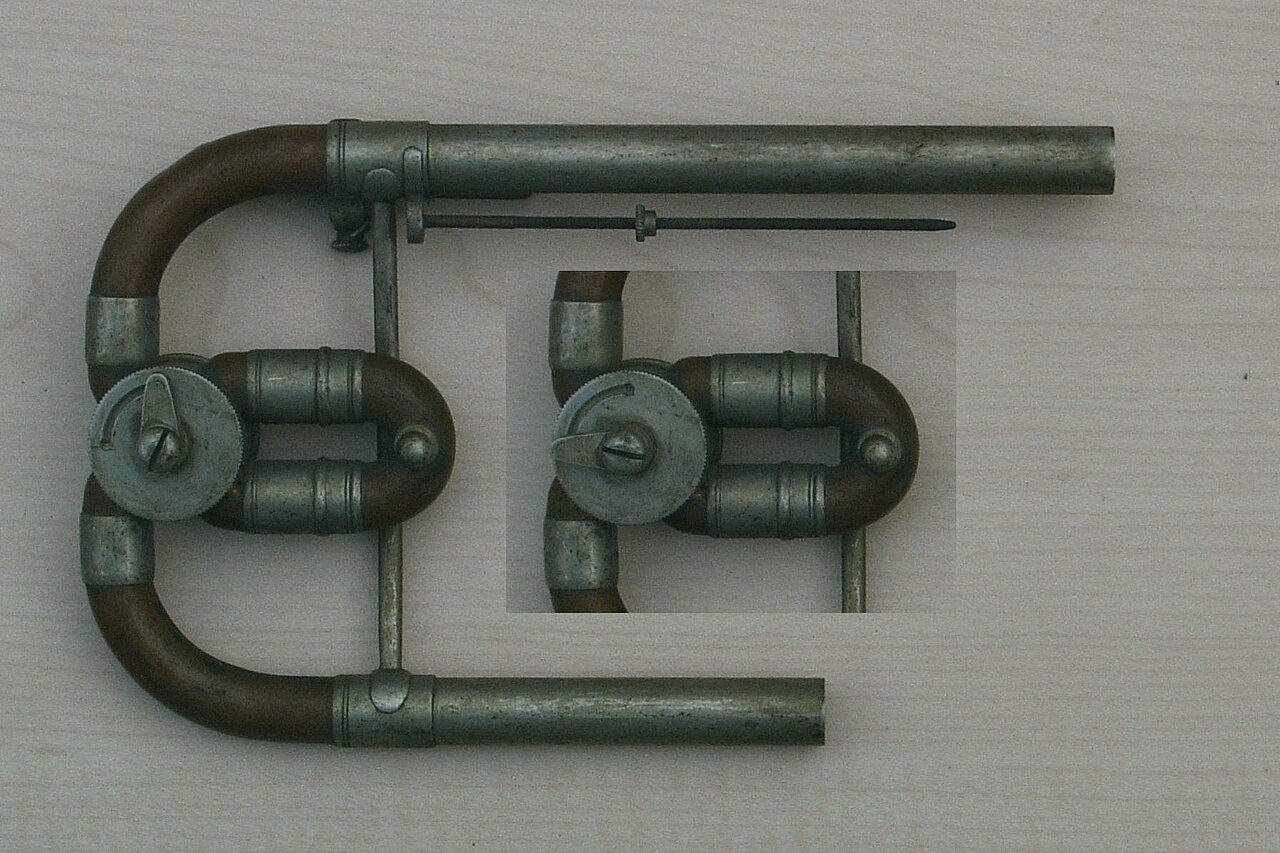
5 min read · 2 sourcesBrass instrument valves are valves used to change the length of tubing of a brass instrument allowing the player to reach the notes of various harmonic series. Each valve pressed diverts the air stream through additional tubing, individually or in conjunction with other valves. This lengthens the vibrating air column thus lowering the fundamental tone and associated harmonic series produced by the instrument. Valves in brass instruments require regular maintenance and lubrication to ensure fast and reliable movement. 1
Piston valve
The first musical instruments with piston valves were developed just after the start of the 19th century. 1
Stölzel valve
The first of these types was the Stölzel valve, bearing the name of its inventor Heinrich Stölzel, who first applied these valves to the French horn in 1814. Until that point, there had been no successful valve design, and horn players had to stop off the bell of the instrument, greatly compromising tone quality to achieve a partial chromatic scale. In a Stölzel valve, the air enters through the bottom of the valve casing, up through the hollow bottom end of the piston, and through a port to the valve loop. The air is then led through an oblique port in the piston to a short tube connecting the valves where it is then directed through the second valve and out the bottom. This type of valve, however, had inherent problems. It forced the air to double back on itself and the 90 degree turns disrupted the bore, causing significant undesired back-pressure. These problems were improved upon later by the double-piston valve. 1
Double-piston valve
The double-piston valve, also called the Vienna valve or pumpenvalve, is a type of valve that preceded the modern piston valve. It was first reported in 1821 on a trumpet built by Christian Friedrich Sattler of Leipzig, and later patented in 1823 by maker Joseph Riedl and horn player Joseph Kail. In this valve type, the simultaneous movement of two pistons bends the air flow in two right angles to introduce an additional valve loop. These turns cause constrictions in the bore, that make the instrument harder to play. At first, the two pistons were operated by a lever connected with braces, but later valves use a mechanism patented by instrument builder Leopold Uhlmann in 1830. These are operated by long rods connecting the pistons to keys on the other side of the instrument and fitted with clocksprings. 1
While they have fallen out of favor compared to modern valves in almost all places, they are often called "Vienna valves" because they are still used almost exclusively in Austria where horn players prefer the smooth legato and natural horn–like timbre of the Vienna horn. The Vienna system was in common use in Germany on many brass instruments including trumpets up to 1850, and as Système Belge on valve trombones in Belgium into the early 20th century. 1
Berlin valve
In 1833, Prussian military bandmaster Wilhelm Friedrich Wieprecht applied to patent his Pumpenventil valve design which used a piston to switch paths where the input, output, and valve ports are attached perpendicularly to the outer valve cylinder in the same plane. He patented the first tuba, the Baß-Tuba in F, with Berlin instrument maker Johann Gottfried Moritz in 1835. Later known as Berlinerpumpenventil, Paris instrument maker Adolphe Sax also used Berlin valves for his earliest saxhorns and other brass instruments in the 1840s, before switching to Périnet valves by 1860. 1
Périnet valve
The modern piston valve was invented by François Périnet and patented in 1839. They are sometimes called Périnet valves after the inventor. They work by diverting air obliquely through ports in the stock of the valve, so that a loop of tubing is included in the air stream, thus lowering the pitch. The stock of the valve is cylindrical and moves up and down through a larger cylindrical casing. A small Périnet valve integrated into a trombone mouthpiece, perpendicular to the shank in order to change the throat diameter to facilitate the upper register, was patented by Charles E. Stacy in 1924. Adolphe Sax invented instruments with six independent piston valves (three for each hand), but only the most dexterous musicians were able to play them. The long lengths of extra tubing used by each of the six valves also made the instruments heavy and cumbersome to play. Modern valve brass instruments not using either rotary or Vienna valves use this type of valve in a set of three configured to lower the instrument by two, one, and three half-steps respectively, which in combination lower the instrument pitch by up to a tritone. Some instruments (e.g. the tuba and euphonium) add a fourth valve that further lowers the pitch by a perfect fourth. 1
The text above is adapted from the Wikipedia article “Brass instrument valve”, available under the Creative Commons Attribution-ShareAlike 4.0 licence. 1
brass instrument valve is device for altering pitch on brass instruments, according to the structured record cited below. This entry was generated automatically from that record and has not yet been reviewed by a person familiar with the tradition. 2
The source record links this tradition to 6 external registers, which can be verified through the citation. 2