The tradition & historical record
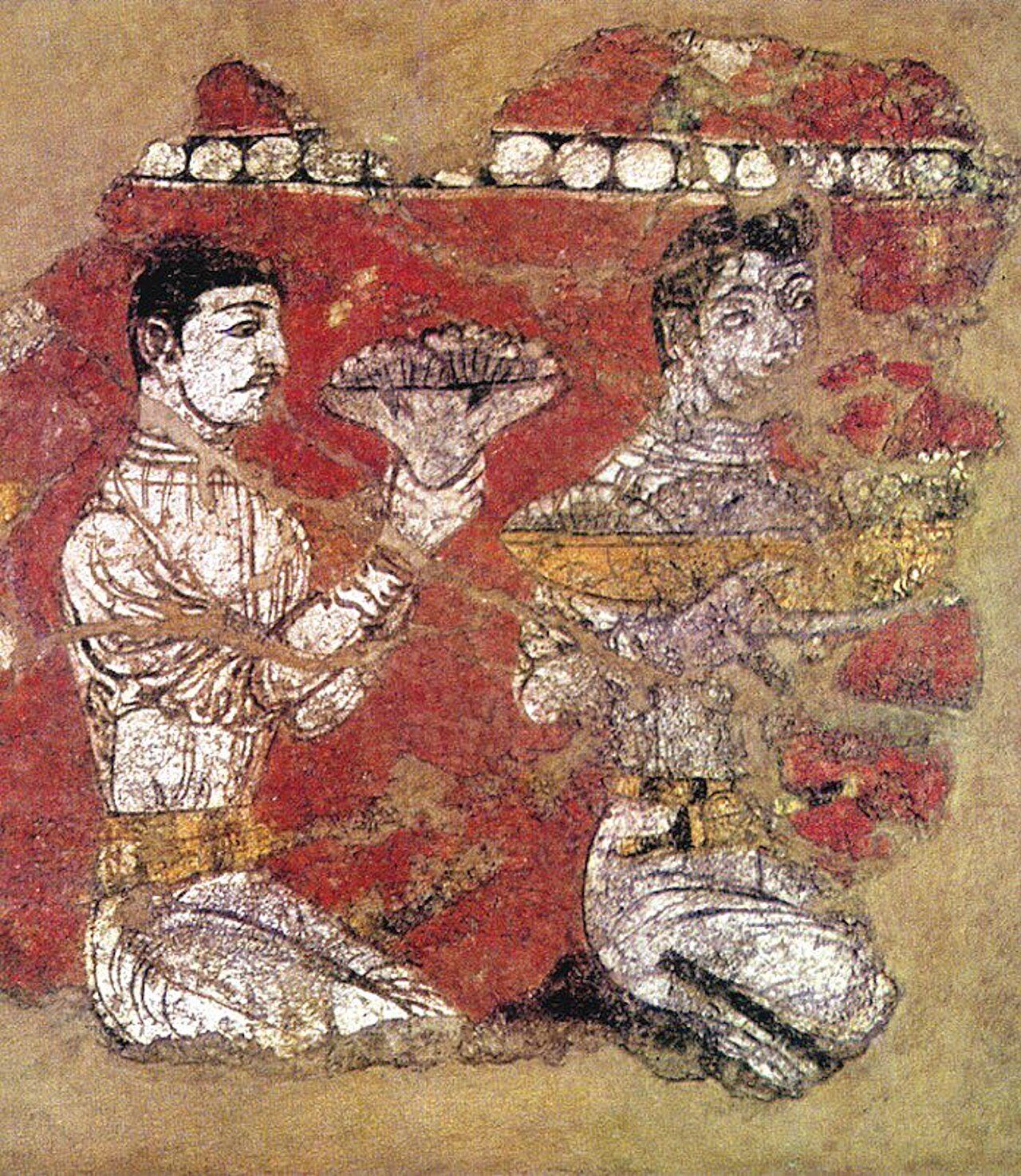
4 min read · 2 sourcesBuddhism has existed in Tajikistan from antiquity through the early medieval period. Although Buddhism is no longer practiced in the country, archaeological, historical, and art-historical evidence demonstrates that the region played an important role in the transmission and localization of Buddhism in Central Asia via the Silk Road. For several centuries, Buddhist monasteries and communities flourished in the regions of ancient Bactria and Tokharistan. Their material remains—particularly monastery complexes, monumental sculpture, and wall paintings—constitute some of the most significant archaeological evidence for Central Asian Buddhism. 1
Early transmission
Buddhism reached the region of modern Tajikistan through a combination of long-distance trade, pilgrimage, and missionary activity linking the Indian subcontinent with Central Asia and China. Merchants and monks traveling along Silk Road routes contributed to the gradual spread of Buddhist ideas, rituals, and institutions. From the early centuries CE, Buddhist communities developed alongside existing religious traditions, including Zoroastrianism and local cults. Buddhism in the region was not uniform but adapted to local cultural and linguistic contexts. 1
Trade and cultural exchange
The development of Buddhism in the territory of present-day Tajikistan was closely connected to long-distance trade and cultural exchange along the Silk Road. From the early centuries CE, merchants, monks, and travelers moving between the Indian subcontinent, Central Asia, and China facilitated the transmission of Buddhist doctrines, ritual practices, texts, and artistic traditions. These exchanges were not limited to religious ideas but also included economic cooperation and the circulation of material culture. Buddhist monasteries were frequently established near major trade routes, river valleys, and urban centers. In addition to serving as religious institutions, monasteries functioned as places of learning, hospitality, and social interaction. They provided lodging for merchants and pilgrims and acted as hubs where local populations encountered foreign religious traditions. Such institutions benefited from patronage by merchants and local elites, reflecting the close relationship between trade networks and religious life in Silk Road societies. Archaeological evidence suggests that Buddhist communities in the region maintained sustained contacts with neighboring cultural areas such as Gandhara, Sogdiana, and the Tarim Basin. These interactions are visible in artistic styles, architectural layouts, and religious iconography that combine Indian, Iranian, and Central Asian elements. 1
Kushan and post-Kushan periods
During the Kushan Empire (1st–3rd centuries CE), Buddhism received strong royal patronage and expanded widely throughout Central Asia. Kushan rulers supported the construction of monasteries and stupas and facilitated the movement of monks and texts across imperial territories. After the decline of Kushan power, Buddhist institutions continued to function in the region under subsequent political authorities. From the 6th to the 8th centuries CE, Buddhism coexisted with multiple religious traditions, reflecting the pluralistic character of Central Asian societies. 1
Archaeological evidence
Systematic archaeological research conducted primarily during the Soviet period revealed extensive evidence of Buddhist religious life in Tajikistan. Excavations uncovered monastery complexes, sculptural programs, mural paintings, and everyday objects associated with monastic communities. 1
Ajina-Tepe
Ajina-Tepe is the most significant Buddhist archaeological site in Tajikistan and one of the best-preserved Buddhist monasteries in Central Asia. Located in the Vakhsh Valley near the modern city of Bokhtar, the site dates to the 7th–8th centuries CE. The monastery was organized around two main courtyards and included temples, stupas, chapels, and residential quarters for monks. Ajina-Tepe is best known for the discovery of a monumental Reclining Buddha statue measuring approximately 12–13 metres in length and representing the Buddha in Parinirvana. The sculpture, originally constructed of clay and straw over a wooden framework, was found in fragments during excavations in the 1960s. After conservation and restoration, it is now displayed in the National Museum of Antiquities of Tajikistan in Dushanbe. The artistic program of Ajina-Tepe included wall paintings and sculptural ensembles depicting Buddhas, bodhisattvas, and donors, reflecting both doctrinal and devotional aspects of Buddhism in the region. 1
The text above is adapted from the Wikipedia article “Buddhism in Tajikistan”, available under the Creative Commons Attribution-ShareAlike 4.0 licence. 1
Buddhism in Tajikistan is recorded in open cultural data. The structured record cited below does not describe the practice, and this entry has not yet been reviewed by a person familiar with the tradition. 2