The tradition & historical record
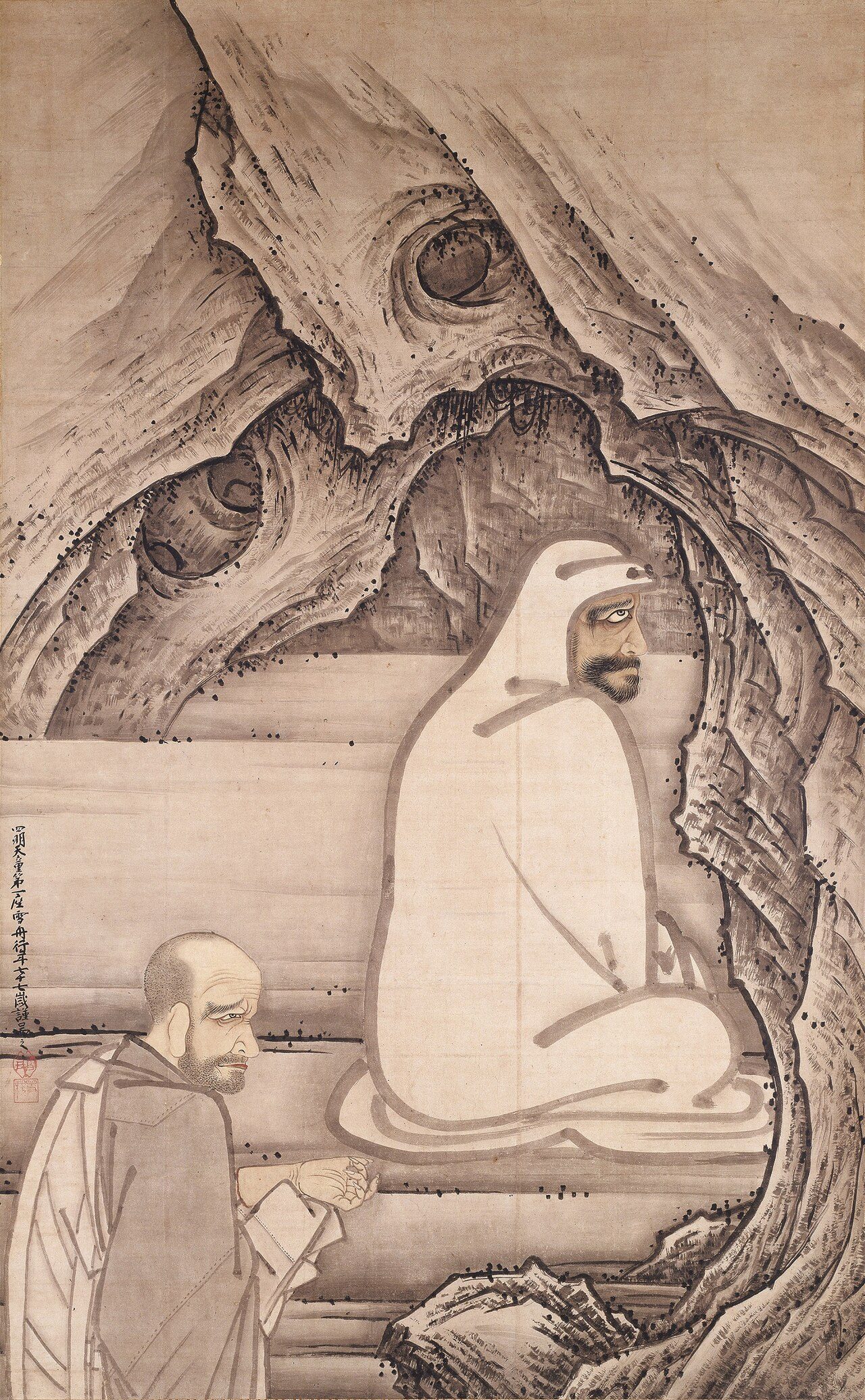
7 min read · 2 sourcesBuddhism played an important role in the development of Japanese art between the 6th and the 16th centuries. Buddhist art and Buddhist religious thought came to Japan from China through Korea. Buddhist art was encouraged by Crown Prince Shōtoku in the Suiko period in the sixth century, and by Emperor Shōmu in the Nara period in the eighth century. In the early Heian period, Buddhist art and architecture greatly influenced the traditional Shinto arts, and Buddhist painting became fashionable among wealthy Japanese. The Kamakura period saw a flowering of Japanese Buddhist sculpture, whose origins are in the works of Heian period sculptor Jōchō. During this period, outstanding busshi (sculptors of Buddhist statues) appeared one after another in the Kei school, and Unkei, Kaikei, and Tankei were especially famous. The Amida sect of Buddhism provided the basis for many popular artworks. Buddhist art became popular among the masses via scroll paintings, paintings used in worship and paintings of Buddhas, saint's lives, hells and other religious themes. Under the Zen sect of Buddhism, portraiture of priests such as Bodhidharma became popular as well as scroll calligraphy and sumi-e brush painting. 1
Asuka period
The dates for the Asuka period are debated, however it is agreed upon that the period extends from mid 500s to early 700s AD. This period is marked by an emphasis on political and cultural relationships with Korea. The Asuka period (552–645) saw the gradual growth of Chinese and Korean artistic and religious influences on Japanese culture. Buddhist texts, implements of worship, and iconography were presented to Japan by Emperor Kimmei in 538 or 552 AD. However, it is likely that more casual introductions had already been made. It was during this period that Buddhism was established as the state religion. The Asuka period is characterized as the foundation for individualistic and public forms of Buddhist art. Specifically, during this period depictions of Buddha are rendered through key iconography such as a lotus, swirled hair, a third eye, mudras, and mandorlas. The sculpture of this period shows, as do most all subsequent sculpture, the influence of continental art. Tori Busshi a descendant of a Chinese immigrant followed the style of Northern Wei sculpture and established what has come to be known as the Tori school of sculpture. Notable examples of Tori works are the Sakyamuni Triad (or Shaka triad) which are the main icons of the Golden Hall of Hōryū-ji temple and the kannon Boddhisatva of Yumedono Hall of the same temple, also known as Guze Kannon. First built in the early 7th century as the private temple of Crown Prince Shōtoku, Hōryū-ji consists of 41 independent buildings. The most important ones, the main worship hall, or Kondō (Golden Hall), and Gojū-no-tō (Five-story Pagoda), stand in the center of an open area surrounded by a roofed cloister. 1
Nara period
The dates for the Nara period are thought to be around 710–784. The beginning of this period is marked by the relocation of Japan's capital to Nara. It was during this period that Japanese society took on a more hierarchical structure with all power proceeding the emperor. In addition there was a merging of Buddhism and state which led to the commission of large scale temple complexes with monuments such as pagodas. In terms of sculpture, this period marked the adoption of the hollow- core dry lacquer technique – it has been suggested that this technique was used in an effort to reduce the use of bronze. Rather than merely depicting Buddha and bodhisattvas, renderings of deities and guardian figures begin to appear with individualistic and expressive features. The Early Nara period saw a move towards more naturalistic styles emerging from China. The Triad of Yakushi shows the healing Buddha which presides over the Eastern Pure Land attended by two Bodhisattvas Nikko and Gakko. The triad, housed in the Yakushiji temple (7th century in Nara), reveals Chinese and central Asian influences in its anatomical definition, naturalism and realistic drapery. The technique known as hompa-shiki was a new way to render drapery in a more solid and fleshy form. This technique later rose in popularity during the Heian period. The end of the nara period is marked by a stylistic shift in sculpture. In terms of painting, Buddhist works emulated the Chinese Tang style, which was characterized by elongated and rounded figures and broad brush strokes. Temple building in the 8th century was focused around the Tōdai-ji in Nara. 1
Heian period (794–1184)
The dates for the Heian period are believed to be 794–1184 AD. In 784 the Emperor Kanmu, threatened by the growing secular power of the Buddhist institutions in Nara, moved the capital to Heian-kyō (Kyōto). This remained the imperial capital for the next 1,000 years. The term Heian period refers to the years between 794 and 1185, when the Kamakura shogunate was established at the end of the Genpei War. The period is further divided into the early Heian and the late Heian, or Fujiwara era, the pivotal date being 894. In 894, the imperial embassies to China were officially discontinued. In addition, this period is marked by the deviation from Chinese artistic models and the development of art specific to Japanese concerns. This art was highly supported by noble commissions. However, there were great social and political changes occurring during the Heian period, and it is necessary to look at Buddhist art in this context. Buddhism underwent changes as a new form of Buddhism rose in popularity: Amidism. This branch held that nirvana and entry to the Pure Land could be earned through a recitation before death and merit. There was also a new found emphasis on creating an adequate worship space. It was thought that the creation of these spaces and commissions would result in strong karma. A commonly commissioned work was the mandala, a roadmap of sorts to the cosmos. Mandalas came in twos, one rendering the phenomenal world while the other rendered the womb world. It was a common practice to meditate before the mandalas and to use them as a religious tool. Jōchō is said to be one of the greatest Buddhist sculptors not only in this period but also in the history of Buddhist statues in Japan. 1
Kamakura period (1185–1333)
The dates of the Kamakura period are 1185–1333 AD. This period is marked by the Gempei Wars, a series of civil wars in the late 12th century between rival families. This eventually led to the rise of the feudalistic Kamakura shogunate, so named because the victorious family, the Minamoto clan, established their political base in Kamakura. The emperor remained in Kyoto as a figurehead, but the actual political power rested with the shōgun. The Kamakura period saw the reestablishment of cultural ties with China, as well as the growth of Zen Buddhism and Pure Land Buddhism as the two major branches of Japanese Buddhism. These new Kamakura patrons also favored a more realistic and naturalistic art which is exemplified by the sculpture of the Kei school. 1
Muromachi period (1333–1573)
Durin… 1
The text above is adapted from the Wikipedia article “Buddhist art in Japan”, available under the Creative Commons Attribution-ShareAlike 4.0 licence. 1
Buddhist art in Japan is recorded in open cultural data. The structured record cited below does not describe the practice, and this entry has not yet been reviewed by a person familiar with the tradition. 2
The source record links this tradition to 2 external registers, which can be verified through the citation. 2