The tradition & historical record
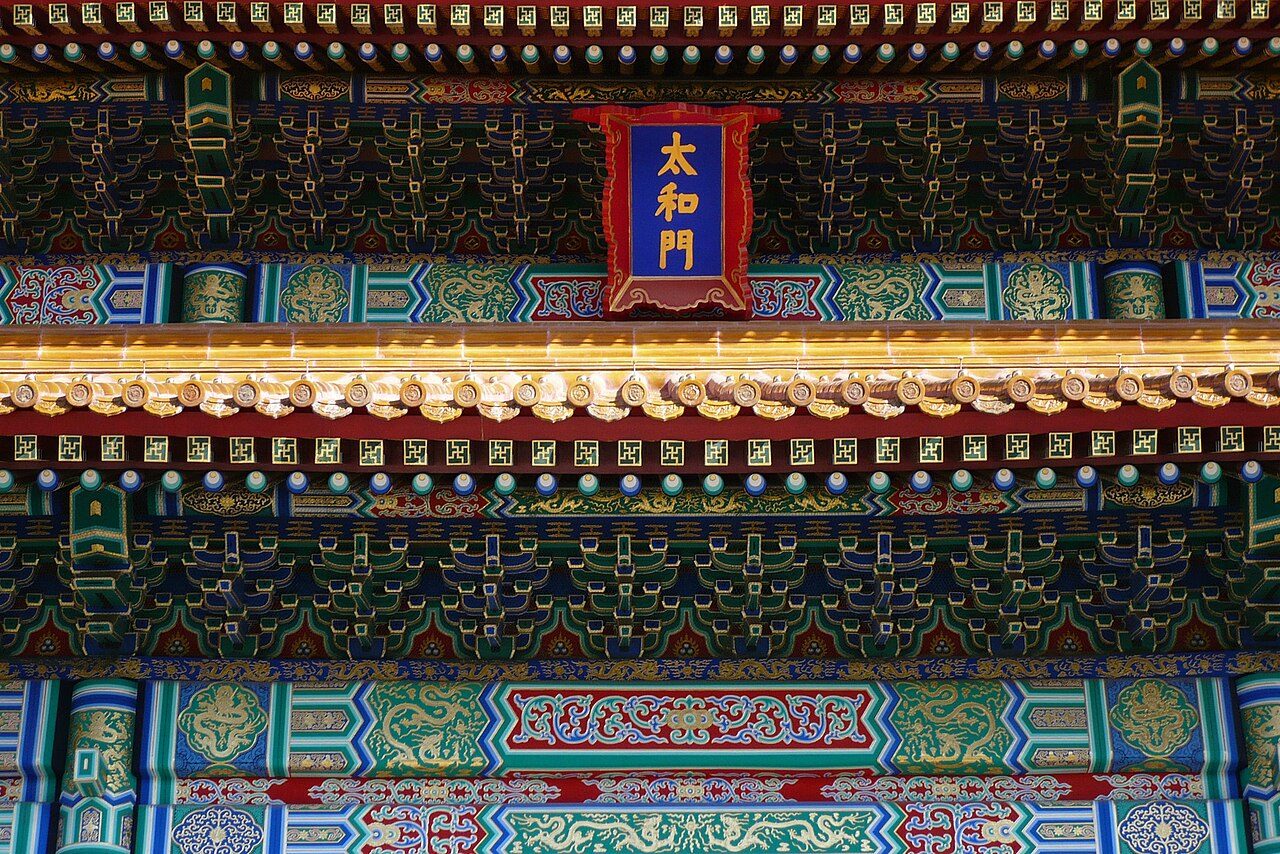
2 min read · 2 sourcesCaihua (Chinese: 彩畫; pinyin: cǎihuà), or "colour painting", is the traditional Chinese decorative painting or polychrome used for architecture and one of the most notable and important features of historical Chinese architecture. It held a significant artistic and practical role within the development of East-Asian architecture, as Caihua served not only decoration but also protection of the predominantly wooden architecture from various seasonal elements and hid the imperfections of the wood itself. The use of different colours or paintings would be according to the particular building functions and local regional customs, as well as historical periods. The choice of colours and symbology are based on traditional Chinese philosophies of the Five Elements and other ritualistic principles. 1
The Caihua is often separated into three layer structures; timber or lacquer layer, plaster layer, and pigment layer. 1
History
The origins of Caihua can be traced back to the Zhou dynasty, as the Zuo Zhuan and Guliang Zhuan detailed: 1
秋,丹桓宮楹。禮,天子、諸侯黝堊,大夫倉,士黈,丹楹,非禮也。 [The Duke painted red the pillars of [Duke] Huan's temple. According to rule, King and royalty use dark and white, gentry use white, yeoman use yellow. Red pillars are against etiquette.] 1
The Rites of Zhou similarly records a ritualistic usage of motifs and colour, based on each respective aspects' corresponding symbolic value. 1
The text above is adapted from the Wikipedia article “Caihua”, available under the Creative Commons Attribution-ShareAlike 4.0 licence. 1
Caihua is Originating in China, the polychrome decorative paintings applied to the wooden architecture in the Sinosphere., according to the structured record cited below. This entry was generated automatically from that record and has not yet been reviewed by a person familiar with the tradition. 2
The source record links this tradition to 1 external register, which can be verified through the citation. 2