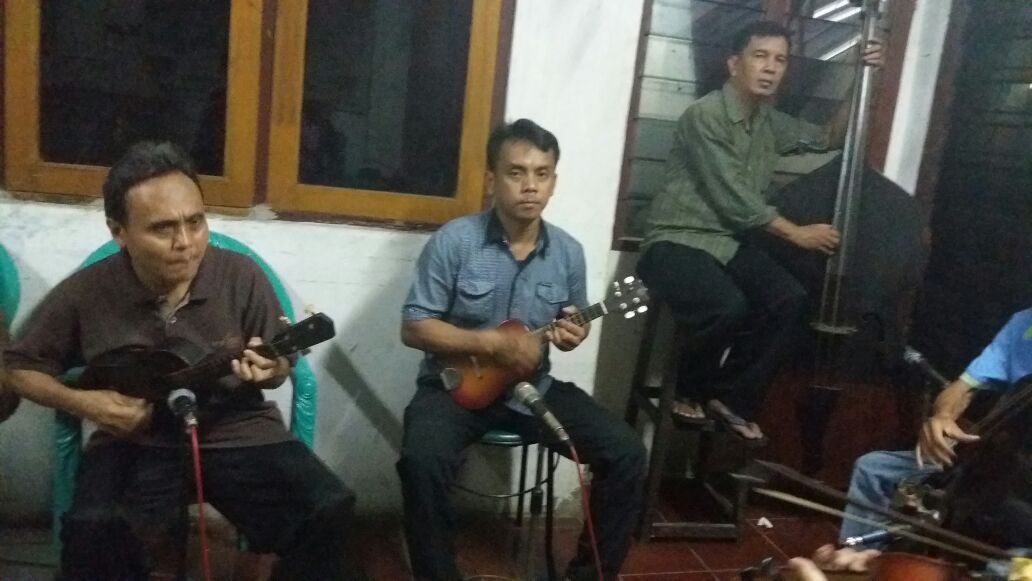
The tradition & historical record
1 min read · 2 sourcesThe Cak is a stringed musical instrument from Java (Indonesia). It has four strings in three courses. It is tuned D5 D5, F#4, B4. The strings are made of steel. The body is usually hollowed out of a solid piece of wood. The soundboard has many little soundholes arranged in a geometric pattern. It is mainly used to play Keroncong music along with the Cuk. 1
History
The Cak is thought to be evolved from a banjo, but developed as a small-sized wooden front and a guitar-shaped body. However, the earlier period in Ancient Java shows clear evidences that the native Javanese were already familiar with the small plucked instrument. 1
The text above is adapted from the Wikipedia article “Cak (instrument)”, available under the Creative Commons Attribution-ShareAlike 4.0 licence. 1
cak is Indonesian traditional musical instruments, according to the structured record cited below. This entry was generated automatically from that record and has not yet been reviewed by a person familiar with the tradition. 2
The source record links this tradition to 1 external register, which can be verified through the citation. 2