The tradition & historical record
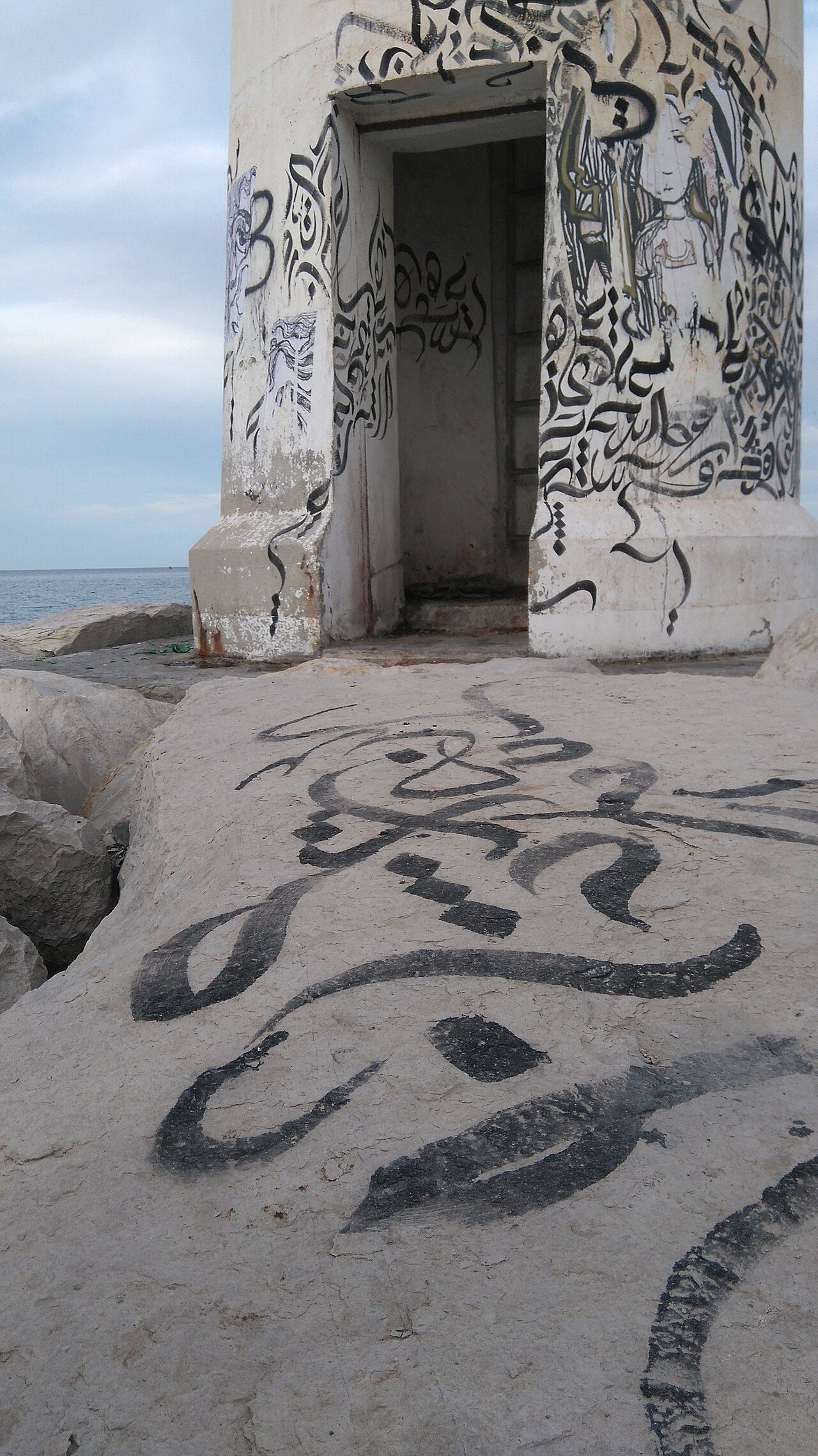
6 min read · 2 sourcesCalligraffiti is an art form that combines calligraphy, typography, and graffiti. It can be classified as either abstract expressionism or abstract vandalism. It is defined as a visual art that integrates letters into compositions that attempt to communicate a broader message through writing that has been aesthetically altered to move beyond the literal meaning. Simply put, it is the conscious effort of making a word or group of words into a visual composition. As such it is meant to be both an aesthetic experience and provocative art—mixing tradition and precision with modern unbridled self-expression. 1
Definition and brief history
The origins of the term, "calligraffiti" are unclear. The Dutch artist Niels Shoe Meulman is often incorrectly credited with coining the term in 2007, when he used it as the title of his solo exhibition. Meulman describes calligraffiti as "traditional handwriting with a metropolitan attitude" and a "way of translating the art of the street to the interior of museums, galleries and apartments." In an interview he explains the technique itself as "directness in the whole, finesse in the details. An even balance between seeing and reading word and image. … letters, writing and language itself becomes an image or abstraction. On the other hand, basic shapes and splats become language." Use of the term, however, predates the contributions of Niels Shoe Meulman by at least thirty years. The Canadian painter, Brion Gysin used the term in his final exhibition, Calligraffiti of Fire held at the Galerie Samy Kinge in Paris between 19 April and 19 May in 1986 and the term was also used as the title of the book which accompanied Gysin's exhibition. The term was also used in a book about post-modernism, Spirits Hovering Over the Ashes: Legacies of Postmodern Theory by H.L. Hix in 1995. Jordanian artist and art historian Wijdan Ali also used the term, "calligraffiti" in her book, Modern Islamic Art: Development and Continuity, (1997) to describe a style of art that had been flourishing across the Middle East and North Africa from the mid-20th century. She defined calligraffiti as the use of "script of ordinary writing where the work is composed of the artist's personalised handwriting within a modern composition." Ali wanted to use the term because she saw this type of art as being inspired by calligraphy yet, also close to the scribbling of graffiti artists. 1
Characteristics
Calligraffiti is a complex process. Its specificity is in its paradoxical nature, as it is characterised by and composed of many elements that appear contradictory: 1
blending of tradition and modernity sharing of culture and political subversion beauty and provocation precision and spontaneity philosophical and reactionary literal and metaphorical It requires an overall vision from the artist- from the message he is trying to convey, to the shape of the letters, to the larger picture he is creating. Calligraffiti artist, Tubs, explains that the art form's graffiti component forces the artist to reflect upon and consciously create a piece that will arouse a specific feeling or reaction in the viewer. However, the use of the alphabet as an artistic medium demands practice, accuracy, and foresight. 1
Tools
Part of what differentiates calligraffiti from calligraphy is its freedom from rules. Calligraphy is a meticulous and specific art that takes years to master. Most calligraffiti artists, like El Seed, do not consider themselves calligraphers because they do not know, nor do they follow the many rules of calligraphy. Calligraffiti on the other hand is characterized by its diversity of mediums, methods, and instruments. Each individual artist uses and sometimes designs his or her own tools. 1
Arabic calligraphy as historical background
Arabic calligraphy is incredibly rich; it is an art form that has been perfected for well over a millennium. Islamic tradition greatly encouraged the development of calligraphy as an art form in order to bear witness of the written word and to spread Islam. In the Quran, Arabic writing represents the word of God revealed to Muhammad, which gives Arabic letters a special meaning. The spread and evolution of calligraphy can be traced very specifically throughout Islamic history as it is inherently tied to the spread of Islam itself. Calligraphy was how scribes transcribed and created copies of the Quran—allowing Muhammad's message to extend beyond the Arabian Peninsula. Calligraphy has always had a central role in Middle Eastern art, because of Islamic restrictions concerning the portrayal of living beings. As a result, calligraphy became not only a tool for the expansion of Islam, but its most characteristic form of religious art. 1
Calligraffiti: calligraphy of the 21st century
Calligraffiti has emerged quite forcefully in the Middle East in recent years, particularly in the wake of the Arab uprisings. While graffiti has never been widespread in the region, it has spread with the rising dissidence against Middle Eastern dictatorships and authoritarian regimes. Calligraphy artist Hassan Massoudy called Arabic calligraphy and graffiti "two daughters of the same parents" because of their interrelationship. He notes that "Obviously [calligraphy and graffiti] both are about the use of letters and their alphabets, and their center of gravity is the beauty of writing. For both, a letter is more than just a letter and they fill them with emotions. The use of empty space and composition within this space is something else they have in common. Calligraffiti is a logical evolution of the two art forms coexisting in the same space. The first step towards calligraffiti was the emergence of the abstract movement in the Middle East during the 20th century. Calligraphy was impacted by the abstract movement in the 1960s and 1970s with the introduction of the Hurufiyya movement in the Arab world and the Saqqa Khaneh movement in Iran. Hassan Massoudy, Hossein Zenderoudi and Parviz Tanavoli were some of the pioneers of this new era of calligraphy. The next two decades saw an initial explosion of graffiti in the context of the First Intifada and the Lebanese Civil War. Today, much calligraffiti is influenced by early Islamic script styles like Siyah mashq and Kufic. 1
The text above is adapted from the Wikipedia article “Calligraffiti”, available under the Creative Commons Attribution-ShareAlike 4.0 licence. 1
calligraffiti is art form that combines calligraphy, typography and graffiti, according to the structured record cited below. This entry was generated automatically from that record and has not yet been reviewed by a person familiar with the tradition. 2
The source record links this tradition to 2 external registers, which can be verified through the citation. 2