The tradition & historical record
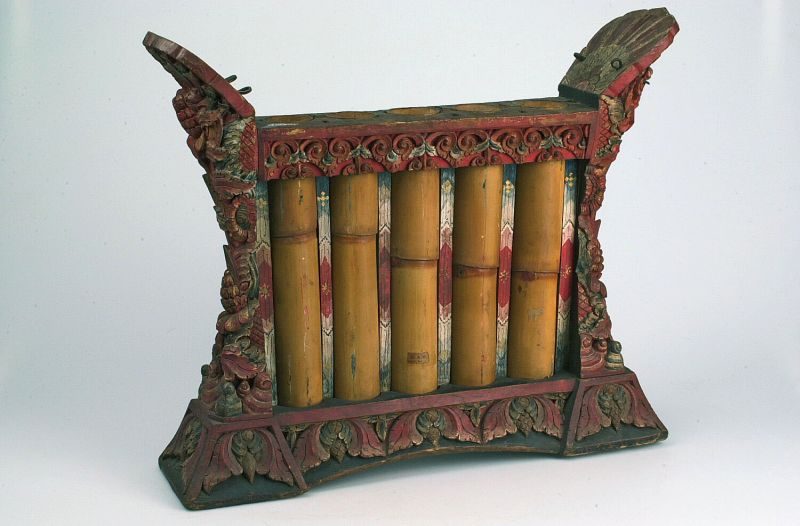
3 min read · 2 sourcesThe Calung (Sundanese: ᮎᮜᮥᮀ) is a type of Indonesian bamboo xylophone originating from Baduy culture and commonly used in Baduy, Bantenese, Sundanese, Banyumasan, and Balinese performances. The calung (instrument) consists of multiple bamboo tubes which are struck at the base to produce a woody sound. In the Balinese Gamelan gong kebyar, the metallophone jublag can also be known as Calung, it has a one-octave range, and is generally utilized to play mid-range melodies. In Banyumas, southwestern Central Java in Indonesia, when Calung is referred to as an ensemble, it uses multiple bamboo instruments and is composed of singers and dancers. The ensemble is characterized by a variety of traits that include: interlocking melodies and rhythm, abrupt changes in tempo, as well as syncopated rhythm and humorous vocals. Calung (the ensemble) is present at many celebratory gatherings, and its dancers are sometimes related to prostitution. On November 18, 2010, UNESCO officially recognized the Indonesian angklung which includes a musical instrument of calung as a Masterpiece of the Oral and Intangible Heritage of Humanity, and encouraged the Indonesian people and the Indonesian government to safeguard, transmit, promote performances and to encourage the craftsmanship of the angklung. In 2011, calung traditions are recognized as National Intangible Cultural Heritage of Indonesia by the Indonesian Ministry of Education and Culture. 1
Etymology
Calung is actually the name for the Diospyros macrophylla tree in Sundanese language (ki calung, literally: calung wood), as a musical instrument, according to the A Dictionary of the Sunda language by Jonathan Rigg (1862), calung is a rude musical instrument so called, being half a dozen slips of bambu fastened to a string, like the steps of a ladder, and when hung up, tapped with a bit of wood. 1
Instrument
The calung works by cutting away multiple pieces of bamboo tubes to create a pitch when struck. To make the Calung in the Sundanese tradition, a set of bamboo tubes are strung together through holes cut into the tubes. You are then able to play the Calung either suspended; you play the tubes while they are in hanging in front of you, or you can put them across a bamboo frame and play it like a xylophone. 1
The text above is adapted from the Wikipedia article “Calung”, available under the Creative Commons Attribution-ShareAlike 4.0 licence. 1
calung is Sundanese bamboo percussion instrument, according to the structured record cited below. This entry was generated automatically from that record and has not yet been reviewed by a person familiar with the tradition. 2
The source record links this tradition to 5 external registers, which can be verified through the citation. 2