The tradition & historical record
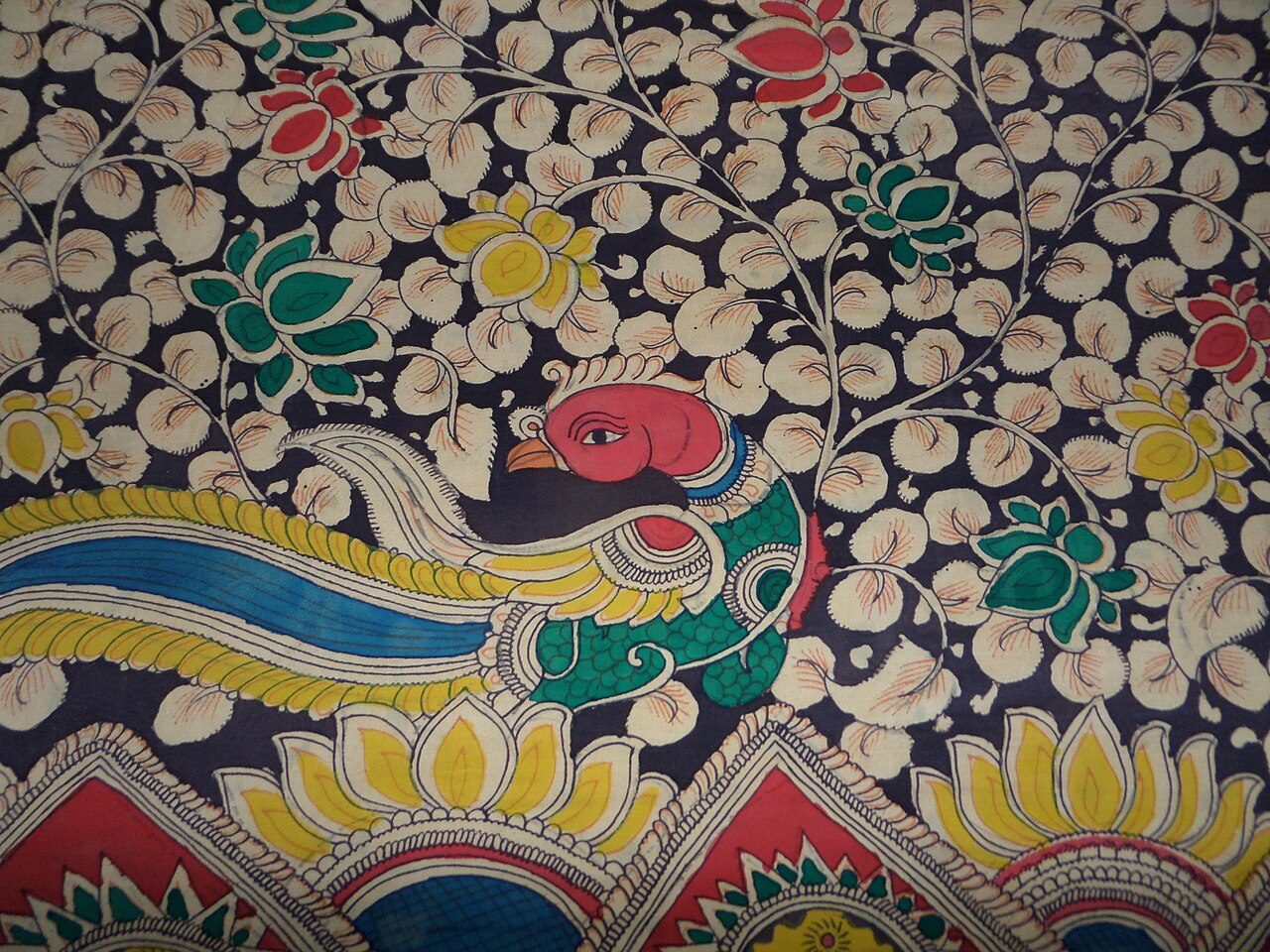
6 min read · 2 sourcesChitra or citra is an Indian genre of art that includes painting, sketch and any art form of delineation. The earliest mention of the term Chitra in the context of painting or picture is found in some of the ancient Sanskrit texts of Hinduism and Pali texts of Buddhism. 1
Nomenclature
Chitra (IAST: Citra, चित्र) is a Sanskrit word that appears in the Vedic texts such as hymns 1.71.1 and 6.65.2 of the Rigveda. There, and other texts such as Vajasaneyi Samhita, Taittiriya Samhita, Satapatha Brahmana and Tandya Brahmana, Chitra means "excellent, clear, bright, colored, anything brightly colored that strikes the eye, brilliantly ornamented, extraordinary that evokes wonder". In the Mahabharata and the Harivamsa, it means "picture, sketch, dilineation", and is presented as a genre of kala (arts). Many texts generally dated to the post-4th-century BCE period, use the term Chitra in the sense of painting, and Chitrakara as a painter. For example, the Sanskrit grammarian Panini in verse 3.2.21 of his Astadhyayi highlights the word chitrakara in this sense. Halls and public spaces to display paintings are called chitrasalas, and the earliest known mention of these are found in the Ramayana and the Mahabharata. A few Indian regional texts such as Kasyapa silpa refer to painting by others words. For example, abhasa – which literally means "semblance, shining forth", is used in Kasyapa-shilpa to mean as a broader category of painting, of which chitra is one of three types. The verses in section 4.4 of the Kasyapa-silpa state that there are three types of images – those which are immovable (walls, floor, terracota, stucco), movable, and those which are both movable-immovable (stone, wood, gems). In each of these three, states Kasyapa-shipa, are three classes of expression – ardhacitra, citra, and citra-abhasa. Ardhacitra is an art form where a high relief is combined with painting and parts of the body is not seen (it appears to be emerging out of the canvas). 1
History
The earliest explicit reference to painting in an Indian text is found in verse 4.2 of the Maitri Upanishad where it uses the phrase citrabhittir or "like a painted wall". The Indian art of painting is also mention in a number of Buddhist Pali suttas, but with the modified spelling of Citta. This term is found in the context of either a painting, or painter, or painted-hall (citta-gara) in Majjhima Nikaya 1.127, Samyutta Nikaya 2.101 and 3.152, Vinaya 4.289 and others. Among the Jain texts, it is mentioned in Book 2 of the Acaranga Sutra as it explains that Jaina monk should not indulge in the pleasures of watching a painting. The Kamasutra, broadly accepted to have been complete by about the 4th-century CE, recommends that the young man should surprise the girl he courts with gifts of color boxes and painted scrolls. The Viddhasalabhanjika – another Hindu kama- and kavya–text uses chitra-simile in verse 1.16, as "pictures painted by the god of love, with the brush of the mind and the canvas of the heart". The nature of a chitra (painting), how the viewer's mind projects a two dimensional artwork into a three dimensional representation, is used by Asanga in Mahayana Sutralamkara – a 3rd to 5th-century Sanskrit text of the Mahayana Buddhist tradition, to explain "non-existent imagination" as follows: 1
Just as in a picture painted according to rules, there are neither projections nor depressions and yet we see it in three dimensions, so in the non-existent imagination there is no phenomenal differentiation, and yet we behold it. According to Yoko Taniguchi and Michiyo Mori, the art of painting the caves at the c. 1
Texts
There are many important dedicated Indian treatises on chitra. Some of these are chapters within a larger encyclopedia-like text. These include: 1
Chitrasutras, chapters 35–43 within the Hindu text Vishnudharmottara Purana (the standard, and oft referred to text in the Indian tradition) Chitralaksana of Nagnajit (a classic on classical painting, 5th-century CE or earlier making it the oldest known text on Indian painting; but the Sanskrit version has been lost, only version available is in Tibet and it states that it is a translation of a Sanskrit text) Samarangana Sutradhara (mostly architecture treatise, contains a large section on paintings) Aparajitaprccha (mostly architecture treatise, contains a large section on paintings) Manasollasa (an encyclopedia, contains chapters on paintings) Abhilashitartha chinatamani Sivatatva ratnakara Chitra Kaladruma Silpa ratna Narada silpa Sarasvati silpa Prajapati silpa Kasyapa silpa These and other texts on chitra not only discuss the theory and practice of painting, some of them include discussions on how to become a painter, the diversity and the impact of a chitra on viewers, of aesthetics, how the art of painting relates to other arts (kala), methods of preparing the canvas or wall, methods and recipes to make color pigments. For example, the 10th-century Chitra Kaladruma presents recipe for making red color paint from the resin of lac insects. Other colors for the historic frescoes found in India, such as those in the Ajanta Caves, were obtained from nature. 1
Theory
The Indian concepts of painting are described in a range of texts called the shilpa shastras. These typically begin by attributing this art to divine sources such as Vishvakarma and ancient rishis (sages) such as Narayana and Nagnajit, weaving some mythology, highlighting chitra as a means to express ideas and beauty along with other universal aspects, then proceed to discuss the theory and practice of painting, sketching and other related arts. Manuscripts of many these texts are found in India, while some are known to be lost but are found outside India such as in Tibet and Nepal. Among these are the Citrasutras in the 6th-century Visnudharmottara Purana manuscripts discovered in India, and the Citralaksana manuscript discovered in Tibet (lost in India). This theory include early Indian ideas on how to prepare a canvas or substrate, measurement, proportion, stance, color, shade, projection, the painting's interaction with light, the viewer, how to captivate the mind, and other ideas. According to the historic Indian tradition, a successful and impactful painting and painter requires a knowledge of the subject – either mythology or real life, as well as a keen sense of observation and knowledge of nature, human behavior, dance, music, song and other arts. For example, section 3.2 of Visnudharmottara Purana discusses these requirements and the contextual knowledge needed in chitra and the artist who produces it. The Chitrasutras in the Vishnudharmottara Purana state that the sculpture and painting arts are related, with the phrase "as in Natya, so in Citra". This relationship links them in rasa (aesthetics) and as forms of expression. 1
The painting
A chitra is a form of expression and communication. According to Aparajitaprccha – a 12th-century text on arts and architecture, just like the water reflects the moon, a chitra reflects the world. 1
The text above is adapted from the Wikipedia article “Chitra (art)”, available under the Creative Commons Attribution-ShareAlike 4.0 licence. 1
Chitra is painting, sketch and related historic arts of India, according to the structured record cited below. This entry was generated automatically from that record and has not yet been reviewed by a person familiar with the tradition. 2