The tradition & historical record
6 min read · 2 sourcesAncient heritage
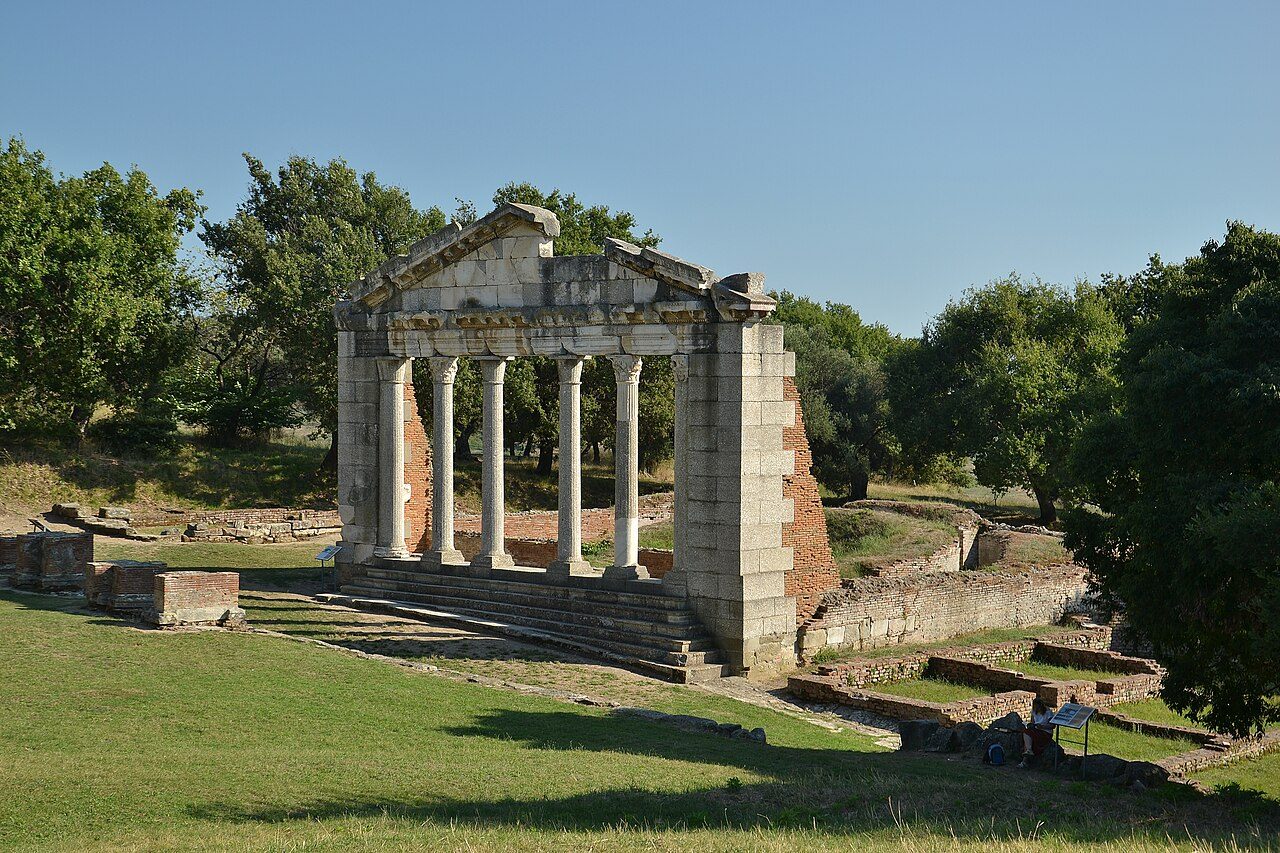
Illyrian heritage: The origins of Albanian culture are associated with the Illyrian and Dardanian civilizations, who lived in the area roughly 3,000 years ago. The Illyrians considered by historians as the primordial ancestors of the Albanians, whose civilization widely influenced later-day Albanian culture and language. Ancient Greek and Roman Influences: Settlers from the ancient Greek and Roman civilizations arrived in present-day Albania, respectively in the 7th and 2nd Centuries BCE. Their entrenchment in the local Albania cultural and social milieu encouraged the adoption of distinctive architectural styles, evident in the Roman amphitheaters scattered around the country and the city of Apollonia. These influences continue to be visible in the country's archaeological sites. 1
Intangible heritage
Iso-Polyphonic Folk Music: This UNESCO-recognized tradition is a documented as a unique vocal music style characterized by complex harmonies and layered melodies. Often sung at festivals and celebrations, it is widely considered a central vehicle for expressing Albanian cultural identity. The vocal tradition differs by geography, with the Labëri style from southern Albania, the Toskëri style from central Albania, and the Ghegs from northern Albania. Epic Ballads: Albanian folklore includes a large number of epic poems (Kângë Kreshnikësh) sung by men called "lahuta players," accompanying themselves on a one-stringed instrument called a lahuta. These ballads narrate tales of bravery, historical events, and legendary heroes, with the intent of preserving Albanian traditions. The Albania epic singing tradition is considered the last in Europe to remain intact, with comparable epics such as Germany's Nibelungen Epic no longer sustained over generations. Traditional Costumes: While Western clothing styles are most popular in Albania's urban centers, rural areas maintain commonplace wearing of traditional Albania dress. Embroidery featuring a wide variety of colors, headwear with unique styles like the plis (folded hat) in southern Albania, and regional variations in clothing styles all contribute to a unique style of Albanian attire. The Xhubleta skirt worn by Albanian women was included in the List of Intangible Cultural Heritage in Need of Urgent Safeguarding by UNESCO in 2022. 1
Museums and monuments
Albania features numerous museums and monuments that reflect the country's thousands-year-long and varied history, cultural and artistic traditions, as well as archaeological finds. The country's main museums and monuments address Albanian archaeology, history, ethnography and art. In November 2019, following a 6.4-Richter scale earthquake in Albania, the European Union launched the EU4Culture initiative to restore 23 "major cultural heritage sites" damaged by the natural disaster. The project was budgeted at €40 million and implemented by the United Nations Office for Project Services (UNOPS), in coordination with the Albanian Ministry of Economy, Culture and Innovation. 1
Museums National History Museum (Albania), Tirana: Located in central Tirana, Albania's largest museum showcases artifacts from prehistoric times to the communist era (1946-1992). Exhibits considered as museum highlights include a replica of the sword of Skanderbeg, a 15th-century military leader memorialized as Albania's national hero. 1
UNESCO World heritage sites
Despite being one of Europe's smallest countries, Albania is home to three sites on the UNESCO World Heritage Site List: 1
Butrint (Latin: Buthrōtum), in southern Albania and about 20 km west of Sarande, was an ancient Greek city, then a Roman one and the seat of a late Roman bishopric. After a period of abandonment it was occupied by the Byzantines in the 9th century the Angevins and the Venetians in the 14th century. It was later fortified to address repeated attacks by the rulers of Epirus and then the Ottomans. Prominent archeological sites include a Greek theater, a late-antique baptistery and a ninth-century basilica that itself was rebuilt in the 9th century.[1] Berat: Nicknamed "City of a Thousand Windows," refers to the numerous windows that line the facades of Ottoman houses which are built into the hilly landscape. The city, designated a UNESCO World Heritage Site in 2008, comprises a unique style of architecture with influences from several civilizations that took root in Albania over millennia. Like many cities in Albania, Berat features an old fortified city, which is among the best preserved Ottoman-era towns in the country. This section of the city contains numerous churches and mosques, some of which are painted with murals and frescoes. Berat has been considered one of the main cultural and spiritual centers of Albania, both for Islam and Orthodox Christianity. Gjirokastër: Gjirokastër's historic center was inscribed as a UNESCO World Heritage Site in 2005. It is recognized for being a prime example of an Ottoman town, due to its characteristically Balkan homes with turrets (kullë). These houses date from between the 17th and 19th centuries. 1
Religious harmony and heritage
Iljaz Bey Mirahor Mosque: Built in 1496 by Ottoman Albanian leader Iljaz Bey, the mosque is considered one of Albania's leading historical and architectural monuments, especially in how it represents early Ottoman architecture in the southeastern part of the country. The mosque's uniqueness is highlighted by a minaret denoted for its elegance and interior decorations that address various Islamic motifs. John the Baptist’s Monastery, Voskopoja: A church and monastery compound dating from the 17th century and deemed to reflect on the cultural legacy and former economic prosperity of Voskopoja. The church was constructed in the Byzantine style and is highlighted for its preserved mural paintings by the monk Andon of Shipcka. Saint Marena Monastery: Perched on a plateau overlooking the city of Pogradec and Lake Ohrid, the church is an 18th-century basilica dedicated to the 5th century Byzantine monk Marina. The complex features a two-story entrance hall, a nave, and an open walkway, while the interior is replete with frescoes depicting individual saints, themes of the Apocalypse, and the Feast of Christ, among others. Church of Saint Koll (Nicholas) Monastery, Mesopotam: A church whose origins date to the 11th century, itself built on an early Eastern Orthodox monastic complex. The monastery complex features unique architecture that includes brick decorations, and sculptures on the facade walls. According to researchers, it was believed to have been damaged in a 1510 earthquake. King Mosque, Berat: One of the main Muslim places of worship in Berat to this day, the mosque was constructed by the order of Ottoman Sultan Bayezid II in the late 15th century, and is one of the country's earliest Islamic structures. It contains a minaret, a prayer hall, and a balcony. 1
The text above is adapted from the Wikipedia article “Cultural heritage of Albania”, available under the Creative Commons Attribution-ShareAlike 4.0 licence. 1
Cultural heritage of Albania is recorded in open cultural data. The structured record cited below does not describe the practice, and this entry has not yet been reviewed by a person familiar with the tradition. 2