The tradition & historical record
6 min read · 2 sourcesThe Ming dynasty (1368–1644) of China was known for its advanced and cultured society. The culture of the Ming dynasty was deeply rooted in traditional Chinese values, but also saw a flourishing of fine arts, literature, and philosophy in the late 15th century. During this time, the government played a stronger role in shaping culture, requiring the use of Zhu Xi's interpretation of Neo-Confucianism in civil service examinations and promoting "proper" art in literature and painting. Despite this, some historians view the Ming era as a period of monotony and mediocrity. However, the Ming dynasty was actually a time of great creativity, particularly in its final century. Intellectuals of this time sought self-realization through anti-rationalist individualism, as seen in the teachings of Wang Yangming, and pursued wisdom through the cultivation of knowledge of one's own mind. During the early Ming period, painting and calligraphy were heavily influenced by past styles, particularly those of the Song dynasty, but were also transformed in a creative manner. The court painting academy, which was revived in the 1420s and 1430s, focused on the genre of "flowers and birds". This genre was dominated by renowned masters such as Bian Jingzhao (early 15th century) and Lin Liang (late 15th century). 1
Early and Middle Ming period
During the first decades of the Ming dynasty, the imperial court highly esteemed and valued leading calligraphers. Some notable names among them were Song Ke (1327–1387), Shen Du (1357–1434), and Shen Can (1379–1453). The emperors themselves also held a deep appreciation for calligraphy. The Yongle Emperor (r. 1402–1424) was particularly fond of it and even designated the style of the two Wangs (Wang Xizhi and his son Wang Xianzhi from the 4th century) as the official script. His successor, the Hongxi Emperor, was renowned for his calligraphy skills and was often compared to Emperor Taizong of Tang (r. 626–649). In the mid-1420s, the following Ming emperor, the Xuande Emperor (r. 1425–1435), restored the Imperial Academy of Painting and Calligraphy in Beijing, which then set the standard for art in the first half of the Ming period. In the mid-fifteenth century, there was a decline in royal interest in calligraphy. The focus of artistic activity shifted to southeastern China during the mid-Ming period. This led to the emergence of new trends in calligraphy among the artists and literati of wealthy cities such as Jiangnan, particularly Suzhou and Songjiang. 1
Late Ming period
The theory and practice of late Ming calligraphy was heavily influenced by Dong Qichang (1555–1636) of Songjiang, a renowned scholar who excelled in literary composition, painting, and calligraphy from a young age. He was not only a prominent theorist of painting, but also wrote about the history of calligraphy, placing the masters of his Songjiang region above those of Suzhou. Dong emphasized the importance of studying works from the Eastern Jin (4th century) and Tang (7th–9th centuries), particularly the Wangs, but did not advocate for direct imitation of their styles. Instead, he encouraged a thorough analysis of their most significant techniques. In the second half of the 16th century, there were several important Songjiang calligraphers, including Chen Jiru, a versatile artist and collector who was a friend of Dong Qichang, and Xu Wei, a pioneer of individual artists in the Qing dynasty. Xu Wei was known for his "flower and bird" paintings and also wrote calligraphy in the "crazy conceptual script", which had a style similar to abstract painting. In the first half of the 17th century, Chen Hongshou, a calligrapher and professional painter specializing in figure painting, gained recognition for his unique expression, which continued to be admired in the years to come. The last generation of Ming calligraphers had distinct and unique styles. Contemporary critics, as well as the calligraphers themselves, used the term qi to describe the innovative calligraphy of the period. This term can be translated as "unusual" or "strange", and it refers to the radical deviation from traditional norms of composition and handwriting. One notable calligrapher of this time was Wang Duo (1592–1652), who claimed that his style was inspired by the work of classical masters. 1
Painting
The Ming era was significant in preserving a large number of paintings by renowned masters, as well as thousands of works by lesser-known artists. In contrast, the Song era only has a few surviving original works by well-known artists, and none from the Tang era. Ming painters were known for their diverse styles, but they often drew inspiration from Tang patterns. Ming critics referred to this style as "Tang traditions", as it was considered more realistic compared to the philosophical and lyrical appearance of the Song period, and the formal and abstract appearance of the Yuan era. 1
Academy
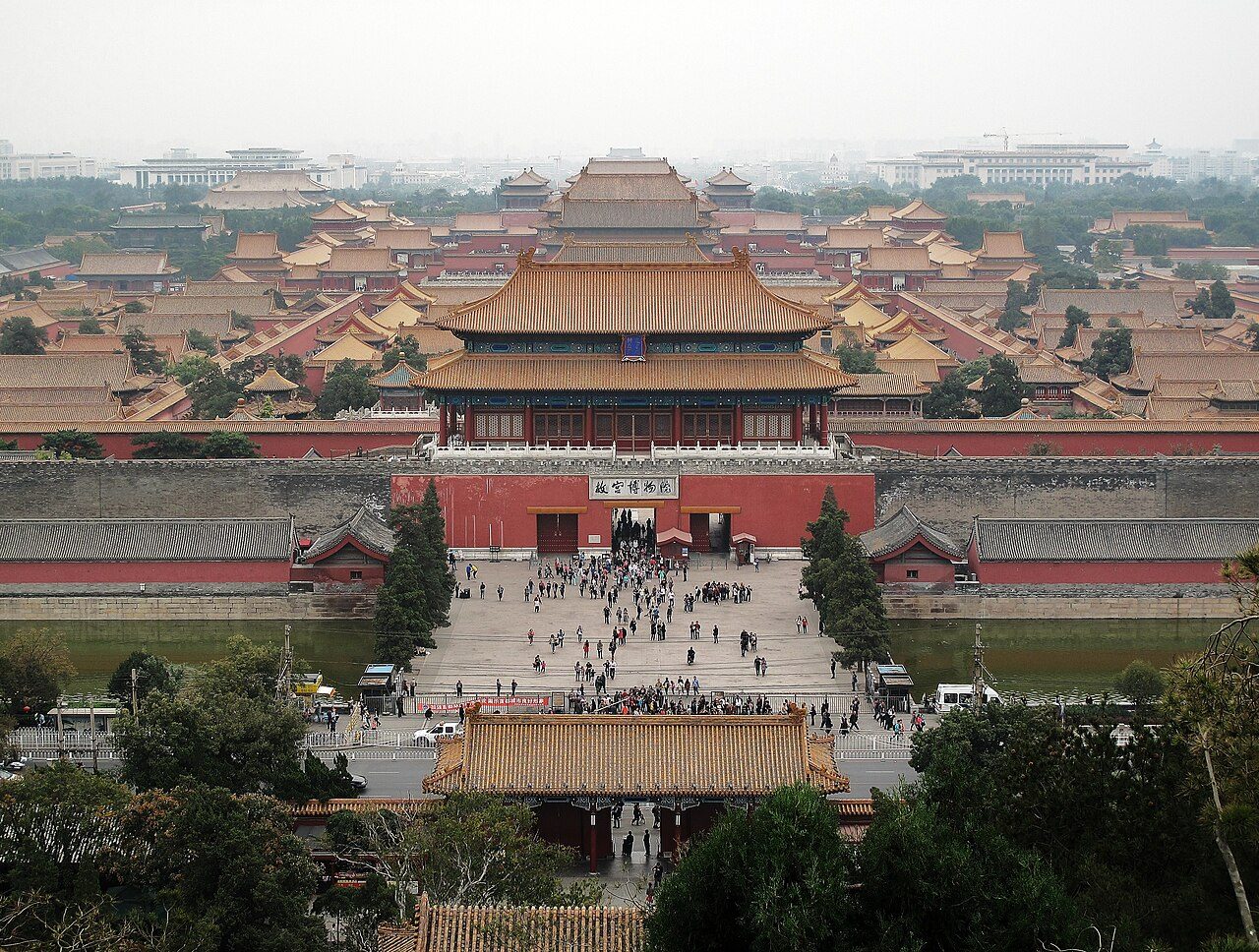
After the establishment of the Ming dynasty, the influence of southern artistic styles, seen as a reflection of the country's spirit and culture, grew. Concurrently, the practice of professional official art was revived within the imperial court. However, independent court painters held little significance during the early Ming period and worked independently. Notable figures among them include Ma Wan (mid-14th century) and Wang Fu (1362–1416), who were renowned for their bamboo ink paintings. They were succeeded by Xia Chang in the latter half of the 15th century. The first Ming emperor, the Hongwu Emperor (r. 1368–1398), assembled a group of literati, painters, and calligraphers at the Belvedere of Literary Profundity. The main task assigned to the painters was to decorate the imperial palaces. It was not until the beginning of the Xuande Emperor's reign that the actual imperial painting academy (畫院; huayuan) was established. This academy was named after the era of Xuande and is known as the Imperial Painting Academy of the Xuande era (宣德畫院; Xuande huayuan). Its model was based on the office of the same name that operated during the Song dynasty. Early Ming painting was heavily influenced by the past, particularly the patterns of the Song dynasty. This restorationist movement was rooted in a conservative approach to the past, which was already evident in the painters of the previous Yuan period. The restorationist ideology was most prominently embodied in the painting academy, which was reinstated by the Xuande Emperor in the mid-1420s. The restoration of the academy in Beijing resulted in a revival of the rules and style of the Song imperial painting academy, as well as a shift in focus from the southern to the northern Song academic tradition. 1
Zhe and Wu schools
In and around Hangzhou, there were professional painters who loosely followed the Ma–Xia style and were known as the "Zhe School" (named after the province of Zhejiang, where Hangzhou was the capital). One of the leading representatives of this school was Dai Jin, who returned to Hangzhou at the beginning of the 15th century after being expelled from the court. 1
The text above is adapted from the Wikipedia article “Culture of the Ming dynasty”, available under the Creative Commons Attribution-ShareAlike 4.0 licence. 1
culture of Ming dynasty is recorded in open cultural data. The structured record cited below does not describe the practice, and this entry has not yet been reviewed by a person familiar with the tradition. 2
The source record links this tradition to 1 external register, which can be verified through the citation. 2